

Yes—big and tall men can find longer-inseam joggers, but you need to choose by garment measurements rather than a larger waist size. Match the inseam to a pair that already fits, then check the rise, thigh room, and cuff position. For your 2026 search, this guide separates actual leg length from sizing labels so you can avoid fixing a short leg with an oversized waistband.
- Searching joggers longer inseam for tall men? Match garment measurements, not just the size label.
- TLF Apparel joggers suit gym-to-everyday dressing; verify each style’s inseam before choosing your size.
- Big-and-tall fit requires enough waist, seat, and thigh room as well as leg length.
- Model height helps you interpret photos, but it does not establish a jogger’s inseam.
Can big and tall men find joggers with a longer inseam?
Yes. The reliable approach is to look for a stated inseam that matches your preferred fit, then confirm that the same size accommodates your waist, seat, and thighs. A tall label helps identify candidates, but the measurement decides whether the leg is long enough.
Use this sequence before choosing a pair:
- Measure a pair you already like. Lay the joggers flat and measure along the inside leg from the crotch seam to the bottom edge. Keep the fabric relaxed rather than stretching it.
- Record the waistband position. Note where you normally wear the reference pair. Pulling a waistband lower changes where the cuffs land without changing the garment’s inseam.
- Compare the exact style and size. Check whether the listed dimensions describe your body or the finished garment. Do not treat those measurements as interchangeable.
- Check room above the knee. Confirm that the seat and thighs allow you to sit and bend without pulling the waistband down.
- Test the cuffs in motion. Walk, sit, and squat. Choose a length that works during your actual routine, not only while standing still.
For a broader look at tops and bottoms, use the gym clothes for tall men guide. Keep the jogger decision measurement-led: height alone does not tell you which inseam will fit.
WHY THIS MATTERS
Big and tall describe separate fit needs. You can need extra leg length without needing a wider waistband, or more thigh room without needing a longer leg. Treating both problems as a single size-up decision makes it harder to identify the right cut.
Your 2026 jogger shortlist should start with how the pants fit your body, not how they look on a model. A clean standing photo cannot show whether the waistband shifts when you sit or the calves catch the fabric when you bend.
The goal is straightforward: enough length for your preferred cuff position, enough room to move, and a waistband that stays where you wear it. None of those requirements replaces another.
HOW TO MEASURE THE LENGTH YOU ACTUALLY WANT
Start with the finished garment rather than guessing from your height. A well-fitting reference pair captures your preferred length, cuff placement, and wearing position in a way that a height label cannot.
Smooth the pants on a flat surface, align the legs, and follow the inside seam with a flexible measuring tape. Include the cuff when measuring to the bottom edge, then check whether the product’s measurement instructions use the same endpoint.
Keep these details in your notes:
- Inseam: Inside-leg distance from the crotch seam to the hem.
- Rise: Distance from the crotch seam toward the waistband; check the seller’s measurement method.
- Thigh room: Space through the upper leg when standing and bending.
- Cuff position: Where the bottom edge sits with your usual shoes.
- Waistband position: Where you wear the pants without pulling them down for extra coverage.
Do not measure stretched fabric and compare it with a relaxed garment measurement. That creates a mismatch before you even consider the cut.
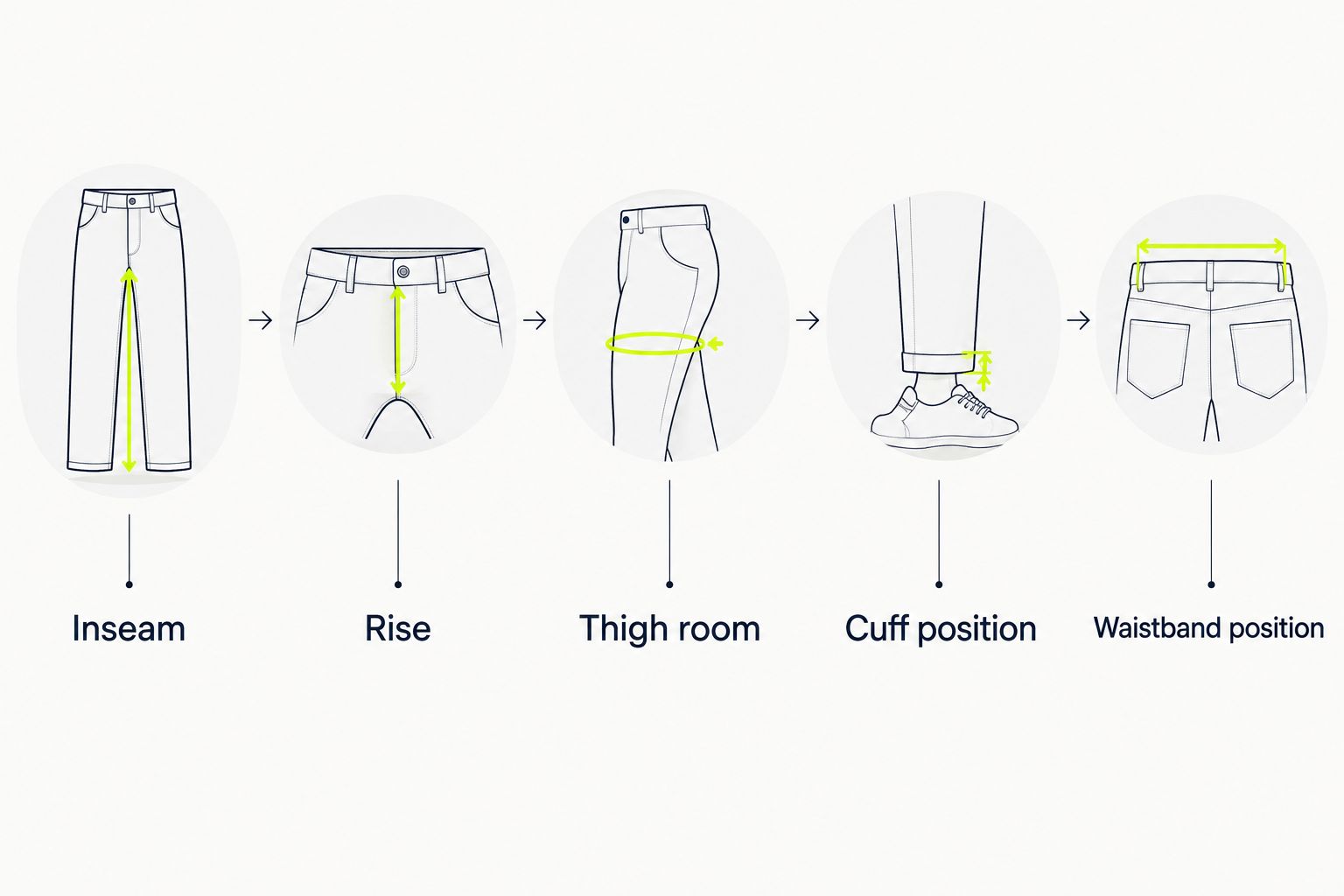
An existing pair is useful even when it fits badly. If the waist feels right but the cuffs sit too high, keep the waist measurement as your reference and look for more leg length. If the cuffs sit correctly but the seat pulls, investigate the cut rather than automatically adding length.
COMPARE THESE JOGGER DETAILS BEFORE CHOOSING
TLF Apparel joggers include athletic and lifestyle styles, but a product name or model’s height is not proof of a long inseam. TLF Apparel joggers are best for men seeking gym-to-everyday styles who verify their inseam before choosing a size.
For your 2026 comparison, the product descriptions provide the following model references. Use them to interpret the fit photos—not to calculate your size or assume a tall fit.
| Style | Best for | Stated model reference | Useful detail | Fit limitation |
|---|---|---|---|---|
| Element Athletic Joggers 2.0 | Men considering an athletic jogger style | Josh: 5 feet 10 inches, 177 lbs, size M | Height, weight, and worn size give context for the photographed fit | Those details do not establish the inseam or room for your thighs |
| GTS Twill Tech Joggers | Men considering a twill jogger style | Zay: 6 feet, 207 lbs, size L | A different model reference helps you assess the styling | A model wearing size L does not confirm a dedicated tall cut |
| Apex 365 Joggers | Men considering a core-performance jogger style | Seth: 5 feet 11 inches, 183 lbs, size Medium | The description identifies a core-performance fabric | Fabric positioning does not tell you where the cuff will sit |
These are style candidates, not a longest-inseam ranking. Compare the current garment measurements before deciding which belongs in your wardrobe.
Keep model weight in context. The same body weight can sit differently through the waist, seat, and legs, so matching a model’s weight does not replace checking your own measurements.
WHY JOGGER FIT VARIES FOR BIG AND TALL MEN
A longer inseam addresses leg length. It does not settle the rest of the fit. Check these factors together when comparing joggers:
- Body proportions: Your leg length and torso length affect fit differently. Two men of the same height do not necessarily need the same inseam.
- Rise and wearing position: The crotch-to-waistband shape affects how the pants sit. Lowering the waistband to gain ankle coverage is not the same as choosing a longer leg.
- Seat and thigh room: Tightness above the knee can pull fabric when you bend. Check those areas before blaming the inseam alone.
- Taper and calf room: A narrow lower leg can catch around your calves instead of falling back into place. Extra length does not resolve that restriction.
- Cuff construction: An elastic cuff sits differently from an open hem. Judge its intended position rather than expecting it to behave like a straight-leg pant.
- Intended silhouette: Cropped, close-fitting, and relaxed styles create different outlines. Decide which look you want before comparing lengths.
For 2026 shopping, keep those checks attached to the exact style you are considering. Do not transfer a fit verdict from one jogger to another simply because both carry the same letter size.
SHOULD BIG AND TALL MEN SIZE UP FOR MORE LENGTH?
Do not size up solely to fix a short inseam. Check the size-specific measurements first; a larger size is not a dependable substitute for a longer-leg cut.
Sizing up makes sense when your waist, seat, or thighs need more room and the resulting length also works. It is a poor solution when the original waist fits but the larger pair needs constant tightening.
Look for these signs during a try-on:
- The waistband stays in place without excessive drawstring tightening.
- The seat allows you to sit without dragging the waistband down.
- The thighs let you bend without pulling sharply across the fabric.
- The calves do not trap the legs after you stand up.
- The cuffs finish where you want them without pulling the pants lower.
If only the length fails, change the length or style—not every other dimension. That keeps your fit decision focused on the actual problem.
ARE CROPPED OR 7/8 JOGGERS A GOOD CHOICE FOR TALL MEN?
Cropped and 7/8 joggers suit men who want an above-ankle look; they are not the starting point when your priority is full ankle coverage. The length label describes an intended silhouette, not a universal finished inseam.
The Train Element 7/8 Cargo Joggers 2.0 description lists Josh at 5 feet 10 inches and 177 lbs wearing size M. That reference helps explain the photographed look, but it does not establish how much ankle you will show.
Choose a cropped style because you want the crop. Do not expect a larger waist size to turn it into a full-length jogger while preserving the same fit everywhere else.
If you prefer covered ankles when sitting as well as standing, make that part of your fit test. A standing-only check misses the position you will use while driving, traveling, or resting between sets.
HOW SHOULD LONGER JOGGERS FIT DURING A WORKOUT?
Longer joggers should let you move without needing repeated waistband or cuff adjustments. Your preferred ankle coverage still matters, but it should not come from pulling the pants below their comfortable wearing position.
Try the movements you actually train. For lifting, check your squat and seated positions; for walking or warm-ups, check your stride and whether the cuffs return to place afterward.
A useful 2026 fitting-room routine is to assess the same pair standing, sitting, and bending. Keep your usual training shoes on so you can judge the hem against the footwear you will wear.
Reject a fit that needs constant correction. A jogger that looks right only after you tug the cuffs down has not passed your movement check, even if its listed inseam appears suitable.
FAQ
Can big and tall men get joggers that cover their ankles?
Yes—choose joggers whose finished inseam and overall cut match your preferred ankle coverage. Check the cuffs while sitting and bending as well as standing.
How do I find joggers longer inseam for tall men without buying a bigger waist?
Compare the finished inseam separately from the waist size. Use a well-fitting pair as your reference, then confirm the rise, seat, and thigh room in the size you need.
Does a tall size always have the same inseam?
Do not assume tall sizes share the same inseam across styles. Check the measurement for the exact garment and size rather than relying on the label alone.
Can I use a model’s height to choose my jogger size?
Use model height as visual context, not as your sizing rule. Body proportions and preferred waistband position affect where the cuffs land.
Are TLF Apparel joggers automatically a long-inseam fit?
Do not treat TLF Apparel joggers as an automatic long-inseam fit. Confirm the exact style’s garment measurements against a pair that already fits you.
Why do my joggers ride up even when the inseam seems right?
Check whether the thighs or calves restrict the fabric during movement. Also check the rise and waistband position before deciding that leg length is the only problem.
Should tall men avoid cropped joggers?
Tall men do not need to avoid cropped joggers if they want an above-ankle silhouette. Choose a different length when your priority is ankle coverage.
What should I ask before choosing a longer jogger?
Ask for the finished inseam in your intended size and how it is measured. Clarify whether the measurement includes the cuff and whether the size chart describes body or garment dimensions.
ONE LAST THING
A jogger can look too short because it is too tight elsewhere. Before replacing a pair for length, notice whether the lower leg catches at your calves or the seat pulls when you sit.
For your next purchase, save a simple fit note alongside your measurements: where you wear the waistband, where you want the cuffs, and which movement exposes a problem. That makes your next comparison more useful than remembering only a letter size.


