

Graphic tees breathe well enough for lifting only when the fabric under the print is built for it. A heavyweight 100% cotton graphic tee traps heat and stays damp through a full session, while a tri-blend or technical-fabric graphic tee — like TLF Apparel's Infi-Dry(TM) training tees — pulls sweat off the skin and dries between sets. The print itself never changes breathability; what matters is the base fabric, how much ink sits on the chest, and whether the cut is fitted or boxy.
- Heavyweight cotton graphic tees (6.5-7 oz) trap heat and stay damp through a lifting session in 2026.
- Tri-blend and Infi-Dry(TM) graphic tees from TLF Apparel wick moisture and dry between sets.
- Large ink placements on the chest and back reduce airflow regardless of the base fabric.
- Standard cotton tees run 5-6 oz; oversized streetwear-style graphic tees often jump to 6.5-7 oz or more.
- Fit matters as much as fabric — a boxy cut traps humid air against the skin even in a technical blend.
Why this matters
Most lifters don't think twice about a graphic tee until the third set of squats, when a cotton shirt starts clinging and a technical one doesn't. That difference isn't random — it's fabric construction, and it's measurable well before you buy. A TLF Train Infi-Dry Swole Tee uses a different base cloth than a screen-printed cotton tee from a mall brand, even if both look identical on a hanger. Knowing what to check on the tag saves you from buying a tee you'll strip off halfway through leg day.
Are graphic tees breathable enough for lifting sessions?
It depends entirely on which of three fabric categories the tee falls into. Here's how they stack up for a lifting session in 2026:
| Fabric Type | Breathability for Lifting | Best For | Verdict |
|---|---|---|---|
| 100% Cotton (heavyweight) | Low — absorbs sweat, dries slowly | Warm-up, lounging, light lifting | Skip for heavy sessions |
| Cotton/Poly Tri-Blend | Moderate — some wicking, softer hand | Moderate-intensity training | Hold for general use |
| Technical Performance (Infi-Dry(TM)) | High — wicks and dries between sets | Heavy lifting, high-rep circuits | Buy for training days |
The cotton category is where most graphic tees still live, because cotton takes screen printing and embroidery cleanly. That's exactly why it underperforms once you're under a bar for 45 minutes.
Cotton graphic tees: comfortable but slow to dry
Standard cotton tees run about 5-6 oz per square yard (roughly 170-180 GSM), and oversized or boxier graphic styles often move up to 6.5-7 oz (220-240 GSM) for a heavier drape. That extra weight looks good on a hanger and holds a print well, but cotton fiber absorbs moisture instead of pushing it to the surface to evaporate. Once you're sweating through a working set, the shirt holds that moisture against your skin instead of releasing it.
Verdict: Skip cotton graphic tees for anything past a warm-up set.
Tri-blend graphic tees: a middle ground
A cotton/poly/rayon blend softens the fabric hand and adds a small amount of wicking capacity from the synthetic fibers mixed in. It's a reasonable pick if you split time between light training and errands, but it's still not built for a 60-minute strength session. Tri-blend graphic tees dry faster than straight cotton, but slower than a true technical fabric.
Verdict: Hold as a general-purpose tee, not a dedicated training piece.
Performance graphic tees: built for the work
This is where Infi-Dry(TM) construction changes the equation. TLF Apparel engineers its training tees — including the Infi-Dry Swole Tee — with moisture-wicking synthetic yarns that move sweat to the fabric surface so it evaporates instead of pooling. That's the same category of fabric behind the TLF Cool Lightweight Cooling Shirt, which trades the cotton hand for a lighter, faster-drying build designed specifically for training sessions.
Verdict: Buy for anyone lifting heavy, training in a warm gym, or stacking multiple sessions in a week.
Why breathability varies
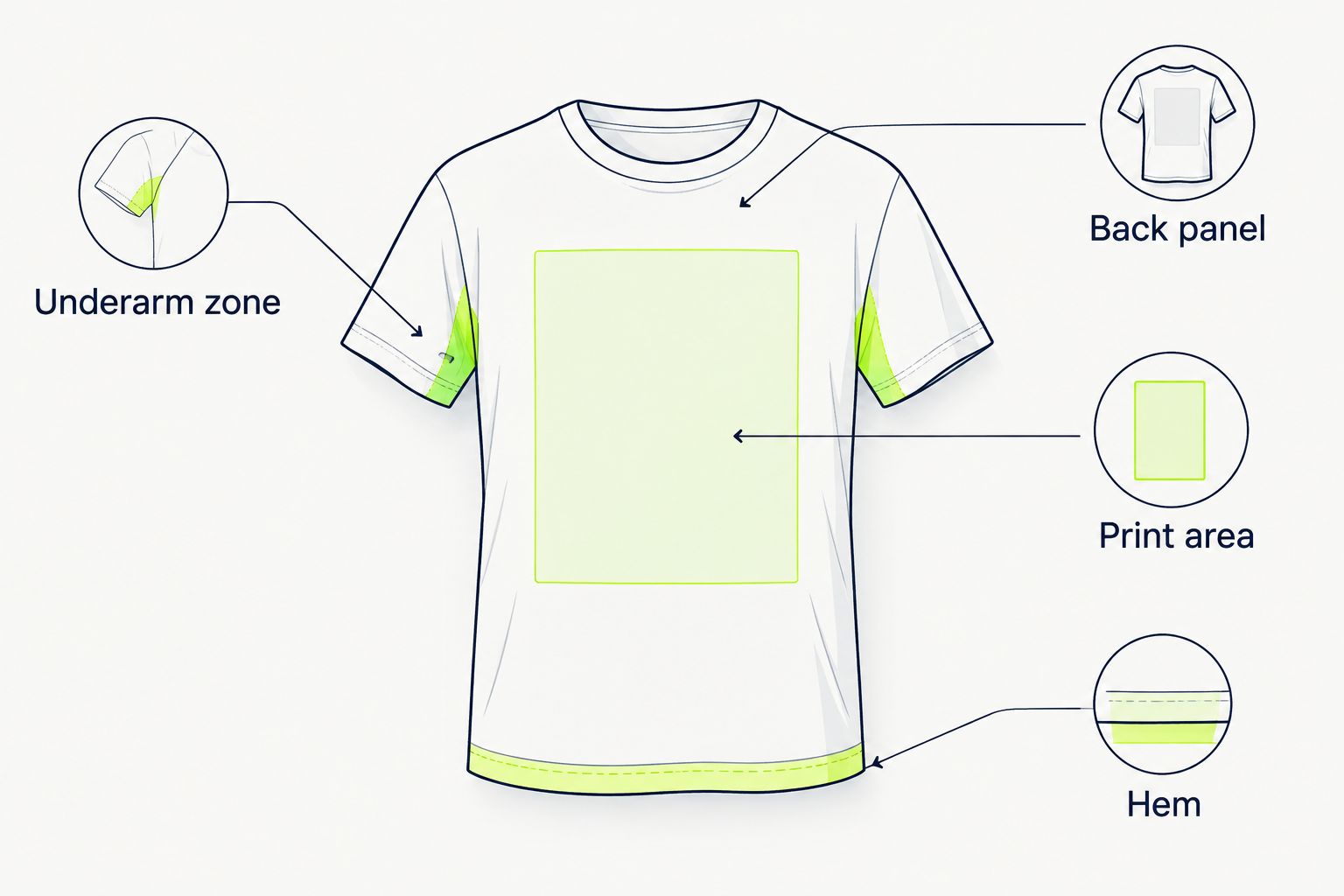
Fabric type is the biggest factor, but it's not the only one. A few variables decide whether a graphic tee holds up under a bar:
- Fabric weight — lighter cloth (5-6 oz) breathes more freely than heavyweight cotton (6.5-7 oz and up)
- Ink coverage — full-chest or back-panel prints reduce the surface area that can actually wick or vent
- Fit — a boxy, oversized cut traps humid air against the skin even in a technical fabric
- Weave/knit structure — open-knit performance fabrics vent better than tight, dense cotton jersey
- Blend ratio — more synthetic fiber in the mix generally means faster drying, less absorption
- Print placement — a small chest logo breathes better than an all-over graphic design
Print style versus performance: they're not the same choice
Graphic tees exist on a spectrum from streetwear statement pieces to gym-specific technical gear, and the print design has nothing to do with which side of that spectrum a shirt lands on. Novelty and humor-driven designs, like the funny ADHD graphic tees built around meme culture, follow the exact same fabric rules as any bold gym-to-street graphic tee — moisture control comes from what's woven into the shirt, not what's screen-printed on it. A cotton meme tee and a cotton gym-branded tee behave identically under a barbell; only the base cloth changes that outcome.
This is why checking the fabric content tag matters more than judging a tee by its graphic. A shirt with a bold design and a technical build gives you both the look and the performance; a shirt with the same design in heavyweight cotton gives you only the look.
Do 100% cotton graphic tees make you sweat more?
Cotton graphic tees don't make you sweat more, but they hold onto the sweat you produce instead of moving it off your skin. That's the core difference between a 5-6 oz cotton tee and a technical-fabric tee during a lifting session — both react to the same sweat output differently.
Is Infi-Dry(TM) breathable enough for heavy lifting?
Infi-Dry(TM) fabric is built specifically to wick moisture away from the skin and dry between sets, which is why TLF Apparel uses it across training tees and long-sleeve tops like the Infi-Dry Long Sleeve. It performs closer to a dedicated compression shirt than a cotton graphic tee, without sacrificing the graphic detailing lifters want on a training day.
Should you size up in a graphic tee for lifting?
Sizing up in any fabric traps more humid air against your torso, which cancels out some of the benefit of a technical build. A true-to-size or slightly fitted cut lets a wicking fabric do its job; an oversized cut holds moisture close to the skin regardless of what the tag says.
FAQ
Are graphic tees breathable enough for lifting sessions in 2026?
Only technical or tri-blend graphic tees breathe well enough for lifting in 2026 — heavyweight cotton graphic tees trap sweat and stay damp through a working set. Check the fabric content tag before the design.
What's the best fabric for a graphic tee at the gym?
A moisture-wicking synthetic blend, like Infi-Dry(TM) construction, is the best fabric for a graphic tee used for lifting. It moves sweat to the surface to evaporate instead of holding it against the skin.
Is cotton bad for gym graphic tees?
Cotton isn't bad for light training or warm-ups, but it performs poorly for heavy lifting sessions because the fiber absorbs moisture instead of wicking it. Heavyweight cotton (6.5-7 oz) is the worst performer of the group.
Do oversized graphic tees breathe worse than fitted ones?
Yes — an oversized cut traps humid air against the torso even in a technical fabric, while a fitted or true-to-size cut lets moisture-wicking fabric do its job. Fit and fabric both matter, not just one or the other.
Does the graphic print itself reduce breathability?
A small chest logo has minimal impact, but a large full-chest or back-panel print reduces the surface area available to vent or wick moisture. Print placement matters more than print size alone.
Can you wear a cotton graphic tee for a light workout?
Cotton graphic tees work fine for warm-ups, mobility work, or low-intensity training where sweat output stays minimal. They start underperforming once a session pushes past 30-40 minutes of sustained effort.
Are tri-blend graphic tees good enough for the gym?
Tri-blend graphic tees offer moderate breathability, better than straight cotton but behind true technical fabrics. They work for general training but aren't the top choice for heavy or high-rep lifting sessions.
One last thing
The fabric weight printed on a tag tells you more than the graphic ever will — a 6.5-7 oz cotton tee and a lightweight technical tee can carry the exact same design and perform in completely different ways once you're three sets into a session. Read the fabric content before you read the graphic.


