

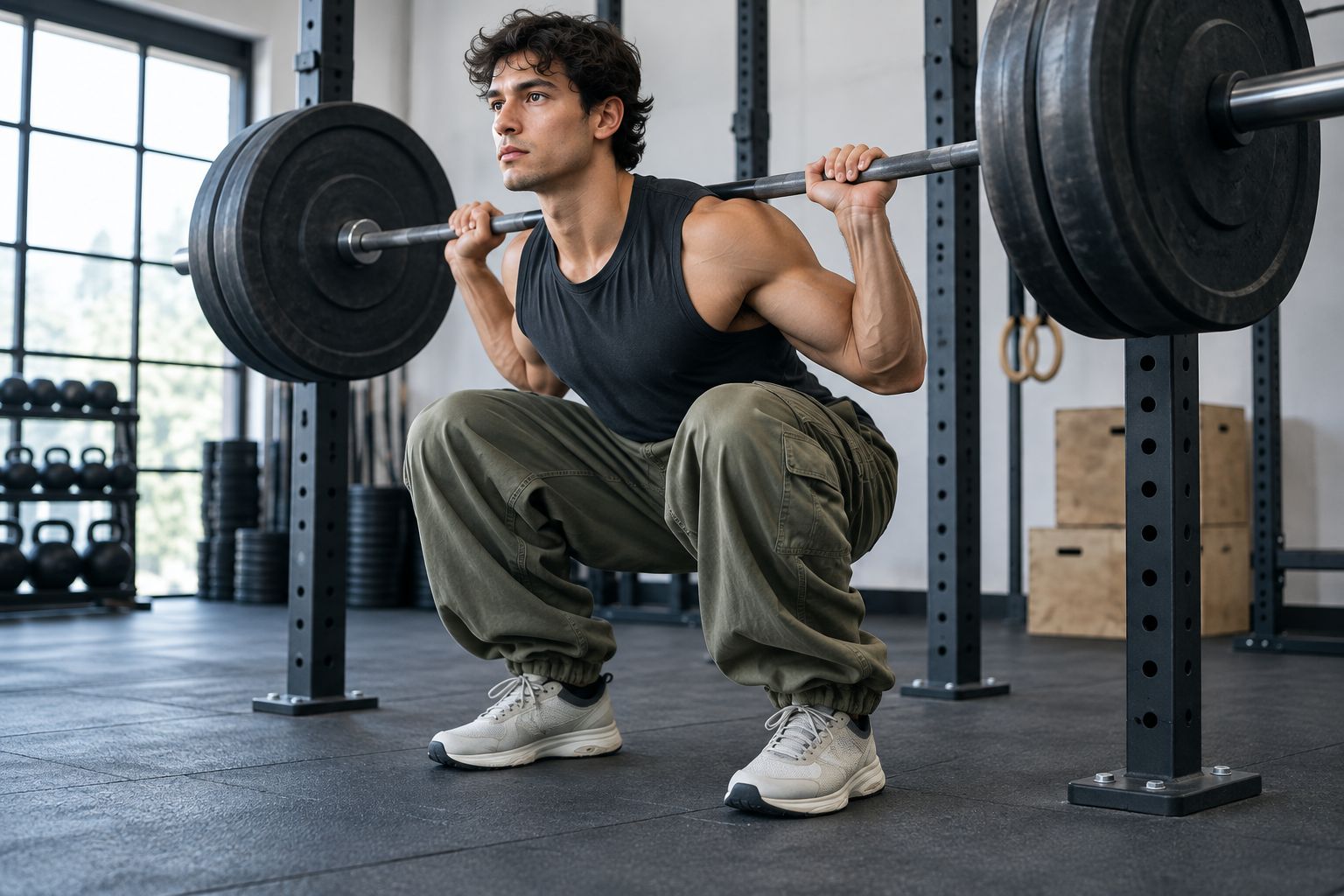
Oversized cargo joggers can handle a real weightlifting session in 2026, but only certain builds pass the test. The ankle cuff has to sit close to the shin, the cargo pockets need to land above the knee instead of at it, and the fabric has to hold its shape once you drop into a full squat. Skip those checks and the same joggers that look good walking into the gym turn into extra material bunching at your knee on every rep, or a pocket flap catching a barbell path on deadlifts.
- Oversized cargo joggers work for weightlifting in 2026 when the ankle cuff is fitted, not loose.
- Pocket placement above the knee keeps fabric clear of squat depth and barbell setup.
- TLF Train Element 7/8 Cargo Joggers 2.0 use a tapered cuff built for squats and deadlifts.
- Wide-leg cargo pants with no cuff catch on plates, pins, and machine handles during heavy sets.
- Fabric weight matters more than pocket count for range of motion in the squat rack.
Why this matters
Most cargo jogger reviews rank them on looks and street style, not on what happens when you rack a bar. That gap matters because the same silhouette that photographs well standing still can restrict a deep squat or snag on a pin loader mid-set. Anyone shopping oversized cargo joggers for weightlifting in 2026 needs to know which construction details actually hold up under load, not just which color drops next. TLF Apparel builds several oversized joggers specifically for training, and the difference between those and a lounge-first cargo pant shows up the moment you hit depth.
Can oversized cargo joggers be worn for weightlifting?
Yes, but the fit category inside "oversized cargo jogger" decides the outcome. A tapered-cuff oversized cargo jogger performs like a normal training jogger with extra room through the thigh. A true wide-leg cargo pant with no cuff behaves more like a lounge pant that happens to have a barbell in the room.
| Fit type | Ankle design | Best for | Verdict |
|---|---|---|---|
| Oversized cargo jogger, tapered cuff | Elastic ribbed cuff at the ankle | Squats, deadlifts, general lifting | Buy |
| Wide-leg baggy cargo pant | Loose, no cuff, wide leg opening | Warm-up, mobility, walking to the gym | Hold |
| Straight-leg cargo jogger | Semi-fitted, light taper | Overhead press, accessory lifts | Buy |
| Skinny-fit cargo jogger | Fitted throughout the leg | Olympic lifts, fast footwork | Buy, less oversized look |
The verdict: an oversized cargo jogger with a tapered cuff is the only wide-fit option that holds up through a full squat, deadlift, and press session in 2026. Anything with a loose, uncuffed ankle opening is fine for the walk to the rack but works against you once the bar is loaded.
Inside TLF Apparel's training line, the TLF Train Element 7/8 Cargo Joggers 2.0 sit in the tapered-cuff category built for squats and deadlifts. For women shopping the same silhouette, the TLF Women's Low-Rise Oversized Cargo Joggers keep the oversized leg but pull the ankle in enough to clear a barbell during setup. A tighter, non-cargo alternative for anyone who wants zero pocket flap during heavy pulls is the TLF Element Athletic Joggers 2.0.
Why fit and design decide whether cargo joggers survive a lifting session
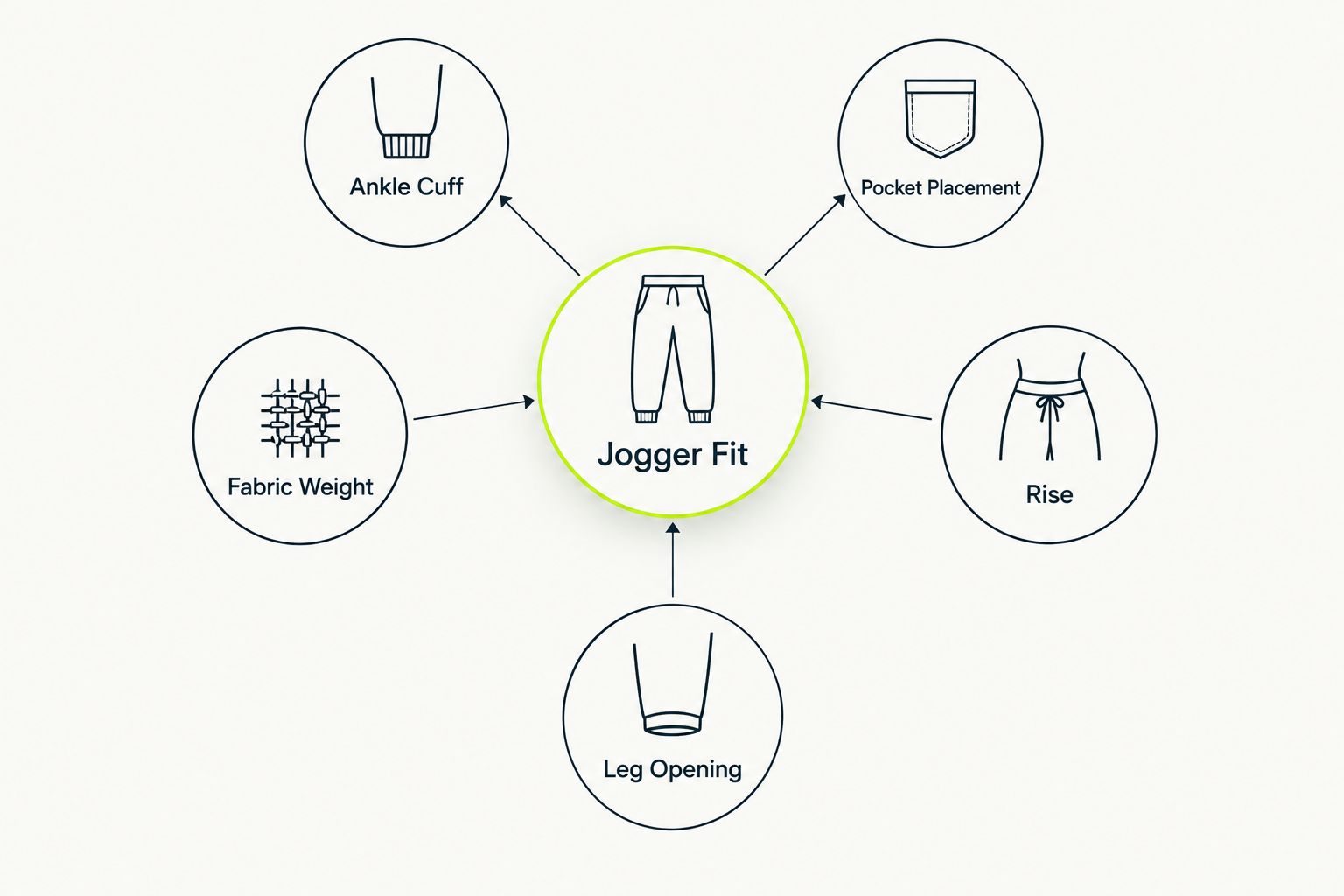
The word "oversized" covers a wide range of construction choices, and only some of them are neutral for lifting. These are the factors that separate a training-ready cargo jogger from a lounge pant with a gym pass:
- Ankle cuff type — an elastic or ribbed cuff keeps fabric volume out of the knee zone during squats; an open, uncuffed leg opening dumps that volume right where your knee bends
- Cargo pocket placement — pockets sitting above the knee stay out of the squat path; pockets at the shin or calf can catch a barbell during deadlift setup
- Fabric weight — a heavier cotton-blend cargo jogger holds its drape and doesn't cling with sweat, but adds resistance during fast footwork or conditioning work
- Rise — a low-rise cargo jogger can gap at the waistband under a loaded belt; a mid or high rise stays put through bracing
- Leg opening width — the wider the leg opening past the calf, the more fabric has to move out of the way at bottom position on a squat
- Drawstring or cinch height — a cinch that sits at the calf instead of the true ankle bone still leaves loose fabric hanging below it
Are oversized joggers good for the gym or just lounging?
Oversized joggers work for both, but the construction details above are what separate a gym-ready pair from a lounge-only pair. A jogger with a fitted cuff and pockets clear of the knee crosses over from couch to squat rack; one with a fully loose leg and low, wide pockets stays better suited to lounging. The full breakdown of which oversized joggers cross over cleanly lives in this guide on oversized joggers for the gym versus lounging.
Do cargo pockets get in the way of squats and deadlifts?
Cargo pockets get in the way when they sit at or below the knee, where they catch on a barbell path during deadlift setup or bunch under a knee sleeve on squats. Pockets placed on the upper thigh, above the knee joint, stay out of both movement patterns. Check pocket height before checking pocket count — one well-placed pocket beats four low ones for lifting.
What jogger fit works best for heavy squats and deadlifts?
A tapered-cuff oversized jogger with a mid-to-high rise and pockets above the knee works best for heavy squats and deadlifts. That combination gives you room through the thigh for depth without adding loose fabric at the ankle or knee where it interferes with bar path or brace stability. Skinny-fit joggers work too, but they trade the oversized silhouette for a closer fit that some lifters find restrictive through the hip crease.
FAQ
Can you deadlift in oversized cargo joggers?
You can deadlift in oversized cargo joggers if the ankle cuff is fitted and pockets sit above the knee. A loose, uncuffed leg opening or low pocket placement can catch on the bar during setup.
Are cargo pockets a problem for squats?
Cargo pockets are a problem for squats only when they sit at or below the knee, where fabric bunches during a deep bend. Pockets on the upper thigh don't interfere with squat depth.
What ankle cuff works best for weightlifting joggers?
An elastic or ribbed ankle cuff works best for weightlifting joggers because it keeps fabric volume out of the knee joint during squats. An open, uncuffed leg opening dumps loose fabric right at the bend point.
Do oversized joggers restrict range of motion?
Oversized joggers don't restrict range of motion when the fabric is lightweight and the rise sits at mid-to-high waist; heavier fabric or a low rise can limit hip flexion during a deep squat.
Should you size down oversized joggers for lifting?
You don't need to size down oversized joggers for lifting if the ankle cuff and pocket placement are already built for movement. Sizing down defeats the point of the oversized fit and can restrict the thigh during a squat.
Can women wear oversized cargo joggers for weightlifting?
Women can wear oversized cargo joggers for weightlifting when the cuff is fitted and the rise stays put under a loaded belt. The TLF Women's Low-Rise Oversized Cargo Joggers keep the oversized leg while tapering at the ankle for squats.
Do cargo joggers work for CrossFit or just powerlifting?
Cargo joggers work for CrossFit only if the fabric is lightweight and the leg opening is tapered enough for fast footwork; heavier cargo fabric built for powerlifting can slow down box jumps and sprints.
One last thing
The detail that trips up most buyers isn't the thigh volume — it's where the drawstring actually cinches. A hem that pulls tight at the calf instead of the true ankle bone still leaves loose fabric hanging below the cinch, and that fabric is exactly what catches at the bottom of a squat. Check where the cinch sits on the leg before you check how roomy the thigh looks in a product photo; that single measurement predicts more about how a jogger performs in the rack in 2026 than the pocket count ever will.


