

Yes, a gym bag can work as a travel bag if it holds your trip essentials and the packed bag meets your airline’s size rules. For a TLF gym bag, check the specific bag’s dimensions and features before treating it as a carry-on: a bag that works for a gym session is not automatically suitable for a flight. This 2026 guide shows you what to check before you pack.
- Can gym bags be used for travel? Yes, when the packed bag fits the trip and your airline’s limits.
- A TLF gym bag is best assessed by its dimensions, closure and compartments—not its name.
- Keep damp workout gear separate from clean travel clothes.
- For flights, check the packed bag’s size against your airline’s current rules before leaving home.
Why this matters
A gym bag is built around what you carry to train; travel adds clean clothes, toiletries and items you need to find in transit. The difference becomes obvious when you have to open the bag at a security checkpoint or pull out a fresh shirt without disturbing used workout gear. If you are choosing between bag styles, start with this guide to gym bags, then judge the bag against your actual trip.
The deciding test is the packed bag, not the empty bag. Soft sides can make a gym bag easier to pack, but an overfilled bag still has to fit within the limits that apply to your ticket. In 2026, check your carrier’s published allowance rather than relying on a bag description or another traveler’s experience.
Can TLF gym bags double as travel bags?
Yes—if the specific TLF gym bag fits what you need to carry and passes the checks below. Do not assume every gym bag has the same capacity, pockets or airline fit. Measure and pack the one you plan to take.
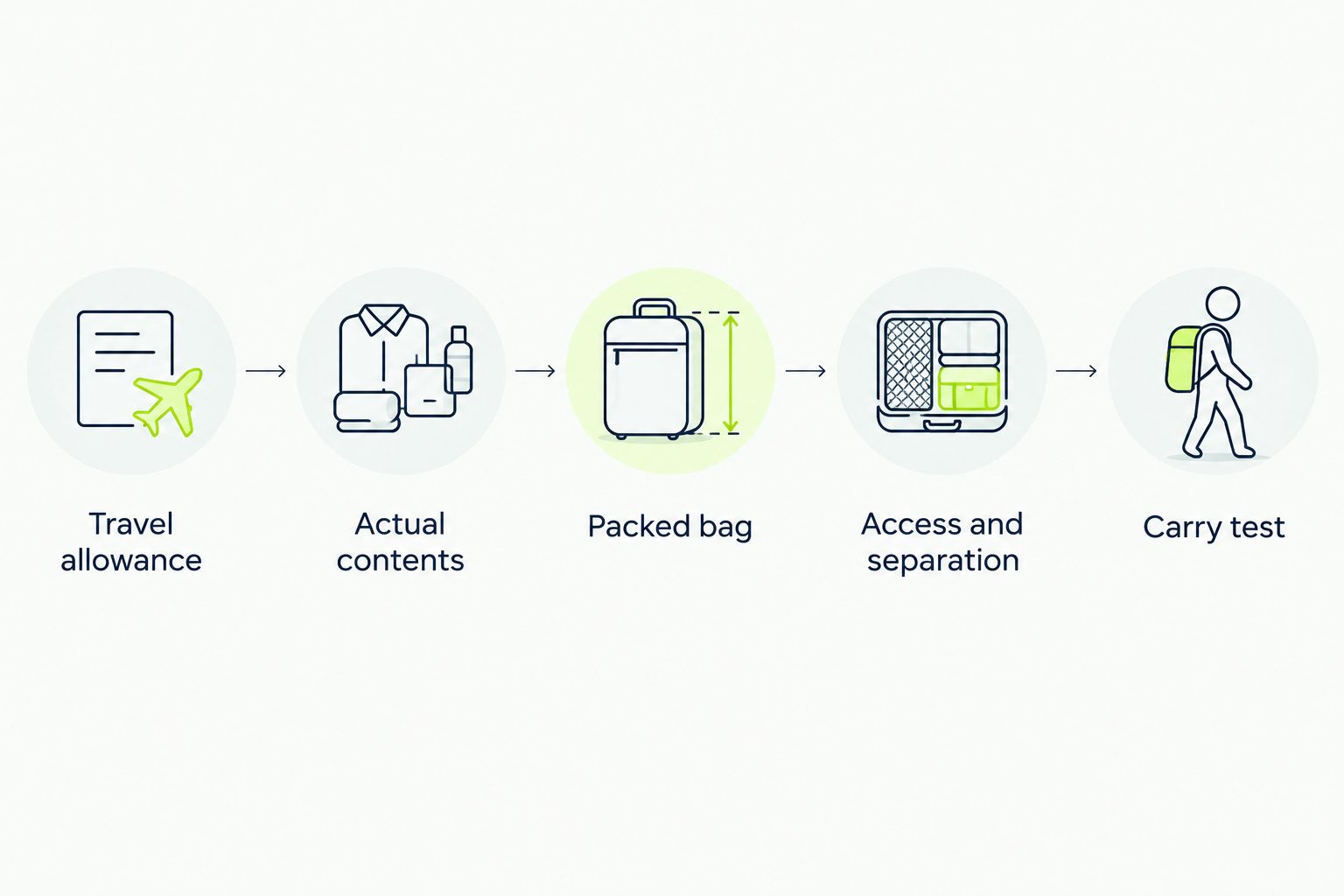
- Check the travel allowance. Find your airline’s current rules for the item you intend to bring: personal item, carry-on or checked bag. Those are different categories, and the label you give your gym bag does not determine which one it qualifies for.
- Pack the actual contents. Add your clothes, shoes, toiletries and anything you need during the journey. Close the bag fully; do not judge its size while it is empty.
- Measure the packed bag. Check its length, width and height at the widest points, including bulging sides and exterior pockets. Compare those measurements with the allowance for your itinerary.
- Test access and separation. Reach your travel documents and other in-transit essentials without unpacking everything. Put used shoes or damp training clothes in a separate pouch so they do not sit against clean outfits.
- Carry it before the trip. Lift and walk with the filled bag. If the load is awkward for the distance you will carry it, a backpack or wheeled suitcase is the better choice.
You can run these checks at home in 2026 without guessing what a product photo means by roomy. A bag that closes, fits the relevant allowance and keeps essentials accessible can serve both purposes. One that fails any of those tests needs a different packing plan.
Gym bag, backpack or suitcase: which works for your trip?
All three can carry workout clothing. Choose by how you will move with the bag, what needs to stay separate and whether you can find your essentials quickly.
| Option | Best for | Advantage | Drawback |
|---|---|---|---|
| Gym bag or duffel | A short trip with training gear and a manageable load | Wide opening makes clothing and shoes easy to pack | Can become awkward to carry when full; organization depends on the bag |
| Backpack | Travel that involves walking with your bag | Keeps your hands free and spreads the load across both shoulders | Shoes or damp gear can crowd clean clothing if you do not separate them |
| Wheeled suitcase | A larger load that you can roll through your route | Takes weight off your shoulders | Less convenient where you must lift or carry it |
Best for a gym-to-trip transition: a gym bag that passes the packed-size and carry tests. Its strength is straightforward access to clothing; its weakness is carrying comfort when the load grows. A backpack wins when you need your hands free. A suitcase wins when carrying the full load is the problem, provided your route suits wheels.
Do not treat the table as an airline approval list. Each option still needs to meet the baggage rules for your booking. That distinction matters whether you travel with a TLF gym bag or a different bag.
What makes a gym bag useful for travel?
A travel-ready gym bag lets you separate clean clothing from the things that make it dirty, reach essentials without a full repack and close securely once filled. Look at the bag you own rather than assuming those features come with the gym-bag label.
Start with the opening. Put your shoes and clothes inside, close it, then try to retrieve a toiletry pouch. If you have to empty the bag to reach it, change your packing layout. A small pouch for items you use in transit keeps them together even if the bag has no dedicated pocket.
Next, check how you will handle used gear. A separate pouch creates a barrier between a worn training outfit and the clean clothes you need later. It does not make damp clothing dry; unpack it when you arrive rather than leaving it sealed with the rest of your trip’s clothes.
Finally, examine the closure and straps while the bag is full. You need it to stay closed when lifted and feel manageable on the part of the journey where you cannot set it down. A comfortable test walk tells you more about travel suitability than a flat product measurement alone.
Why gym-bag travel suitability varies
There is no single verdict for every TLF gym bag—or every trip in 2026. These factors change the answer:
- Airline and fare rules. The allowance attached to your booking determines whether the packed bag can travel as your intended baggage type.
- Packed shape. Clothing can push a soft-sided bag beyond its empty dimensions. Exterior pockets also affect the space it occupies.
- Trip contents. Shoes, a change of clothes and toiletries compete for room. Pack the trip you are taking, not an imagined minimal load.
- Separation needs. Training during the trip creates used clothing that you will want to keep away from clean items.
- Time spent carrying it. A bag that feels fine from your home to a car can feel different when you have to walk with it.
- Access during transit. If you need to retrieve documents or other essentials, their placement matters as much as total capacity.
These are checks, not promised features of a particular bag. If you are shopping, use them to question the product details. If you already own the bag, test it with your actual kit.
How should you pack a gym bag for a trip?
Give each group of items a place before filling the bag. Put clean outfits together, keep shoes apart from them and reserve a pouch for used workout clothing. Position the items you will need during transit where you can reach them without taking out the rest.
For a US flight, pay particular attention to liquids in carry-on baggage. TSA’s standard liquids rule covers containers of 3.4 fluid ounces (100 milliliters) or less within one 1-quart bag. Check TSA’s current instructions and the rules for your itinerary before departure; the fact that a toiletry fits in your gym bag does not make it acceptable at security.
Pack one full trial load, close the bag and measure it again. Then lift it as you would during the trip. This last step catches two different failures: a bag that is too large for the intended allowance and a bag that is unpleasant to carry even though it fits.
If your trip includes a workout followed by other plans, clothing choice can reduce the need for a complete outfit change. TLF Apparel’s Gym-To-Street(R) clothing is designed for training and everyday wear; for example, the Scuba Tech wide-leg sweatpants offer an option to consider when planning what to wear rather than pack. That clothing choice does not change the size or baggage status of your bag.
Can you use a gym bag as an airline carry-on in 2026?
Yes, if the packed gym bag meets your airline’s carry-on rules for your booking. Check the current dimensions and baggage allowance, then measure the filled bag at its widest points. A gym-bag label is not proof of carry-on approval.
Is a gym bag a personal item or a carry-on?
It depends on the packed bag and your airline’s rules. Compare its filled dimensions with the personal-item allowance first; if it exceeds that allowance, check whether it qualifies as a carry-on under your booking. Do not assume that being able to push a soft bag into a smaller space changes its measured size.
Should you choose a gym bag or a backpack for travel?
Choose a gym bag for easy access to a manageable clothing load; choose a backpack when carrying comfort and free hands matter more. Either option needs a plan for shoes and used workout gear. Neither gets an automatic pass on airline size rules.
FAQ
Can gym bags be used for travel?
Yes, gym bags can be used for travel when the packed bag fits your belongings and the rules for your trip. Test access to essentials and keep used workout gear apart from clean clothes.
Can a TLF gym bag double as a travel bag?
Yes, if the specific TLF gym bag meets your packing and carrying needs. For a flight, measure it when packed and compare it with your airline’s current allowance.
Can I take a gym bag as a carry-on in 2026?
Yes, if the filled gym bag meets the carry-on rules for your airline and booking in 2026. Check the allowance before you leave and include bulging sides when you measure.
Does a soft gym bag count as a personal item?
A soft gym bag counts as a personal item only when it meets the applicable airline’s personal-item rules. Its material and label do not decide its baggage category.
How do I keep clean clothes separate from gym gear while traveling?
Put used workout clothing and shoes in separate pouches before placing them beside clean outfits. Unpack damp items when you arrive rather than leaving them sealed in the bag.
Is a gym bag better than a suitcase for a short trip?
A gym bag is better when your packed load is comfortable to carry and you want direct access to clothing. A suitcase is the better choice when carrying that load is the main problem and your route suits wheels.
What should I check before flying with a gym bag?
Check your booking’s baggage allowance, measure the bag after packing and review the rules for anything you plan to carry through security. Make sure the bag closes and that you can retrieve in-transit essentials.
One last thing
In 2026, make your final decision with the bag packed exactly as you will travel. If it fits the allowance but feels awkward to carry, it has passed only half the test. The right travel bag has to work between destinations, not just fit your clothes at home.


