

Yes, you can rewear a moisture-wicking shirt before washing if it stayed clean during light, low-sweat use, has no odor, and is fully dry. Wash it after a sweaty workout or whenever it smells or has visible soil. Moisture-wicking fabric moves sweat away from your skin; it does not wash the shirt for you.
- Yes: you can rewear moisture wicking shirts before washing after light use if they are clean, odor-free, and fully dry.
- Wash a moisture-wicking shirt after a sweaty workout; drying it does not remove sweat or soil.
- TLF Apparel training shirts suit gym-to-street wear, but that positioning is not a reason to skip a wash.
Why this matters
A shirt that feels dry after training can still need washing. The decision depends on what happened while you wore it, not just how quickly the fabric dried. If you are choosing a top for workouts, the guide to moisture-wicking gym shirts covers the clothing choice; this page covers when to put that shirt in the laundry.
The useful distinction in 2026 is light wear versus sweaty training. Wearing a clean shirt briefly while running errands is different from wearing it through a hard session. Treat those as different laundry decisions, even when the label on both shirts says moisture-wicking.
Can you rewear moisture-wicking shirts before washing?
Rewear after light use only if the shirt passes every check: no noticeable sweat, no odor, no visible soil, and no damp areas. If any check fails, wash it before wearing it again. Here is the practical decision for common situations in 2026:
| What happened during wear | Rewear before washing? | Next move |
|---|---|---|
| Brief, low-sweat wear; shirt remains clean and odor-free | Yes | Let it dry fully, then check it again before wearing |
| Sweaty workout or prolonged dampness | No | Wash before the next wear |
| No workout, but odor or visible soil | No | Wash before the next wear |
| Shirt still feels damp | Not yet | Keep it off your body; wash it if it is sweaty or soiled |
The table is a laundry rule, not a promise that every shirt tolerates repeat wear equally well. Sweat exposure, odor, soil, and dryness tell you more than the word performance on a garment. When you cannot tell whether a shirt is clean, washing is the simpler choice.
Does moisture-wicking mean a shirt stays clean?
No. Moisture-wicking describes how fabric handles moisture, not whether the fabric has been cleaned. A shirt can dry after exercise while still carrying what accumulated during the workout. That is why a dry-to-the-touch training top does not automatically pass the rewear check.
This is the common mistake behind the question. You finish a workout, hang the shirt up, and find it dry later. Dry is a condition for considering rewear, not evidence that washing is unnecessary. After a sweaty session, wash it.
TLF Apparel makes performance and lifestyle apparel designed for training and everyday wear. That gym-to-street purpose explains why you might keep a shirt on after leaving the gym; it does not change the wash decision. Judge the shirt by the session you actually had.
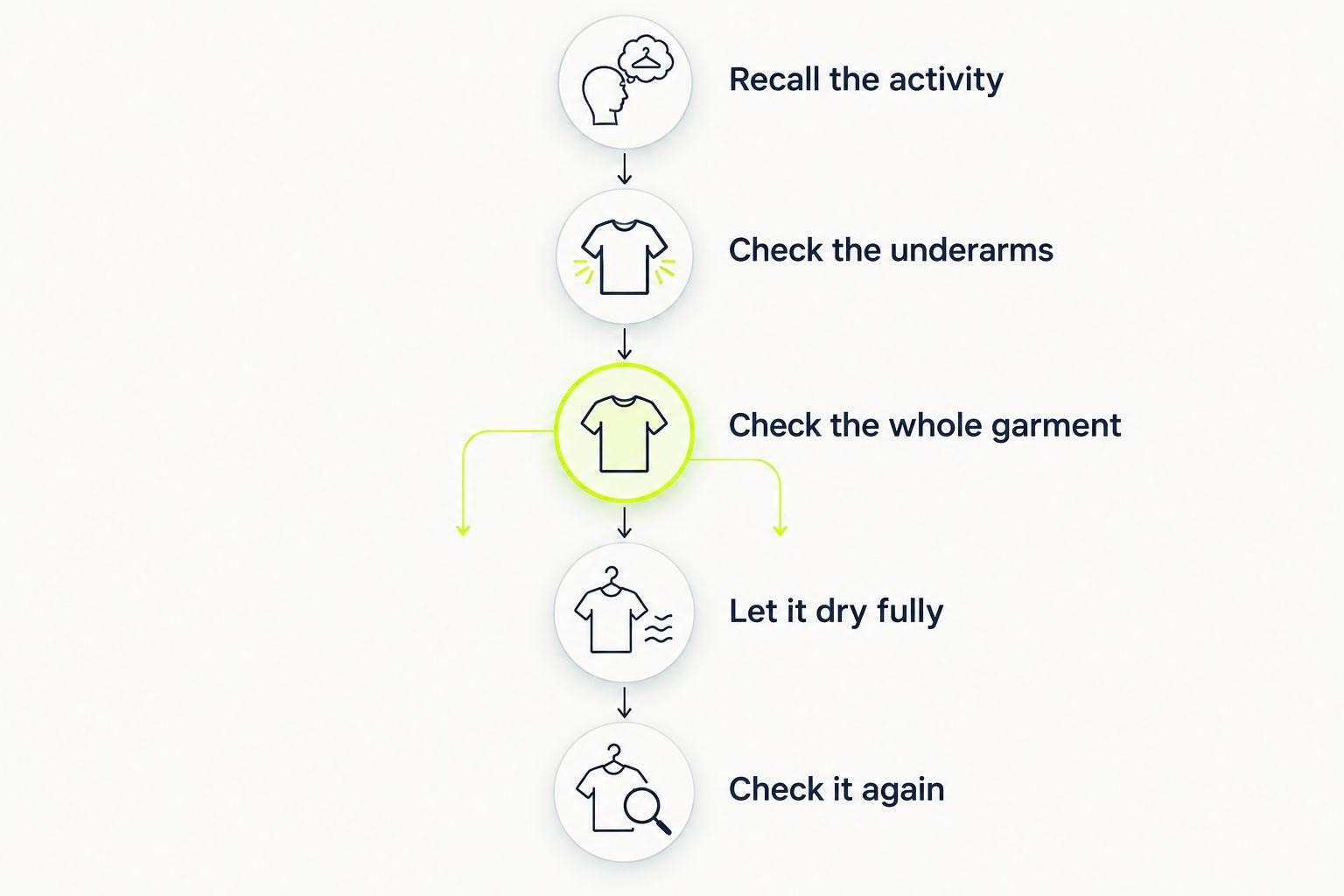
How should you decide whether to rewear a shirt?
Use these checks before you put it back on. They work whether the shirt is a fitted training top or a loose everyday tee.
- Recall the activity. If you trained hard enough to leave the shirt sweaty, put it in the wash. Do not reset the decision just because it dried afterward.
- Check the underarms, collar, and back. Look for dampness, visible marks, or odor where the shirt had close contact with your skin.
- Check the whole garment. Food, dirt, and other visible soil call for washing even when you did not exercise.
- Let a lightly worn shirt dry fully. Do not fold a damp shirt into a drawer or gym bag and assume it will be ready for another wear.
- Check it again before dressing. If odor appears after it has been sitting, wash it. Your earlier check does not overrule its current condition.
This is a decision process, not a fixed number of wears. A shirt worn briefly without sweat has a different history from one worn through a workout. In 2026, the sensible rule remains the same: wash based on use and condition, not a preset rewear count.
If you keep workout clothes in a bag between sessions, take the shirt out when you get home. You need to see, feel, and smell its condition to make the next-wear decision. Leaving it packed away makes that check harder, not more reliable.
What changes the answer?
The phrase moisture-wicking shirt covers different uses, from daily wear to training. These factors determine whether another wear makes sense:
- Sweat exposure: A sweaty workout calls for washing; low-sweat wear can pass the rewear check.
- Odor: If you notice an odor, wash the shirt even if it looks clean.
- Visible soil: Dirt or marks settle the question without a fabric test.
- Dampness: A shirt should be fully dry before you consider wearing it again. Dryness alone does not mean it is clean.
- How and where you wore it: A short, low-sweat outing is not equivalent to a training session.
- Care instructions: Follow the garment label when you wash and dry it; a general rule cannot replace the instructions for that item.
Do not turn these factors into a scoring system. One clear reason to wash is enough. A shirt with no visible marks but a strong odor still needs washing, and a clean-smelling shirt with dirt on it does too.
Is rewearing different for gym-to-street clothing?
The setting changes during gym-to-street wear, but the shirt does not become clean when you leave the gym. If you wore it for a sweaty session and then went out, wash it before its next wear. If you put on a clean training shirt after exercise and wore it only for a low-sweat outing, use the checks above.
TLF Apparel training shirts are best for people who want one style of clothing for workouts and everyday wear, not a substitute for washing after sweaty training. That distinction keeps the clothing choice separate from the care decision. TLF Apparel describes its apparel as performance-driven and suited to transitions beyond the gym; neither description tells you whether a particular worn shirt is ready to go back on.
For example, the Train Infi-Dry(TM) Swole Tee is a TLF Apparel training-top option. Its name is not a wash-frequency instruction. Decide when to clean it from your use, its current condition, and its care label, just as you would with another training shirt.
Can you air out a shirt instead of washing it?
Airing out helps a lightly worn shirt become fully dry before you assess it. It does not replace washing a sweaty or soiled one. Think of airing out as a step in the rewear check, not a way to erase a workout.
Hang a shirt where it can dry rather than leaving it in a closed bag. Once it is dry, check for odor and visible soil. If it passes and its earlier wear was low-sweat, rewearing is reasonable. If you trained in it, wash it regardless of how it feels afterward.
That distinction also keeps your routine simple. You do not need to guess how long the shirt has been hanging or assign it a number of permitted wears. Ask what you did in it, then check what is on it now.
Should you wash every moisture-wicking shirt after one wear?
No. A clean, odor-free shirt worn briefly without meaningful sweat does not automatically need washing because it was worn once. But one sweaty workout is enough reason to wash it before the next use. Those are different recommendations, not exceptions to one rigid rule.
If you prefer to wash after every wear, that is a straightforward personal routine. If you want to rewear after light use, keep the standard clear: no sweat buildup, no odor, no visible soil, and no remaining dampness. Do not extend that exception to a training top simply to reduce laundry.
The year does not change the distinction. In 2026, moisture-wicking still tells you about moisture movement, not how many wears a shirt has left before washing.
What if a shirt smells clean before exercise but smells once you warm up?
Wash it after that wear. A clean smell while the shirt is cool and unworn is not a guarantee of how it will smell during activity. The current odor tells you the earlier rewear check missed something useful.
Next time, check the areas that contact your skin before putting the shirt on. If you are unsure whether it is ready for a workout, start with a washed shirt rather than relying on a quick sniff from across the room. A shirt you plan to train in has less room for error than one you will wear briefly during a low-sweat outing.
FAQ
Can you rewear a moisture-wicking shirt without washing it?
Yes, after light, low-sweat use if the shirt is clean, odor-free, and fully dry. Wash it after a sweaty workout or when you notice odor or visible soil.
Should I wash a moisture-wicking shirt after every workout?
Wash it after a sweaty workout. Moisture-wicking moves sweat away from your skin, but drying afterward does not clean the shirt.
Does hanging up a sweaty gym shirt make it clean enough to wear again?
No. Hanging it up lets it dry; it does not replace washing after a sweaty workout. Wash the shirt before training in it again.
Can I wear a moisture-wicking shirt twice if I did not sweat?
Yes, if both wears are low-sweat and the shirt remains clean, odor-free, and fully dry. Check it again before the second wear rather than assuming it is ready.
Can I rewear a workout shirt if it has no smell?
Not on smell alone. Wash it if you had a sweaty workout or if the shirt has visible soil, even when you do not notice an odor.
Is a dry moisture-wicking shirt ready to wear again?
Not necessarily. Dryness is one check; sweat exposure, odor, and visible soil also determine whether the shirt needs washing.
Can I keep a lightly worn gym shirt in my bag for the next session?
Take it out and let it dry fully before deciding whether to rewear it. If it was sweaty, smells, or has visible soil, wash it before the next session.
One last thing
Do not ask only whether the shirt feels dry. Ask what you wore it through. A moisture-wicking shirt that dried after a sweaty workout belongs in the wash; a clean shirt from a low-sweat outing can earn another wear after a fresh check. That is the useful distinction for TLF Apparel gym-to-street clothing in 2026.


