

Yes, you can wear gym shorts for swimming in 2026, but they work best for a quick dip rather than regular laps. Training shorts can become heavy, clingy, or slow to dry once soaked, while repeated chlorine exposure can weaken stretch fibers not designed for pools. Choose dedicated swim trunks when swimming is the main activity.
- Can you wear gym shorts for swimming? Yes for a quick dip; choose swim trunks for regular laps.
- Chlorine exposure can weaken non-swim stretch fibers and shorten a training short's useful life.
- Mesh drains faster than thick liners, but neither becomes swimwear without a swim-rated label.
- TLF Apparel gym shorts are training gear, not a substitute for dedicated swimwear.
Why this matters
Gym shorts are designed around movement, airflow, and sweat management. Swim trunks are designed around submersion, drainage, and repeated contact with treated or salt water. Those jobs overlap, but they are not the same.
TLF Apparel's Train Element 5 Inch Shorts, for example, have a 5-inch inseam and side vents intended for range of motion during squats and performance training. Those features make sense in the gym, but the available product information does not identify the shorts as swimwear or chlorine-resistant.
That distinction protects your training gear. If a care label does not mention swimming, pools, or chlorine resistance, treat the shorts as workout clothing in 2026.
Can you wear gym shorts for swimming?
You can wear gym shorts for casual swimming when comfort matters more than speed, drainage, or long-term fabric care. They are reasonable for wading, cooling down after an outdoor workout, or getting into the water when you did not pack swimwear. They are a weak choice for lap swimming, water sports, or repeated pool sessions.
| Option | Best for | Main advantage | Main drawback |
|---|---|---|---|
| Lightweight gym shorts | A quick dip after training | Comfortable before entering the water | Pockets and liners can retain water |
| Mesh gym shorts | Wading or brief casual swimming | Open construction drains more easily | Mesh may cling or become more revealing when wet |
| Compression-lined gym shorts | Training before a brief swim | Close support during exercise | The liner stays against wet skin and can chafe |
| Swim trunks | Regular pool or ocean use | Designed to drain and dry after submersion | Less specialized for lifting and gym movements |
| Board shorts | Beach and surface water activities | Water-focused shell and secure fit | A longer cut can feel restrictive during leg training |
For regular swimming in 2026, swim trunks win because the entire garment is designed around water rather than sweat. Gym shorts remain the backup option, not the default.
When are gym shorts acceptable for swimming?
Gym shorts are acceptable when the swim is brief, the facility permits them, and you can rinse and dry the garment afterward. A spontaneous jump into a pool or a short ocean dip does not require a complete wardrobe change if you accept the slower drying time.
They also work for mixed sessions where most of your time is spent training on land. If you run, lift, or play a beach sport before entering the water, lightweight gym shorts can be more practical than changing twice. The trade-off begins after submersion: wet pockets pull downward, fabric sticks to your legs, and a training liner can remain damp.
Check the facility's clothing policy before entering a public pool. Some pools require clothing intended for swimming, while others permit clean athletic shorts without exposed hardware.
What happens to gym shorts in a pool?
The result depends on the fabric and construction, but water changes how every component behaves. A dry waistband feels secure because its elastic and drawcord support a light garment. Once the shorts absorb water, that waistband must support additional weight while you kick, turn, and climb out.
Pockets create another problem. Open pockets fill during movement and add drag, while zippered pockets can trap water until you leave the pool. Empty every pocket before swimming, especially if it contains a phone, key fob, paper, or wired earphones.
The liner deserves the closest attention. A workout liner manages sweat during running or lifting, but it is not automatically a swim brief. A wet liner sits directly against the inner thigh, so seams that felt comfortable during a dry workout can rub during repeated kicking.
Chlorine is the long-term concern in 2026. Repeated exposure can degrade elastane, the stretch fiber used in many fitted waistbands and compression liners. Dedicated swimwear is selected and constructed for regular water exposure; ordinary activewear should not be assumed to have the same resistance.
Can you wear gym shorts in the ocean or a lake?
You can wear gym shorts in the ocean or a lake for casual swimming, but rinse them with fresh water afterward. Salt, sand, sediment, and organic debris can remain in pockets, liners, and folded seams after the surface looks dry.
Ocean swimming also adds waves and current. A loose waistband that feels fine on land can shift in moving water, so tighten the drawcord before entering. Avoid carrying anything in the pockets, and do not rely on ordinary gym shorts as safety equipment.
Lake water does not contain pool chlorine, but that does not make every training fabric water-ready. The same problems with retained water, slow drying, pocket drag, and wet seams remain. For repeated open-water sessions in 2026, use apparel intended for that activity.
Why suitability varies between gym shorts
Two pairs labeled gym shorts can behave differently in water. Check these factors before deciding whether your pair can handle a brief swim:
- Fabric composition: Polyester and nylon constructions generally absorb less water than cotton-heavy shorts. Elastane adds stretch but needs protection from repeated chlorine exposure.
- Liner type: An open mesh liner drains differently from a close compression liner. The closer the liner sits against your skin, the more its wet seams matter.
- Pocket construction: Deep side pockets collect more water than a streamlined shell without pockets. Zippers do not guarantee drainage.
- Waistband security: A working drawcord matters because soaked fabric places more load on the elastic waistband.
- Garment color and coverage: Thin or light-colored material can look different when saturated. Check coverage before wearing the shorts in a shared pool.
- Care instructions: The label is the deciding source. If it warns against chlorine or recommends immediate rinsing, follow that direction.
A 4-inch fitted short, a 5-inch training short, and a 7-inch loose short will not feel identical in water. Inseam length changes coverage, but construction determines whether the garment drains, stays secure, and avoids rubbing.
How do you check gym shorts before swimming?
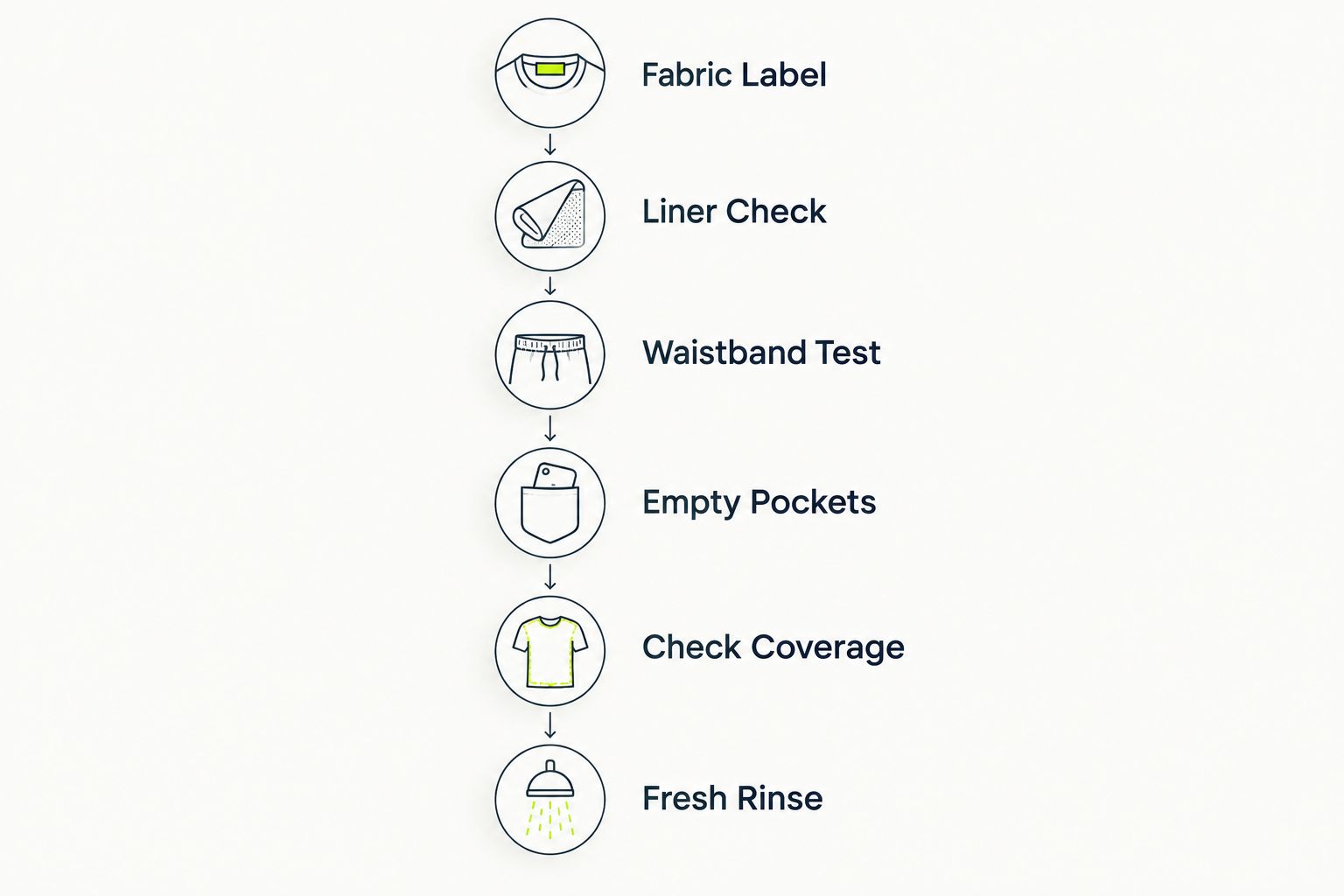
Use this quick inspection before entering the water:
- Read the fabric label. Look for the exact fiber composition and any warning about chlorine, salt water, or soaking.
- Inspect the liner. Confirm that it sits flat and does not have thick seams in areas affected by kicking.
- Test the waistband. Tighten the drawcord and make sure it stays tied under tension.
- Empty every pocket. Remove electronics, keys, cards, paper, and anything that can damage the fabric or become lost.
- Check coverage when wet. Test the shorts under clean water at home if thin material or light colors raise a concern.
- Plan the rinse. Bring dry clothing and rinse the shorts with fresh water after leaving the pool, ocean, or lake.
Do not test unfamiliar shorts during a long session. Start with shallow water, confirm that the waistband stays secure, and leave the water if the liner rubs or the fabric restricts your kick. That simple check prevents discomfort from becoming the only thing you remember about the swim.
Are TLF Apparel gym shorts made for swimming?
TLF Apparel describes its shorts as workout and lifestyle apparel built around training, performance, fit, and Gym-To-Street® use. The available product information for its training shorts does not state that they are swimwear, so they should not be treated as pool shorts unless the specific garment label says otherwise.
TLF Apparel gym shorts are best for lifters who need training range of motion and Gym-To-Street® styling, not swimmers doing regular laps. Their advantage is land-based versatility before and after a workout. Their drawback in this context is clear: training performance does not establish chlorine resistance or swim-ready drainage.
If you want TLF Apparel shorts for hot land-based sessions, compare inseam, liner, and ventilation rather than assuming the lightest option is suitable for swimming. The 2026 guide to gym shorts for men covers those training-focused criteria.
Can you swim in gym shorts with a liner?
You can swim briefly in gym shorts with a liner, but the liner does not automatically make them swim trunks. Training liners provide support and sweat management during exercise; swim liners are selected and cut for repeated water exposure.
A close compression liner can retain water against your skin, while a loose mesh liner can shift during kicking. Neither design should be called chlorine-resistant without an explicit statement from the manufacturer. If you regularly wear a base layer, this guide explains when you can wear compression shorts under gym shorts.
Are mesh gym shorts better for swimming?
Mesh gym shorts usually drain more freely than dense, multi-layer training shorts, so they are the better emergency option for a brief dip. That does not make them equivalent to swim trunks in 2026.
The open structure can cling after saturation, and some mesh becomes more revealing when wet. Mesh shorts can also include a waistband, liner, or trim made with stretch fibers that remain vulnerable to repeated chlorine exposure. Use them casually, then rinse and air-dry them according to the care label.
Should you wear underwear under gym shorts when swimming?
Ordinary cotton underwear is a poor layer for swimming because it absorbs water, dries slowly, and bunches beneath the shorts. A built-in gym liner already occupies that layer, so adding underwear usually creates more wet fabric rather than more useful support.
If the shorts have no liner, use a swim-specific base layer or change into swimwear. Do not assume a liner replaces underwear in every dry training situation; gym shorts with liners and underwear require a separate fit and comfort decision.
FAQ
Can you wear gym shorts for swimming?
Yes, you can wear gym shorts for a brief casual swim, but swim trunks are better for regular laps. Gym shorts can retain water, chafe when wet, and lose stretch after repeated chlorine exposure.
Will chlorine ruin gym shorts?
Repeated chlorine exposure can weaken elastane and affect the fit of gym shorts over time. Rinse the shorts with fresh water after swimming and follow the garment's care label.
Can you swim in polyester gym shorts?
You can swim casually in polyester gym shorts, but polyester content alone does not make a garment swimwear. The liner, waistband, pockets, seams, and stretch fibers also determine how it performs when wet.
Are gym shorts allowed in public pools?
Public-pool clothing rules vary by facility. Check the posted policy because some pools require swim-specific garments while others permit clean athletic shorts without exposed hardware.
Do gym shorts dry as fast as swim trunks?
Gym shorts generally dry less predictably than swim trunks because training liners, pockets, and waistbands can retain water. A lightweight mesh pair can dry faster than a dense lined pair.
Can you wear compression shorts in a pool?
You can wear compression shorts for a short pool session, but their close-fitting stretch fabric is not automatically chlorine-resistant. Repeated use can reduce elasticity unless the label identifies the garment as swim-ready.
Are board shorts better than gym shorts for swimming?
Board shorts are the better option for regular swimming and beach use because they are designed around water exposure. Gym shorts are the better option for lifting, running, and mixed land-based training.
What should you do after swimming in gym shorts?
Rinse gym shorts with fresh water, remove water from the pockets, and dry them according to the care label. Do not leave the wet shorts bundled inside a gym bag.
One last thing
The liner, not the outer shell, is often the deciding factor. Shorts can look lightweight and water-ready from the outside while hiding a compression layer that remains wet against your skin.
For a single unplanned dip in 2026, wear the gym shorts and rinse them afterward. For recurring pool, lake, or ocean sessions, keep dedicated swimwear in your bag and protect your TLF Apparel gym shorts for the training they were designed to handle.


