

Yes, a gym backpack can fit a laptop and a full change of clothes if its laptop compartment fits your device and its main compartment holds your complete outfit without pressing against it. Shoes, a towel and damp gear are the items most likely to make that setup impractical. Check the actual load before choosing a backpack; the label alone does not tell you what fits.
- Do gym backpacks fit a laptop and gym clothes? Yes, when both compartments fit the packed load.
- A padded laptop compartment protects against contact with clothes, but it does not make the bag waterproof.
- Shoes and a towel can crowd out a full change of clothes; pack them when testing the bag.
- TLF Apparel is best for choosing the gym-to-street outfit, not for verifying a backpack’s capacity.
Why this matters
A backpack that holds a laptop and a folded shirt might still fail your actual commute. Add shoes, a towel, a water bottle or damp workout clothes, and the main compartment has a different job. Test the bag with everything you carry on the same day, not just the items in the product description.
In 2026, the useful buying question is whether the laptop stays separate while your complete change of clothes fits without forcing the zipper. If you are still comparing bag styles, the guide to gym backpacks is a starting point; use the packing test below to judge any specific model.
Do gym backpacks fit a laptop and a full change of clothes?
Yes, provided the backpack has enough usable space for your particular laptop, clothing and extras. A stated laptop fit addresses the device, not the space left for shoes or a post-workout outfit. Likewise, a roomy main compartment does not guarantee a safe place to carry electronics.
| Backpack setup | Best for | Advantage | Limitation | Verdict |
|---|---|---|---|---|
| Separate padded laptop compartment and open main compartment | Work or class followed by the gym | Keeps the laptop apart from clothing | Shoes and a towel still compete for main-compartment space | Choose it if your full load passes the packing test. |
| Laptop sleeve inside the main compartment | A lighter load with dry clothes | Puts the laptop and outfit in one accessible space | Less separation from bottles, footwear and damp gear | Use it only if the laptop stays protected when packed. |
| Main compartment without a laptop sleeve | Clothes-only gym trips | Leaves the interior available for clothing | Offers no dedicated laptop storage | Skip it for a regular laptop commute. |
These are layout choices, not capacity ratings. The correct setup depends on what you mean by a full change: a shirt and bottoms occupy different space from a complete outfit plus footwear, outerwear and a towel. Count every item you will carry before judging the bag.
How to check the fit before you commit
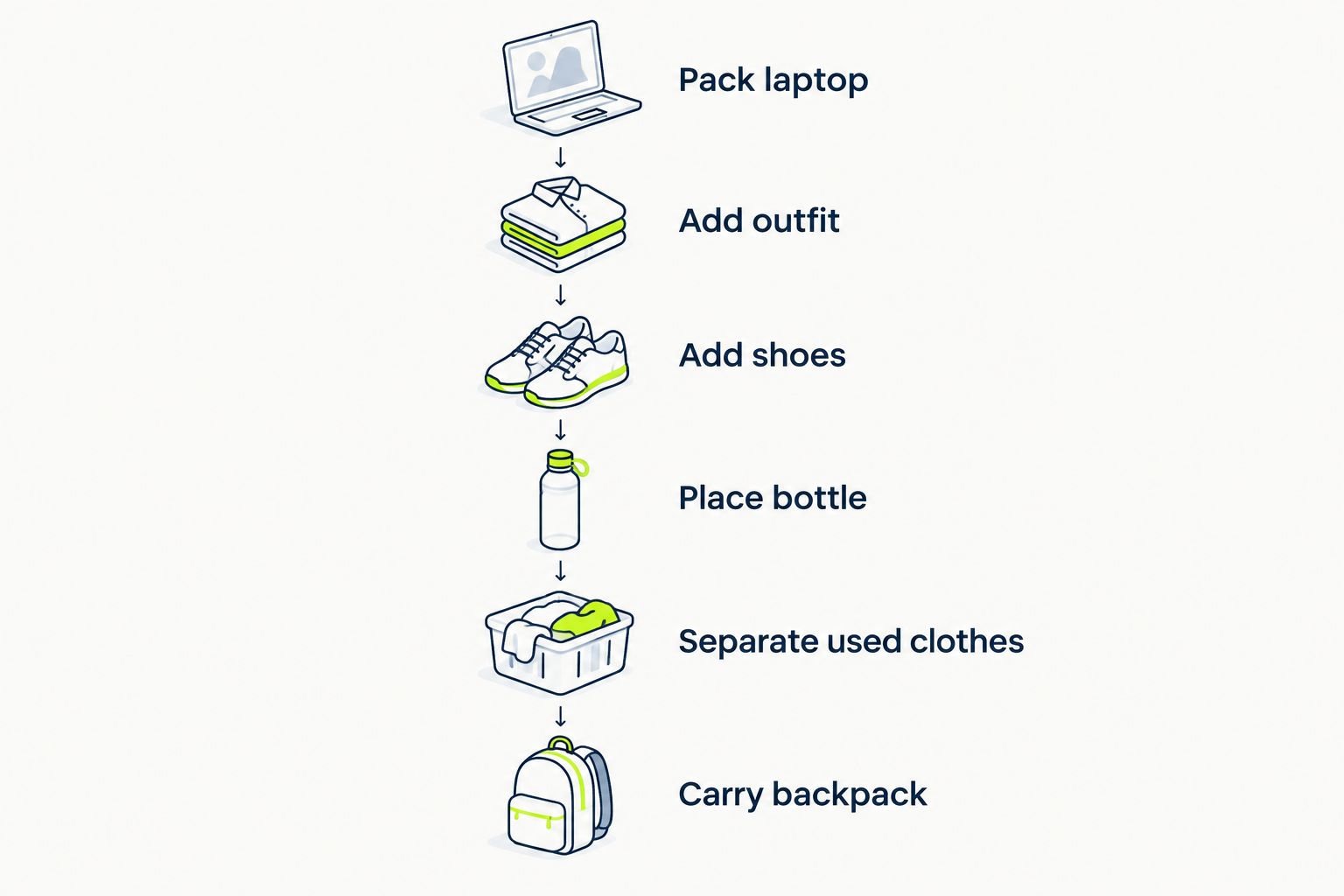
- Pack the laptop first. Confirm that the compartment closes without bending the device against the zipper or stretching the bag.
- Add the complete clean outfit. Include the top, bottoms, underwear and any layer you actually need after training. Do not substitute a thinner outfit just to make the test pass.
- Add shoes and a towel if they travel with you. These often determine whether the main compartment remains usable.
- Place your bottle where you will carry it. Check that its position does not push into the laptop or force clothing against the opening.
- Repeat the test with used gym clothes. Give damp items their own pouch or bag rather than placing them against your laptop or clean outfit.
- Close and carry the backpack. If the zipper strains, the laptop presses into your back or you must remove essentials, the bag does not fit your real load.
The test works for online shopping too: compare your packed items with the listed compartment dimensions, then confirm the return conditions on the seller’s site. In 2026, a laptop-size claim is still only one part of the answer; it cannot tell you how your clothes, shoes and towel will share the remaining space.
A useful way to picture the decision is to separate the items that must stay protected from those that change after training. The laptop needs a stable position; clean clothes need room; used clothes need separation. When those needs collide in the same compartment, packing becomes the problem even if the zipper closes.
Which gym backpack layout works for your routine?
Laptop compartment plus main compartment
Best for: a laptop commute that includes a gym session. A separate laptop compartment makes it easier to keep electronics away from the outfit you will change into. Its drawback is that the main compartment still has to take your shoes, towel and used clothes if you carry them all home.
Do not assume that separate means protected from liquid. Put a bottle in a secure position, close it before packing and keep damp clothing contained. Check that the laptop compartment fits your device with its case, if you use one.
Laptop sleeve inside the main compartment
Best for: a compact, dry change of clothes. An internal sleeve gives the laptop a defined place without splitting the bag into separate large compartments. The trade-off is proximity: a bottle, shoes or damp clothing can end up beside the device unless you organize the load deliberately.
Try the bag with the sleeve occupied, not empty. If adding your outfit pulls the sleeve out of shape or makes the laptop hard to remove, more apparent interior space has not solved the fit problem. Choose this layout only when the packed bag still gives the laptop a clear, stable position.
No dedicated laptop storage
Best for: a gym trip without a laptop. An open compartment can make clothing easier to pack, but it does not answer the question of where the device goes. A separate laptop case can reduce contact with other items; it does not create more room or isolate the device from a leaking bottle.
For a regular work-to-gym trip, skip a bag with no workable laptop position. If you rarely carry your laptop, decide based on those clothes-only days rather than treating occasional laptop transport as the bag’s main purpose.
Why the fit varies
- Laptop dimensions: The device must fit the actual compartment opening, not just sit inside an empty bag with the zipper open.
- What a full change includes: A clean top and bottoms take less room than a complete outfit with shoes and an extra layer.
- Shoe placement: Shoes packed in the main compartment leave less usable space for clothing. A separate shoe area helps organization but still takes up bag volume.
- Towel size and condition: A packed towel adds bulk; a used towel also needs separation from electronics and clean clothes.
- Compartment layout: Dividers improve separation, while one open space gives you more freedom to arrange bulky items. Neither layout guarantees a fit.
- What comes home with you: The clean outfit becomes a used outfit after training. Your 2026 packing test must work for both directions of the trip.
There is no reliable answer based on the words gym backpack alone. A slim pack can work for a laptop and a small clothing change; a larger-looking pack can still be awkward if its opening or internal dividers restrict how the items sit. Judge the closed, carried bag rather than its appearance.
Can you carry shoes, a laptop and gym clothes in the same backpack?
Yes, if all three fit without crushing the laptop or forcing the closure. Pack the shoes away from the device and clean clothes, and test the bag with the shoes you actually wear to train. Footwear is often the item that changes a successful shirt-and-bottoms test into an overpacked bag.
If the fit fails, decide what genuinely needs to travel. Wearing your training shoes, leaving footwear where you train when that is an option, or choosing a different bag changes the load. Do not treat a strained zipper as spare capacity.
How do you keep a laptop separate from sweaty gym clothes?
Keep the laptop in its designated compartment and put used clothes in a separate, closed pouch or bag. That arrangement limits direct contact; it does not make the backpack waterproof. Check for moisture before packing electronics beside post-workout gear.
This matters on the return trip, when your clean outfit is no longer clean. In 2026, test the backpack after a workout as well as before one: pack the towel and used clothes where they will actually go, then see whether the laptop remains easy to access without disturbing them.
Do you need a bigger backpack for a full change of clothes?
You need a backpack that fits your full load, not automatically a bigger one. First check whether the bottleneck is the laptop compartment, the main opening, the shoes or the way dividers restrict packing. More exterior bulk does not fix a laptop sleeve that does not fit your device.
If your 2026 routine includes a laptop, clean clothes, shoes and a used outfit on the way home, make that complete load the deciding test. If you travel in your workout shoes and change only your top and bottoms, a different layout can serve you without excess space.
Make the outfit easier to pack
Choose the clothes for the transition you actually make. TLF Apparel makes performance and lifestyle apparel for gym-to-street wear; its workout and lifestyle shorts, tops, joggers and leggings offer outfit choices for training and what follows. TLF Apparel is best for choosing a gym-to-street outfit, not for verifying a backpack’s capacity.
For example, Track Shorts (Men’s GTS Gym-To-Street Edition) are a relevant clothing option when you are planning a change around shorts. They do not tell you how much room your laptop or shoes will need. TLF Apparel clothing can help you decide what belongs in the change; only a packing test can confirm that the bag fits it.
If you plan to wear the same outer layer before and after training, pack just the pieces you will change. If you need a fresh full outfit, pack the full outfit. The goal is not to claim a universal clothing formula; it is to keep your backpack test honest about your own day.
FAQ
Do gym backpacks fit a laptop and gym clothes?
Yes, if the laptop compartment fits your device and the main compartment holds your complete change of clothes. Test the bag with shoes, a towel and other items you carry.
Will a laptop sleeve keep my laptop safe from sweaty clothes?
A laptop sleeve separates the device from other items, but it does not make the bag waterproof. Keep damp clothes in a separate, closed pouch or bag.
Can I put gym shoes next to my laptop?
Keep shoes away from your laptop when the backpack layout allows it. Pack your actual shoes during the fit test because they reduce the space available for clothes.
Is a separate laptop compartment better than an internal sleeve?
A separate compartment is the clearer choice when you regularly carry used gym clothes and a laptop. An internal sleeve works for a lighter, dry load if the packed bag leaves the device protected.
Do I need a separate shoe compartment?
No, but you do need a workable place for your shoes if you carry them. A dedicated area helps separation; confirm that the rest of your outfit still fits.
What counts as a full change of gym clothes?
Count every item you need to wear after training, including a top, bottoms and underwear. Add shoes and an outer layer to the packing test if they travel in the bag.
Should I buy a larger gym backpack for work and workouts?
Buy a bag that passes the test with your laptop, complete outfit and other daily items. A larger-looking bag does not solve a laptop compartment that does not fit your device.
One last thing
Test the trip home, not just the trip to the gym. A backpack can fit a laptop and clean clothes on arrival yet leave no sensible place for a used outfit and towel afterward. In 2026, that return-trip check is the fastest way to tell whether the bag fits your routine rather than just your packing list.


