

Mesh gym shorts hold up for outdoor training in warm, dry conditions, but a loose open-weave mesh loses ground fast once wind, rain, or brushy trails enter the picture. The short answer: yes for heat management on runs, sprints, and yard-based circuits; no for wind-blocking, water resistance, or bug protection on rougher terrain.
- Do mesh shorts work for outdoor training? Yes for hot, dry sessions like running and HIIT circuits, not for wind or brushy terrain.
- Tight-knit mesh with a liner, such as TLF Apparel's Micro Mesh DNA fabric, holds shape better outdoors than loose open-weave mesh.
- Wind cuts straight through mesh gym shorts, which is why layering matters on cold-morning outdoor sessions in 2026.
- Dark-colored mesh shorts absorb more heat outdoors than light colorways during midday training.
Why this matters
Mesh gets marketed as the default "breathable" fabric for gym shorts, but breathability outdoors is a different job than breathability in a climate-controlled gym. Outdoors, mesh shorts deal with wind chill, ground debris, UV exposure, and sweat evaporation rates that don't match an indoor studio. Picking mesh shorts for a treadmill session and picking them for a trail run outdoors are two different calls, even though the product tag says the same thing.
TLF Apparel builds several shorts around mesh and mesh-adjacent fabrics, including Train Element 5 Inch Shorts, which use side vents instead of full mesh panels to manage airflow during outdoor training. That distinction, vented seam construction versus true open-weave mesh, decides a lot of the outdoor performance conversation below.
Do mesh shorts work for outdoor training?
Mesh gym shorts work best outdoors when the session is hot, dry, and mostly stationary or straight-line movement, like road running, sprint intervals, or a backyard HIIT circuit. They start to underperform once the environment adds wind, moisture, or unpredictable ground contact.
| Fabric type | Breathability outdoors | Wind resistance | Best outdoor use | Liner typically needed |
|---|---|---|---|---|
| Open-weave mesh shorts | High | Low | Hot, dry runs and sprints | Yes, for coverage |
| Vented woven nylon (e.g. Element Tech DNA fabric) | Medium-high | Medium | Mixed-weather training, sled work | Sometimes built-in |
| Compression shorts | Low-medium | Medium-high | Cold or windy outdoor sessions | No, worn as a base layer |
The table holds up across most outdoor training scenarios in 2026: mesh wins on hot days, loses on windy or wet ones, and vented woven fabric splits the difference.
Mesh shorts for outdoor running and sprint work
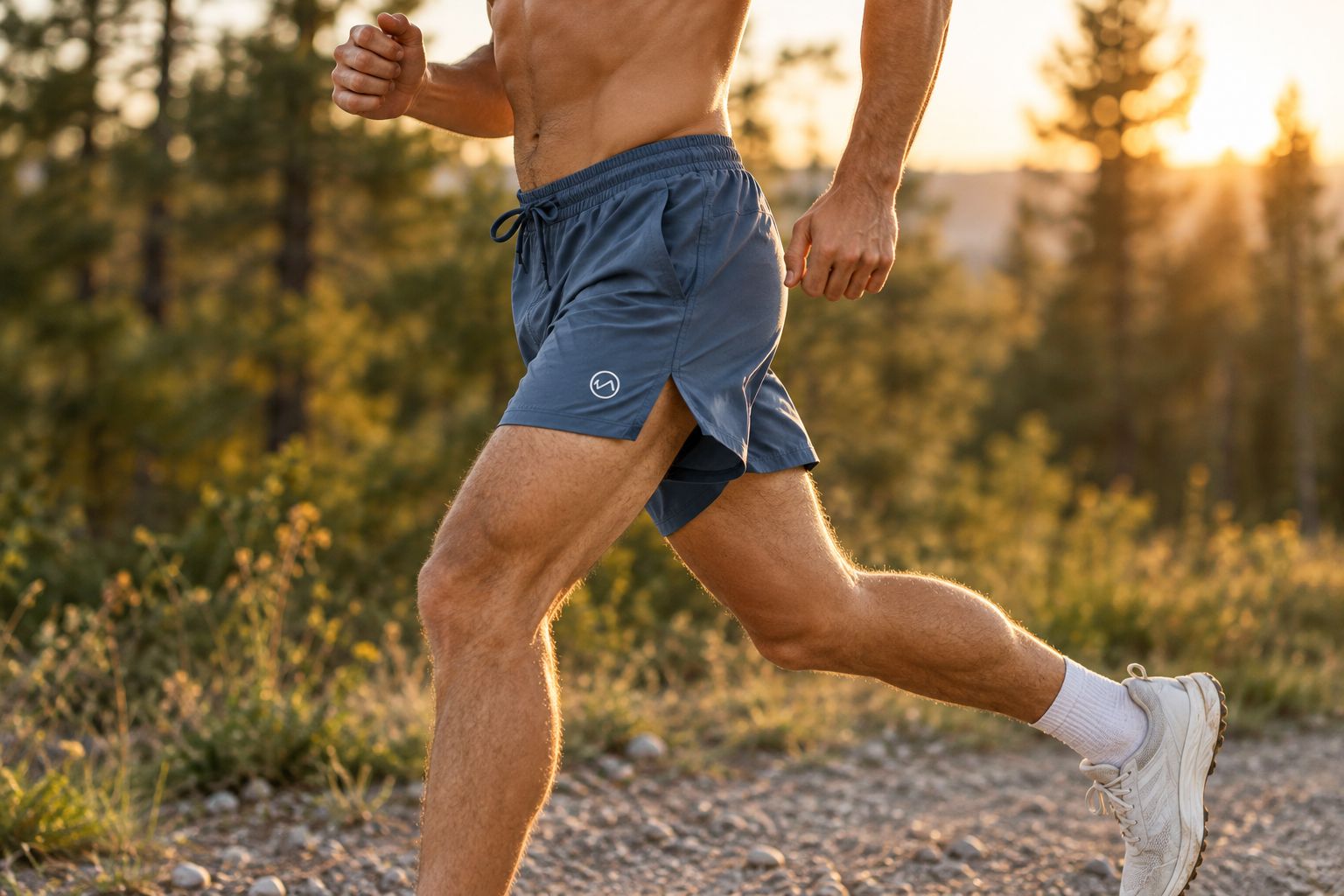
Running and sprint intervals are where mesh shorts do their best outdoor work. The open weave sheds heat as fast as you generate it, which matters most on repeat 400m efforts or tempo runs where core temperature climbs quickly. A tighter micro-mesh construction, like the Micro Mesh DNA fabric used across TLF Apparel's training tops, resists the see-through risk that comes with basic open-weave mesh under bright outdoor light.
Mesh shorts for HIIT, sled pushes, and yard workouts
Outdoor HIIT circuits, sled pushes on turf, and bodyweight yard workouts put mesh shorts through repeated stop-start heat spikes rather than sustained airflow. Mesh still wins here because the rest periods between rounds let the open weave dump heat fast. The downside shows up on grass or gravel: mesh snags more easily on rough surfaces than a tighter woven fabric, so shorts with reinforced seams or a liner hold up longer through burpees, crawls, and ground work.
Mesh shorts in wind, rain, or brushy terrain
This is where mesh gym shorts stop being the right call. Wind passes straight through an open weave, which turns a 55-degree morning into something that feels 10 degrees colder once you're moving. Rain soaks mesh shorts almost instantly and they don't dry as fast as a tightly knit performance fabric once wet. Brush, thorns, and uneven trail debris also catch on open mesh far more than a denser woven short.
Why mesh breathability varies outdoors
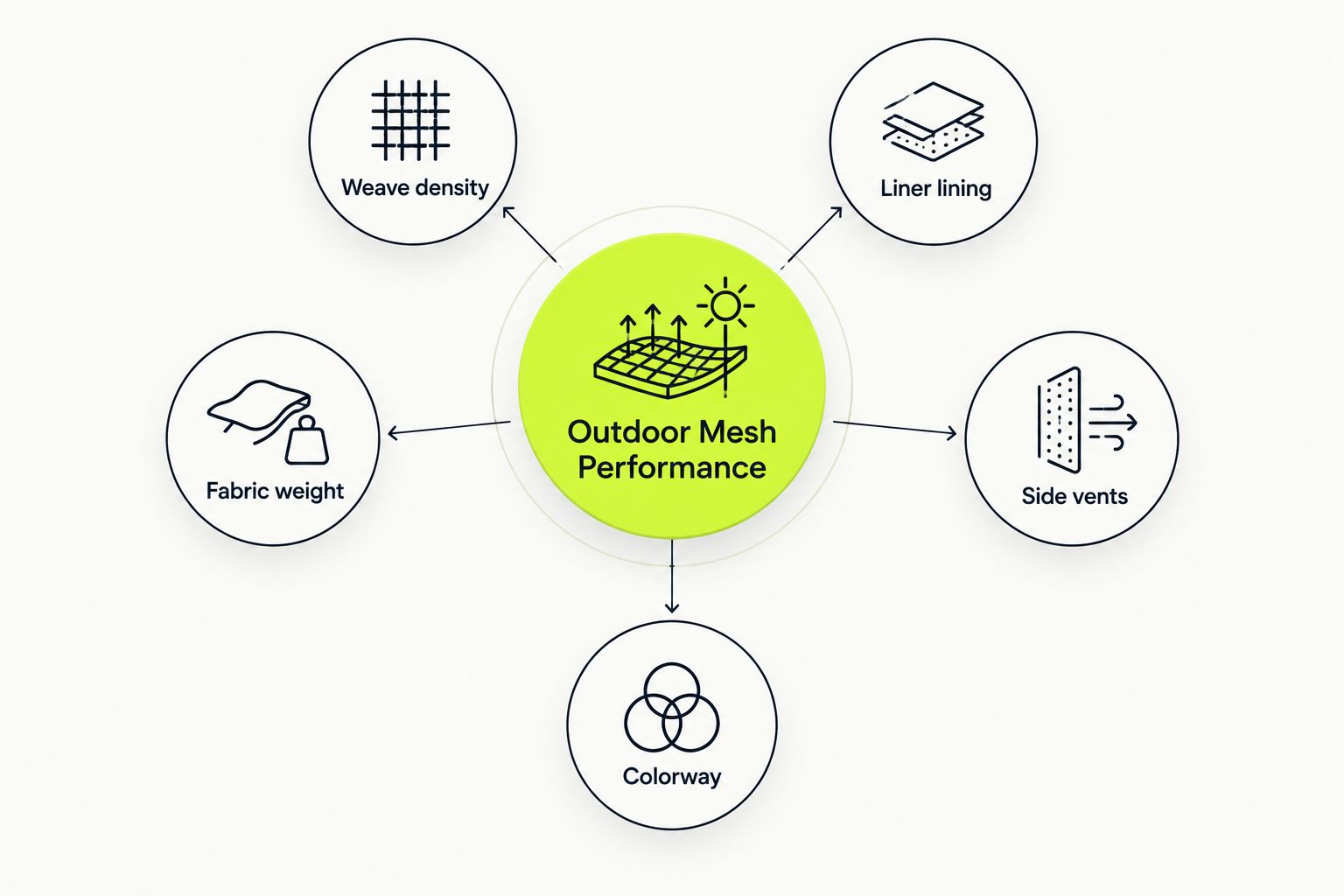
Not all mesh shorts perform the same way once you step outside a controlled gym environment. A handful of factors decide whether a specific pair holds up:
- Weave density and hole size — tighter micro-mesh sheds less heat than loose open-weave mesh but also blocks more wind
- Liner or brief lining — a built-in liner adds coverage and slightly reduces airflow compared to unlined mesh
- Fabric weight — lightweight mesh cools faster but tears more easily on rough outdoor terrain
- Side vents versus full mesh panels — vented woven shorts often outlast full mesh panels on abrasive surfaces
- Colorway — darker mesh shorts absorb more heat under direct sun than lighter colorways during midday outdoor sessions
- Seam reinforcement — reinforced seams resist snagging on brush, benches, and turf better than raw-edge mesh


Related questions
Are mesh shorts breathable enough for hot yoga?
Mesh shorts handle hot yoga's heat output well since the open weave sheds body heat during static poses, but the tradeoff is more visible sweat-through than a tighter fabric. Indoor hot yoga studios also lack the wind that outdoor mesh shorts have to contend with, so the fabric performs closer to its best case in that setting.
Can mesh shorts be worn without a liner?
Mesh shorts can be worn without a liner if you layer compression shorts or briefs underneath, since the open weave alone doesn't provide reliable coverage during dynamic movement. Without a liner or base layer, most outdoor training movements like sprints or lunges will test the fabric's opacity.
Do gym shorts with a liner replace underwear?
A built-in liner is designed to replace underwear during training, since it's cut and positioned for movement rather than everyday wear. Whether it works for you outdoors depends more on liner material and fit than on whether the outer shell is mesh.
FAQ
Do mesh shorts work for outdoor training in 2026?
Mesh shorts work for outdoor training in hot, dry conditions like running and sprint work, but they lose effectiveness in wind, rain, or brushy terrain. A vented woven fabric handles mixed outdoor weather better than open-weave mesh.
Are mesh shorts breathable enough for hot yoga?
Mesh shorts are breathable enough for hot yoga because the open weave sheds heat during static, low-impact poses. The tradeoff is more visible sweat-through compared to a tighter knit fabric.
Can mesh shorts be worn without a liner?
Mesh shorts can be worn without a liner if you layer compression shorts underneath for coverage during dynamic outdoor movement. Without a base layer, opacity becomes a concern during lunges, sprints, and stretching.
Do gym shorts with a liner replace underwear?
Gym shorts with a built-in liner are designed to replace underwear during training sessions. Fit and liner material matter more than whether the outer shell is mesh or woven fabric.
Can you wear compression shorts under gym shorts?
Compression shorts work well under mesh gym shorts outdoors because they add wind resistance and coverage the open weave lacks on its own. This combination is common for cold-morning outdoor training in 2026.
Are 5 inch shorts too short for tall men?
A 5 inch inseam is not inherently too short for tall men, since fit depends more on thigh circumference and personal preference than height alone. Tall men who prefer more coverage often size up to a 7 inch inseam instead.
Do mesh shorts hold up on trail runs with brush?
Mesh shorts do not hold up well on trail runs through brush, since the open weave catches easily on thorns and rough vegetation. A denser woven fabric with reinforced seams lasts longer on technical trail terrain.
One last thing
The detail that trips people up isn't mesh versus non-mesh, it's mesh versus vented. A full mesh panel and a woven short with strategic side vents both claim "breathable" on the tag, but they behave completely differently once wind or brush gets involved. If your outdoor training in 2026 mixes hot days with the occasional windy morning, a vented construction like the side-vent design on TLF Apparel's shorts lineup covers more of the calendar than pure open-weave mesh ever will.


