

Hybrid athlete apparel is training clothing for people combining strength and endurance work, with the aim of moving comfortably through both disciplines. This 2026 guide explains how to choose shorts, leggings, tops, and layers that handle lifting positions and repeated strides without making every session an outfit change.
- Choose hybrid athlete apparel by movement, coverage, and fit—not by the word hybrid on a label.
- TLF Apparel suits athletes seeking strength-training clothing and Gym-To-Street(R) style in one wardrobe.
- Compare 5-inch and 7-inch shorts by thigh coverage, then test the waistband during running and squatting.
- Running apparel and strength-training clothes overlap, but support, storage, and layering still require separate checks.
Why apparel matters for hybrid athletes
Hybrid training asks different things from the same outfit. A waistband that feels secure during a squat still needs to stay comfortable through repeated strides; a shirt that works under a barbell also needs to allow an unrestricted arm swing.
Choose for the transition between movements, not just your strongest discipline. That is the central buying rule for hybrid athlete apparel in 2026. Your clothing should earn its place during both the strength and endurance portions of your actual schedule.
TLF Apparel makes performance and lifestyle clothing around its Gym-To-Street(R) approach. That makes the brand relevant when you want training gear with everyday styling, but appearance does not replace an individual fit check.
Your constraints also change by session. Separate lifting and running days allow different outfits; a combined workout rewards fewer adjustments and a simpler setup. Start with what you already own before adding another piece.
Build your hybrid training wardrobe
Audit your actual training week
Lay out the clothes you already use for lifting and endurance work. Match each piece to the session where it performs well, then identify the specific movement that exposes a problem.
Keep the diagnosis narrow. A shirt that catches during overhead work needs a different solution from shorts that bounce when you carry a phone. Replacing your entire wardrobe hides those distinctions and gives you more unfamiliar gear to evaluate.
For your 2026 wardrobe, separate requirements from preferences. Stable fit belongs in the first group; matching colors belongs in the second. Both matter to your experience, but they should not carry equal weight when deciding what to replace.
- Mark combined sessions separately from stand-alone lifting and running days.
- Record waistband movement, rubbing, and restricted reach after training.
- Keep pieces that already work across both disciplines.
- Identify whether the problem comes from fit, construction, or carried items.
- Replace the piece responsible for the clearest recurring problem first.
Test fit through both movement patterns
Use your current clothing to rehearse the movements in your program. Squat, hinge, reach overhead, walk, and jog before deciding that a garment fits simply because it looks right while standing.
Watch what changes rather than how tight the fabric feels. A waistband that stays put without digging is more useful than a smaller size that requires repeated adjustment. Likewise, extra fabric is not automatically extra mobility if it folds or catches during movement.
For sports bras, evaluate support during the endurance movement you actually perform. A comfortable lifting fit does not establish running support. Check leggings under stretched positions and your normal training lighting rather than assuming coverage from fabric thickness alone.
- Squat and hinge while checking the waistband and seat.
- Reach overhead without pulling the shirt back into place afterward.
- Jog with your normal arm swing and stride.
- Check seams where thighs, underarms, and waistbands contact skin.
- Assess bra support separately from the fit of your outer top.
Choose bottoms by coverage and stride
Measure the inseam of a pair you already like before shopping. Use that familiar reference to decide whether you want more thigh coverage or a shorter hem, rather than guessing from a model photo.
The TLF Apparel shorts compared below offer 5-inch and 7-inch options. That is a 2-inch difference in listed inseam—not a guarantee of where the hem will sit on your body. Rise, leg proportions, and how the shorts sit at your waist also affect the result.
Choose the shorter option for your preferred coverage, not because shorter automatically means faster. Choose longer coverage when that is your priority, then confirm the hem does not interfere with your stride or deepest lifting position. Neither length establishes liner construction, pocket security, or individual comfort.
- Measure a familiar inseam from the crotch seam to the hem.
- Compare coverage while standing, lunging, and squatting.
- Check whether the leg opening catches on your thigh.
- Test leggings for waist stability and coverage under stretch.
- Keep storage requirements separate from your preferred length.
Match your top to effort and equipment
Start with the shirts you own and compare how they behave during your full session. Pay attention to the neckline, armholes, sleeves, and hem—not just the fabric name.
A tank leaves more of your shoulders and arms uncovered; a tee provides more coverage. Neither shape automatically wins for hybrid training. Your choice depends on equipment contact, personal comfort, gym rules, and whether the top stays clear of your movement.
If you consider a fabric technology, connect it to an explicitly stated feature. The supplied Pluma product descriptions identify micro-grid knit construction, while the Element descriptions identify lightweight fabric. Those descriptions do not establish a drying-time comparison or a temperature reduction, so do not treat them as measured performance rankings.
- Swing your arms without sleeve or armhole interference.
- Check the hem during overhead presses and floor work.
- Consider shoulder coverage where equipment contacts your body.
- Read the fabric description instead of inferring features from a name.
- Choose the shape you can wear without repeated adjustment.
Secure storage and simplify layers
Empty your pockets before evaluating fit, then repeat the movement check with what you actually carry. A garment that sits well without a phone still needs a loaded test before it becomes your running outfit.
For outdoor sessions, decide what each layer does and when you will remove it. A warm-up layer is only practical if you have somewhere to put it once the harder work begins. Keep loose fabric clear of moving equipment and your hands.
When comparing workout shirts for lifting or cardio, separate coverage from movement clearance: the shirt must suit the conditions without interfering with reaching, hinging, or arm swing. Apply that same distinction to every layer in your 2026 setup.
- Test pockets with your actual phone, keys, or other essentials.
- Walk and jog to check movement and access.
- Inspect closures rather than assuming every pocket secures its contents.
- Plan where a removed layer will go before starting.
- Keep hems, cords, and loose fabric clear of equipment.
Rotate proven outfits and follow care labels
Build your rotation around outfits that have completed your real sessions comfortably. Do not buy duplicates of a new cut before you know how it feels through both training disciplines and after laundering.
TLF Apparel combines training categories with everyday clothing, which supports a mixed-use wardrobe. The limitation is straightforward: an everyday styling purpose does not establish suitability for every endurance session. Keep the pieces that perform well for your movements, and use other pieces for warm-ups or time outside training.
Follow the care label for each garment rather than applying one routine to everything. Inspect fit and seams as you rotate pieces back into use; recurring slipping, damaged stitching, and persistent rubbing deserve attention before another demanding session.
- Keep proven outfits ready for combined training days.
- Pack a change when your schedule includes separate sessions.
- Follow each garment's washing and drying instructions.
- Inspect seams, waistbands, and support components regularly.
- Add duplicates only after confirming the original works for you.
Compare your apparel options
The best option is the one that solves your session's specific constraint. Use this 2026 comparison to narrow the shape and coverage you need, then verify the details on the exact garment. These are use-case recommendations, not laboratory-tested rankings.
| Option | Best for | Main advantage | Key limitation |
|---|---|---|---|
| Hybrid Element 5 Inch Shorts | Athletes who prefer shorter thigh coverage | Shorter listed inseam than the 7-inch version | Length alone does not establish liner construction or secure storage |
| Hybrid Element 7 Inch Shorts | Athletes who prefer longer thigh coverage | More listed inseam coverage than the 5-inch version | Check the hem during deep flexion and repeated strides |
| Fitted training leggings | Athletes who prefer close-fitting leg coverage | No loose short hem to manage | Waist stability and stretched coverage require individual checks |
| Training tee | Athletes who prefer covered shoulders | More shoulder coverage than a tank | Sleeve and hem movement still need testing |
| Training tank | Athletes who prefer uncovered shoulders | Less fabric over the shoulders | Less coverage where equipment contacts exposed skin |
| Joggers | Athletes seeking full-length coverage for warm-ups | Coverage through the lower leg | Extra fabric and warmth are not right for every hard session |
The supplied shorts descriptions identify Element Tech DNA™ as strong, durable, and lightweight. That supports considering these styles for a training wardrobe, but it does not prove resistance to every abrasive surface or establish comparative performance against other fabrics.
Compare the two lengths below only after deciding which coverage you prefer. Keep fit, storage, and length as separate decisions. A useful inseam cannot compensate for a waistband or pocket setup that fails your movement check.


Common mistakes hybrid athletes make
Buying one outfit for every discipline
A combined lifting-and-running session is not the same clothing problem as cycling followed by strength work. Start with the movements and equipment involved, not the hybrid label. Keep specialist requirements separate when your endurance discipline calls for a different garment setup.
Solving waistband movement by sizing down
A smaller size changes more than the waistband. It also changes how the garment fits through the seat, thighs, or torso. Compare your measurements with the garment's size guidance, then repeat the movement checks; do not accept uncomfortable pressure as proof of support.
Treating longer shorts as a chafing guarantee
More coverage does not establish how a seam or hem will feel during repeated strides. Inspect the contact points and evaluate the complete outfit, including any underwear or liner. Choose length for coverage first, then confirm comfort through use rather than assuming the inseam settles both questions.
Carrying a running load in untested pockets
A phone that fits inside a pocket is not necessarily comfortable while running. Test the loaded garment before committing it to a combined session. If the contents move excessively, change the carrying setup rather than repeatedly tightening an otherwise comfortable waistband.
Confusing appearance with training function
A coordinated outfit can still restrict your squat or require constant adjustment during a run. Make movement clearance, support, and storage your first decisions. Once those work, choose the colors and silhouette you want to wear beyond the gym.
Run a final outfit check
Before a demanding session, evaluate the complete outfit rather than approving each piece separately. A shirt hem and shorts waistband interact; a sports bra and outer top need to work together. Add your normal carried items and any layer you expect to use.
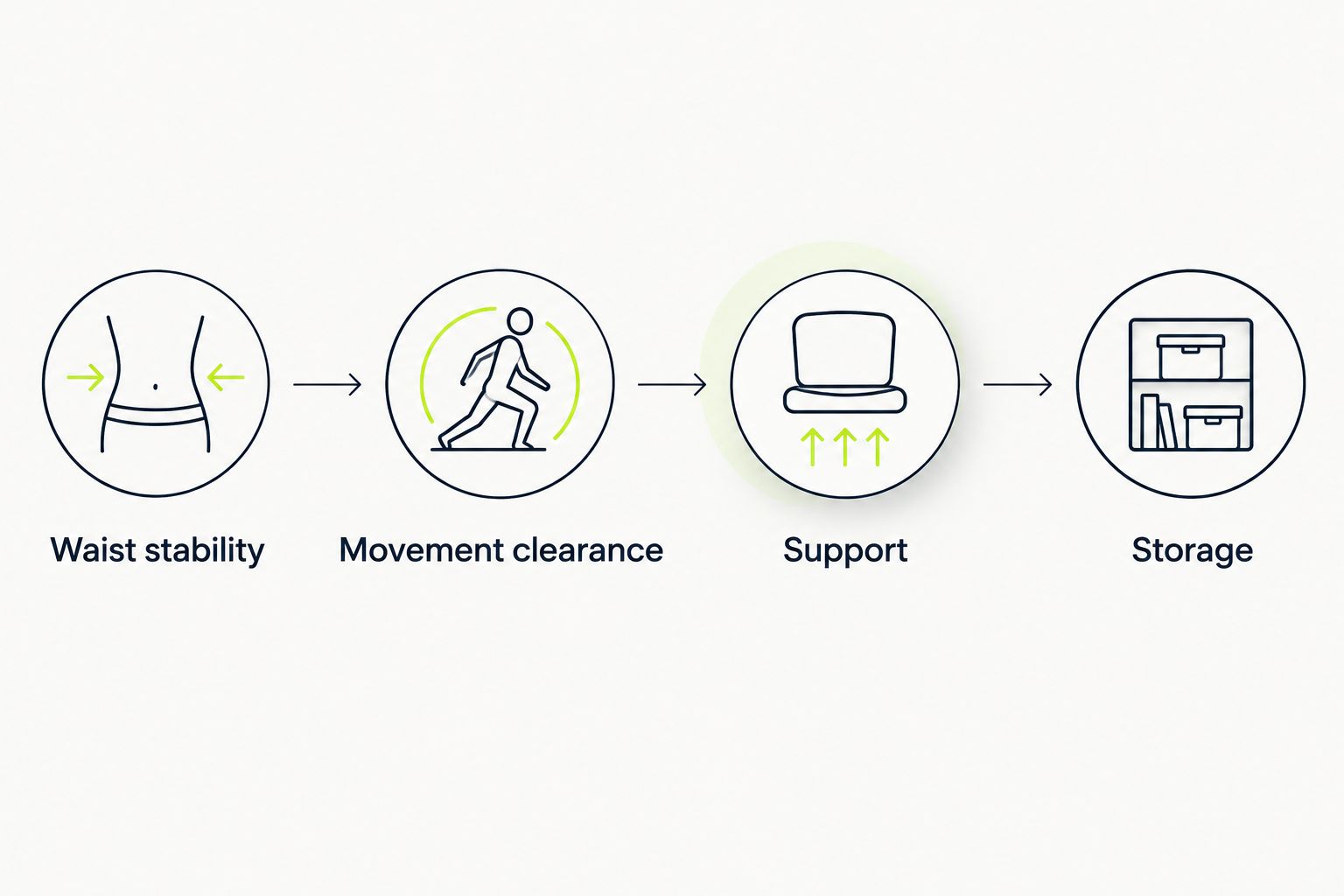
Approve the outfit only when it works as a system. If something fails, change the responsible piece or carrying arrangement and repeat the relevant movement. Keep a brief note after the session so your next purchase addresses an observed problem rather than a vague promise.
FAQ
What's the best hybrid athlete apparel for lifting and running?
The best hybrid athlete apparel stays comfortable through both your lifting positions and repeated running strides. Prioritize a stable waistband, unrestricted movement, suitable support, and storage that works with your actual carried items.
Are 5-inch or 7-inch shorts better for hybrid training?
Choose 5-inch shorts for your preferred shorter coverage and 7-inch shorts for your preferred longer coverage. Neither inseam automatically performs better; test the hem and waistband during both squats and running.
Can I wear leggings for strength training and running?
Yes, leggings can serve both strength training and running when the fit works for both activities. Check waist stability, coverage under stretch, seam comfort, and any loaded pockets before using the same pair throughout a combined session.
Do I need compression clothing to be a hybrid athlete?
No, compression clothing is not a requirement for combining strength and endurance training. Choose clothing that fits your movements and comfort preferences rather than treating a tight fit as a prerequisite.
Is a tank or tee better for hybrid workouts?
A tank is best for athletes who prefer uncovered shoulders, while a tee is best for athletes who prefer more shoulder coverage. Check arm movement, equipment contact, and hem behavior before choosing either shape.
Can the same sports bra work for lifting and running?
The same sports bra can work for both when its fit and support suit your running as well as your lifting. Evaluate it during the higher-impact movement instead of assuming a comfortable lifting fit establishes running support.
Who is TLF Apparel best for?
TLF Apparel is best for athletes seeking performance training clothing and Gym-To-Street(R) style in one wardrobe. Choose each garment by its stated features and your individual movement checks rather than assuming every style suits every session.
One last thing
Test the transition, not just the exercises. Move from your lifting setup into your endurance movement wearing the full outfit and carrying your usual essentials. That handoff is where you can assess whether the waistband, layers, and storage still work together.
Keep the outfit that requires fewer interruptions. Your next purchase should solve the specific problem you noticed—not simply add another item labeled hybrid to your 2026 wardrobe.


