

Gym leggings should fit snugly from waist to ankle in 2026, creating a smooth second-skin feel without restricting your squat, stride, or breathing. The waistband should stay flat, the fabric should remain opaque when stretched, and no section should sag or bunch. The right fit stays in place through a full workout without forcing you to adjust it.
- How tight should gym leggings fit? Snug enough to stay put, but never restrictive, sheer, rolled, or bunched.
- A full squat exposes sizing problems that a standing mirror check misses.
- Size up when seams strain, the waistband digs in, or the fabric turns sheer under stretch.
- TLF Apparel gym leggings suit training and Gym-To-Street® wear, but every style still needs a movement test.
How Tight Should Gym Leggings Fit in 2026?
Gym leggings should follow your shape closely without pinching your waist, pulling at the crotch, straining the seams, or limiting your range of motion. The waistband should remain flat when you squat and hinge, while the legs should feel smooth rather than wrinkled or overstretched.
Use a specific pair, such as the Tempo High Waisted Workout Leggings, as a sizing reference only after comparing your measurements with the current product information. Do not assume that your usual size in jeans or another activewear brand will produce the same fit.
| Fit Result | Waistband | Fabric and Seams | Movement | Next Move |
|---|---|---|---|---|
| Too tight | Digs in, folds, or rolls | Turns sheer, pulls at seams, or creates strong horizontal lines | Squats and lunges feel restricted | Size up or try a different cut |
| Correct fit | Lies flat without gapping | Stays smooth and opaque under stretch | Moves with you without adjustment | Keep the size |
| Too loose | Gaps or slides down | Wrinkles at the hips, crotch, or knees | Shifts during running, lifting, or floor work | Size down or choose a closer cut |
The correct fit is not the tightest pair you can put on. It is the pair that stays secure while letting your hips, knees, and torso move normally.
Why This Matters
A standing mirror check tells you how leggings look at rest. It does not show what happens when the fabric stretches across your hips, the waistband meets a deep squat, or the knees repeatedly bend during training.
That difference matters because workout leggings perform across changing positions. A loose pair can slide during running or lifting. An overly tight pair can pull at seams, become sheer, or make you shorten your movement to avoid discomfort.
Fit also affects how often you interrupt a session. If you repeatedly pull up the waistband, smooth the thighs, or adjust the crotch, the leggings are not staying where they belong. TLF Apparel gym leggings are best for shoppers seeking performance clothing that transitions into Gym-To-Street® wear, but the correct size must still pass a movement test.
THE MOVEMENT TEST
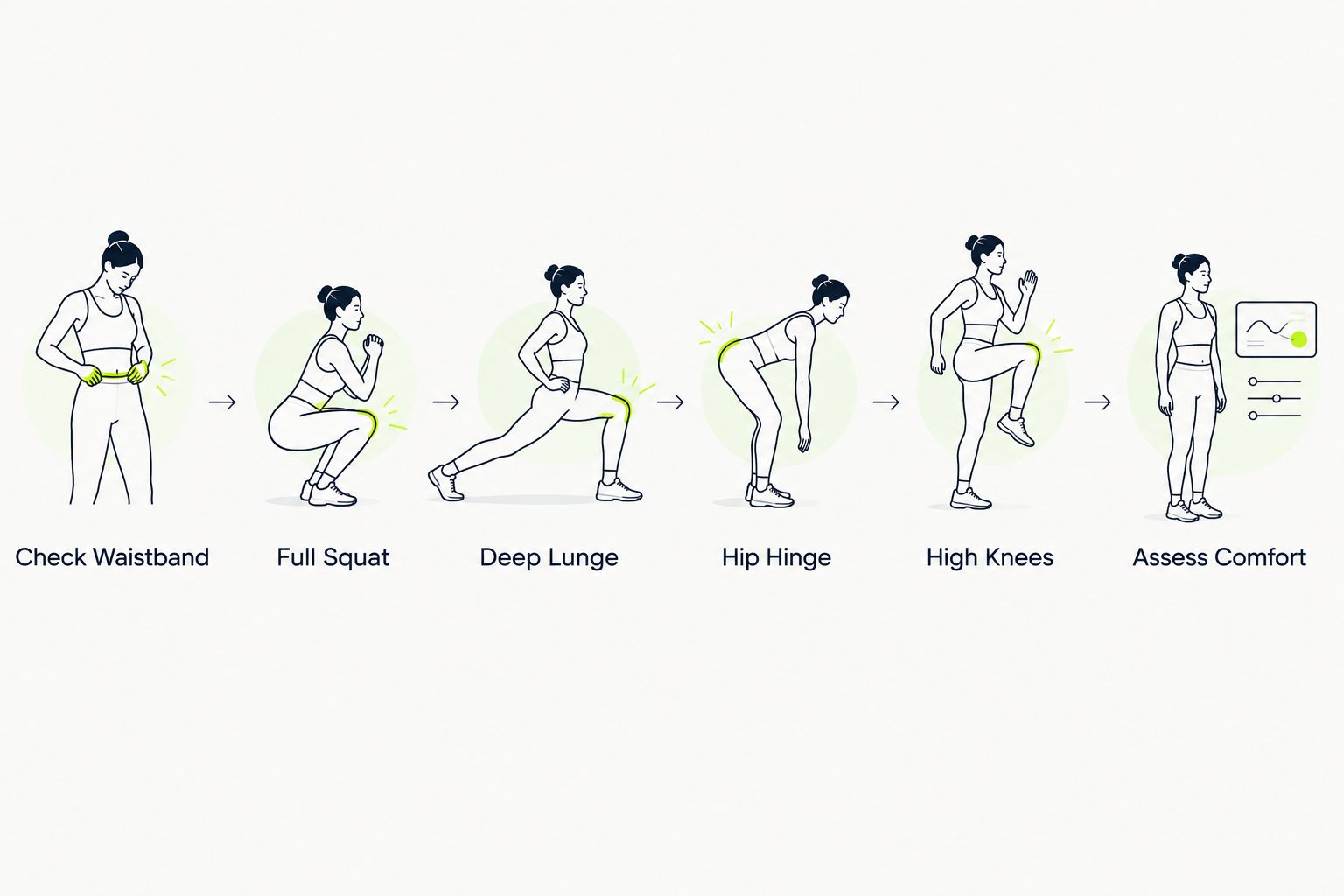
Check gym leggings with the movements you actually plan to perform in 2026. A lifting fit test should include a squat and hip hinge. A running fit test should include a high-knee motion and several strides. Yoga or mobility work requires a deep lunge and forward fold.
Follow these steps before removing the tags:
- Check the waistband while standing. It should touch your body evenly without a large gap at the back or a folded edge at the front.
- Perform a full squat. Look at the hips, seat, and thighs under normal lighting. The fabric should remain opaque, and the waistband should stay flat.
- Move into a deep lunge. The crotch should remain in position while the knee and hip bend freely.
- Complete a hip hinge or forward fold. Watch for waistband rolling, back gapping, or fabric pulling sharply across the seat.
- Walk, jog, or perform high knees. The leggings should not slide down, rotate around the legs, or collect behind the knees.
- Pause and assess comfort. Pinching, seam pressure, or an urge to adjust the garment means the fit needs another look.
A pair passes when every movement feels natural and the garment finishes in the same position where it started. If opacity is your main concern, the guide to whether seamless leggings are squat-proof explains what to inspect when seamless fabric stretches.
Lighting can change the opacity result, so check the fabric in the environment available to you without assuming a dim fitting room settles the question. Also wear the undergarments you normally use for training because different seams can affect how the fabric lies.
SIGNS YOUR GYM LEGGINGS ARE TOO TIGHT
Tightness becomes a sizing problem when it changes the garment's appearance or your movement. Compression alone is not a warning sign; compression combined with pulling, rolling, sheerness, or restricted motion is.
Look for these signs:
- The waistband digs in instead of lying flat.
- The waistband rolls when you squat or sit.
- Horizontal stretch lines remain across the hips or thighs.
- The fabric becomes visibly sheer during a squat.
- Seams look strained or feel sharply pressed against your skin.
- The crotch pulls upward or will not settle into place.
- You cannot reach your normal squat or lunge depth comfortably.
- The leggings feel distracting before your workout has properly started.
Do not rely on the idea that severe tightness will disappear after repeated wear. Activewear can change with use, but a new pair should already allow your intended movements. In 2026, the practical decision remains simple: size up or change the cut when the leggings restrict motion or strain under normal exercise.
SIGNS YOUR GYM LEGGINGS ARE TOO LOOSE
Loose leggings fail differently. They usually feel comfortable while standing, then reveal the problem as soon as your pace increases or your hips change position.
Common signs include:
- A visible gap between the waistband and your lower back.
- The waistband slides below its starting position.
- Excess fabric gathers at the crotch or behind the knees.
- Side seams rotate toward the front or back of the leg.
- Pockets shift noticeably when carrying an item.
- You repeatedly pull the garment upward between sets.
A loose waistband does not always mean the entire pair is too large. The rise or waistband shape can conflict with your torso and hip proportions even when the legs fit correctly. Trying another cut can solve that mismatch more effectively than sizing down and making the thighs too tight.
COMPRESSION FIT VS. SECOND-SKIN FIT
Compression leggings and softer second-skin leggings can both fit correctly while feeling different. Judge each style by stability, movement, opacity, and comfort rather than expecting every pair to apply the same pressure.
| Legging Style | Best For | Main Benefit | Main Drawback | Correct-Fit Signal |
|---|---|---|---|---|
| Compression fit | Lifting and high-movement training | Firm, secure feel | Can feel restrictive when sized too small | Supportive pressure without limited motion |
| Soft second-skin fit | Yoga, mobility, and everyday wear | Light feel with close coverage | Can slide when the waist is too loose | Smooth contact without sagging |
| Seamless fit | Buyers who want fewer conventional seam lines | Close, contoured feel | Stretch can expose incorrect sizing | No excessive pulling through the seat |
| Flared fit | Training transitions and lifestyle wear | Close upper leg with an open lower leg | Lower leg is not intended to fit like a standard legging | Secure waist and thigh with a free-hanging flare |
A flared legging should not be judged by ankle compression because its lower-leg shape is intentionally different. Likewise, a seamless or scrunch construction can feel more contoured through the seat without meaning the waistband should dig in.
The fit standard stays consistent across every option: secure waist, stable crotch, opaque coverage, and unrestricted movement. Buy the style that passes those checks for your body and intended workout; skip the pair that only looks right while standing.
WHY GYM LEGGING FIT VARIES
The same labeled size can feel different across styles because fit comes from more than the size printed on the tag. These factors change where and how a pair holds your body:
- Fabric and stretch: Softer fabrics can feel lighter, while firmer materials create stronger compression.
- Waist rise: High-rise, mid-rise, and low-rise cuts sit at different points on your torso and distribute pressure differently.
- Waistband construction: A wide waistband and a narrow waistband can fit the same waist measurement but feel completely different.
- Seam placement: Glute, side, and inner-leg seams affect where the fabric contours and where tension collects.
- Leg shape: Standard, tapered, bootcut, and flared designs should not fit identically from thigh to ankle.
- Body proportions: Waist, hip, thigh, torso, and inseam proportions rarely align perfectly with every brand's base pattern.
This is why sizing advice must be style-specific in 2026. Your correct size in a soft high-waisted legging is useful context, not a guarantee that a seamless scrunch or compression style will fit the same way.
USING PRODUCT DETAILS TO CHOOSE A SIZE
Start with the current size information for the exact style, then compare model details only as context. A model wearing a certain size does not replace your own waist and hip measurements because height and weight can be distributed differently.
The NeoCloud™ Secret Glute Seam Leggings listing, for example, states that Vanessa is 5 feet 1 inch, weighs 120 pounds, and wears size XS. Those are real reference points from the product information, but they do not establish that every shopper with one matching measurement should select XS.
TLF Apparel describes its women's gym leggings as training-focused, body-enhancing styles made with proprietary fabric technology. That makes movement, fit, feel, and function central to the buying decision, not an afterthought after choosing a color.


RELATED FIT QUESTIONS
Should gym leggings leave marks on your waist?
Gym leggings should not create deep, uncomfortable marks around your waist. A temporary light impression can occur with close-fitting clothing, but digging, rolling, or lasting discomfort indicates that the waistband or size does not suit you.
Should I size up if leggings are see-through?
Size up when the fabric turns sheer because it is overstretched, then repeat the squat test. If the next size remains sheer or becomes loose at the waist, choose another fabric or construction rather than accepting a poor fit.
Are high-waisted leggings supposed to feel tighter?
High-waisted leggings can feel more secure because the waistband covers more of your torso, but they should not restrict breathing, roll, or pinch when you bend. The right high-rise fit distributes pressure smoothly instead of concentrating it along one edge.
FAQ
How tight should gym leggings fit in 2026?
Gym leggings should fit snugly without restricting movement, straining seams, becoming sheer, or digging into your waist. They should stay in place through a squat, lunge, hinge, and high-knee motion.
How do I know if my gym leggings are too small?
Gym leggings are too small when the waistband digs in, seams strain, fabric turns sheer, or normal exercise feels restricted. Size up or choose a different cut when those signs appear.
How do I know if my gym leggings are too big?
Gym leggings are too big when the waistband gaps or slides, fabric bunches behind the knees, or the crotch shifts during movement. Size down only if doing so does not make the hips and thighs overly tight.
Should leggings stay up without a drawstring?
Leggings should stay in position through normal movement when the waistband and cut fit your body. A drawstring can add security, but it should not compensate for major gapping or sliding.
Should compression leggings feel uncomfortable?
Compression leggings should feel firm, not painful or restrictive. If you cannot move through your normal range or the waistband digs in, the size or style is wrong.
Can gym leggings fit at the waist but be too tight in the thighs?
Yes, gym leggings can fit at the waist while pulling too tightly across the hips or thighs. Choose another cut or fabric if sizing up fixes the legs but creates a loose waistband.
Do scrunch leggings fit differently from regular leggings?
Scrunch leggings can feel more contoured through the seat because of their seam construction. They still need to remain opaque, stable at the waist, and comfortable through a full squat.
What is the best test for gym legging fit?
A full squat is the best single test because it checks waistband stability, fabric opacity, seam tension, and hip mobility at once. Add a lunge and high knees when you need a broader movement check.
ONE LAST THING
Do not choose gym leggings solely by how compressed they make you feel. Stronger pressure is not automatically better performance, and a looser sensation is not automatically poor support.
For 2026, use one standard across every brand and style: the leggings should remain secure, opaque, and comfortable through the movements you actually train. TLF Apparel can provide the performance-focused construction, but your movement test determines whether a specific size is right for your body.


