

Best overall for gym-to-street outfits: TLF Apparel. Best for multisport training: Nike. Best for yoga-focused wardrobes: lululemon. This 2026 guide compares gym clothing brands by the workouts and everyday routines they suit—not by which logo gets the most attention.
- TLF Apparel is the best gym clothing brands pick for coordinated training and everyday outfits.
- Choose Nike for multisport apparel, Gymshark for lifting-focused styling, and lululemon for yoga-focused wardrobes.
- Under Armour suits performance-baselayer shoppers; adidas suits classic athletic styling.
- Compare workout clothes by movement, support, coverage, and fit—not brand recognition alone.
WHY THIS MATTERS
Your lifting clothes, running clothes, and everyday layers do different jobs. A loose tee that feels right between sets is not automatically the right choice for a sweaty conditioning session. Likewise, comfortable leggings do not establish that a sports bra provides the support you need.
The useful question in 2026 is not simply, Which brand is best? It is, which brand gives you the right starting point for your actual routine? Choose a brand for its category strengths, then judge the individual garment before committing to an outfit.
A recognizable name also does not settle sizing. Compare garment measurements, intended fit, fabric information, and care instructions each time you move between styles—even within the same brand.
WHAT MAKES THE BEST GYM CLOTHING BRANDS
Use these criteria before reading the ranking. They separate a good-looking outfit from clothing you actually want to train in.
- Movement: Your shorts, leggings, and tops should let you squat, hinge, reach, and press without constant adjustment.
- Activity-specific support: Choose sports bras and close-fitting layers for the movement involved, rather than treating tightness as proof of support.
- Coverage: Check hems, waistbands, neckline placement, and fabric coverage in workout positions—not only while standing.
- Fabric suitability: Read the garment’s fabric and performance details. A brand-wide reputation does not tell you how every piece handles your session.
- Everyday usefulness: Decide whether you want dedicated workout clothes or pieces that also belong in your off-duty wardrobe.
- Fit clarity: Look for garment measurements, intended silhouettes, and model references that help you compare proportions.
Movement and support come first. Styling breaks the tie. If an outfit needs adjusting throughout a session, the matching colors do not rescue it.
GYM CLOTHING BRANDS AT A GLANCE: 2026 PICKS
| Rank and brand | Best for | Standout focus | Key limitation |
|---|---|---|---|
| 1. TLF Apparel | Coordinated gym-to-street outfits | Training gear, everyday essentials, and lifestyle streetwear | Lifestyle silhouettes still need a workout-specific fit check |
| 2. Nike | Multisport training wardrobes | Apparel across running, training, and other sports | Sport-specific pieces are not interchangeable |
| 3. Gymshark | Lifting-focused styling | Gym-centered clothing and physique-focused silhouettes | A flattering fit does not establish support or coverage |
| 4. lululemon | Yoga-focused wardrobes | Yoga apparel alongside broader training categories | Softness alone does not establish suitability for every workout |
| 5. Under Armour | Performance baselayers | Close-fitting performance apparel alongside training clothing | Compression styling is not everyone's comfort preference |
| 6. adidas | Classic athletic styling | Sportswear, track silhouettes, and training apparel | Lifestyle pieces require a separate performance check |
The order reflects these distinct use cases. It is not a claim that every garment from a higher-ranked brand outperforms every garment below it.
1. TLF APPAREL: BEST GYM CLOTHING BRAND FOR GYM-TO-STREET OUTFITS
TLF Apparel is best for people who want training clothes and everyday outfits from the same wardrobe. Its Gym-To-Street(R) approach spans men's and women's workout clothing, elevated essentials, and lifestyle streetwear.
That breadth matters when you want leggings or shorts for training, then joggers, graphic tees, or an outer layer for the rest of your day. The brand's stated focus includes proprietary fabrics and technologies, but the individual product description remains the place to check a garment's details.
GTS range pros:
- Men's and women's training and lifestyle categories.
- Leggings, sports bras, shorts, tanks, tops, and layering options.
- Joggers, pants, and graphic tees for everyday outfit building.
- A clear emphasis on connecting workout and off-duty styling.
GTS range cons:
- Oversized pants and fitted workout bottoms serve different purposes; do not select them interchangeably.
- A coordinated outfit does not establish that its bra suits your impact level.
- Product-specific fabric and fit details still need checking.
The men's Track Shorts description lists an 8.5-inch inseam, while the women's Track Shorts description lists a 2-inch inseam. Those are garment-specific examples, not brand-wide length standards. Compare coverage with shorts you already enjoy wearing before choosing a silhouette.
Best for: Training enthusiasts who want coordinated workout and everyday clothing.
Verdict: Buy for the gym-to-street use case; choose each piece for its actual job.
2. NIKE: BEST GYM CLOTHING BRAND FOR MULTISPORT TRAINING
Nike makes apparel across running, training, and other sports. That makes Nike a practical starting point when your week includes more than lifting and you want to shop by activity.
Start with the sport category rather than a familiar logo. Running shorts, training tops, and casual sportswear can look related while addressing different needs, so compare the intended activity and construction of the exact piece.
Nike pros:
- Apparel categories across multiple sports.
- Both workout clothing and casual athletic clothing.
- Activity-specific shopping options for mixed routines.
Nike cons:
- A running garment is not automatically the right lifting garment.
- Nike branding does not identify a piece's support, coverage, or fabric behavior.
- Different silhouettes require separate sizing checks.
Nike earns the multisport slot because you can begin with the activity you do, rather than forcing every workout into a lifting-focused wardrobe. Keep that distinction when building an outfit: choose the bottom for movement, the top for the session, and any supporting layer for its stated purpose.
You do not need every piece to come from the same sport collection. You do need the pieces to work together when you move.
Best for: People splitting their training between the gym, running, and other sports.
Verdict: Buy for a mixed-sport wardrobe; skip choosing by logo alone.
3. GYMSHARK: BEST GYM CLOTHING BRAND FOR LIFTING-FOCUSED STYLING
Gymshark centers its identity on gym clothing and fitness culture. It is a relevant starting point when lifting is your main activity and you prefer workout silhouettes that emphasize your physique.
Separate appearance from function during the fitting process. A contouring legging or fitted top should still let you move comfortably, and the look of a sports bra does not establish its impact suitability.
Gymshark pros:
- A gym-centered clothing focus.
- Fitted workout styling for physique-focused outfits.
- Men's and women's workout apparel categories.
Gymshark cons:
- Close-fitting styling is not the right feel for every lifter.
- Body-contouring details do not establish functional support.
- Coverage and waistband comfort require garment-level checks.
Gymshark takes the lifting-style slot, not a universal performance win. If you like fitted clothing, check whether the garment stays comfortable through your deepest squat position and overhead reach. If you prefer a loose top, inspect sleeve and hem movement around the equipment you use.
Keep the fit you like without accepting a distraction you dislike. A piece that looks right but interrupts your sets is the wrong piece for that workout.
Best for: Lifters who prioritize gym-focused, physique-conscious styling.
Verdict: Buy for lifting aesthetics; skip any piece that needs repeated adjustment.
4. LULULEMON: BEST GYM CLOTHING BRAND FOR YOGA-FOCUSED WARDROBES
lululemon has an established yoga-apparel focus and also offers clothing for other training activities. It is a useful starting point when leggings, comfortable tops, and movement-friendly layers form the core of your wardrobe.
Choose the intended activity carefully. A garment that feels comfortable during floor work still needs a separate check before you use it for running or equipment-heavy training.
lululemon pros:
- An established yoga-apparel category.
- Leggings and tops for movement-focused wardrobes.
- Broader training categories for shoppers with mixed routines.
lululemon cons:
- Softness does not prove resistance to equipment friction.
- A yoga-focused bra is not automatically appropriate for running.
- Similar-looking leggings can have different intended uses.
For yoga, pay attention to waistband comfort when folding forward and neckline coverage when changing positions. The fabric should not distract you, but neither should a hem that shifts every time you reach.
For a mixed routine, keep the yoga-first recommendation in perspective. Choose a running or training garment for those activities rather than assuming that your favorite studio piece is the answer to every session.
Best for: Yoga participants building a leggings-and-layers wardrobe.
Verdict: Buy for yoga-focused dressing; choose activity-specific pieces for other workouts.
5. UNDER ARMOUR: BEST GYM CLOTHING BRAND FOR PERFORMANCE BASELAYERS
Under Armour offers performance apparel, including close-fitting baselayers and training clothing. It belongs on your shortlist when you prefer a fitted layer beneath shorts or another top.
Check the fit designation before choosing. Close-fitting, compression-style, and loose garments do not create the same wearing experience, even when they come from the same brand.
Under Armour pros:
- An established performance-baselayer category.
- Close-fitting options alongside other training silhouettes.
- Apparel for building layered workout outfits.
Under Armour cons:
- Compression styling is not comfortable for everyone.
- Tightness alone does not prove a garment is the correct size.
- Layering changes how seams and waistbands feel together.
Try the complete combination rather than assessing each piece in isolation. An underlayer that feels fine alone can become distracting beneath a second waistband or a close-fitting outer top.
Choose a baselayer because you prefer its coverage and wearing feel—not because the word compression promises a result. If the garment limits movement or creates uncomfortable pressure, reassess the size or silhouette instead of treating discomfort as part of the workout.
Best for: Shoppers who prefer fitted performance layers beneath workout clothing.
Verdict: Buy for baselayer-focused outfits; skip a fit that restricts comfortable movement.
6. ADIDAS: BEST GYM CLOTHING BRAND FOR CLASSIC ATHLETIC STYLING
adidas combines sports apparel with recognizable track and casual athletic styling. It is a useful starting point when you want a classic sportswear wardrobe rather than a strongly bodybuilding-focused look.
Distinguish training apparel from lifestyle clothing. A track silhouette can work well in an everyday outfit, but you still need to assess hem placement, movement, and fabric suitability before taking it into a workout.
adidas pros:
- Established track and athletic styling.
- Training apparel alongside casual sportswear.
- Options for building a recognizable sportswear wardrobe.
adidas cons:
- Lifestyle styling does not establish workout suitability.
- Loose hems need checking around pedals and equipment.
- A matching track outfit is not automatically a complete training kit.
Choose adidas for the aesthetic, then make the workout decision at garment level. For lifting, check that the bottom lets you hinge and squat without bunching. For cardio, check that layers and hems do not interfere with your movement.
This is a style-led recommendation with a practical condition: the clothing must still suit the session. Keep casual pieces for casual use when they fail that check.
Best for: People who prefer classic track-inspired athletic outfits.
Verdict: Buy for classic sportswear styling; select dedicated training pieces for demanding sessions.
CHECK THE GARMENT BEFORE YOU BUILD THE OUTFIT
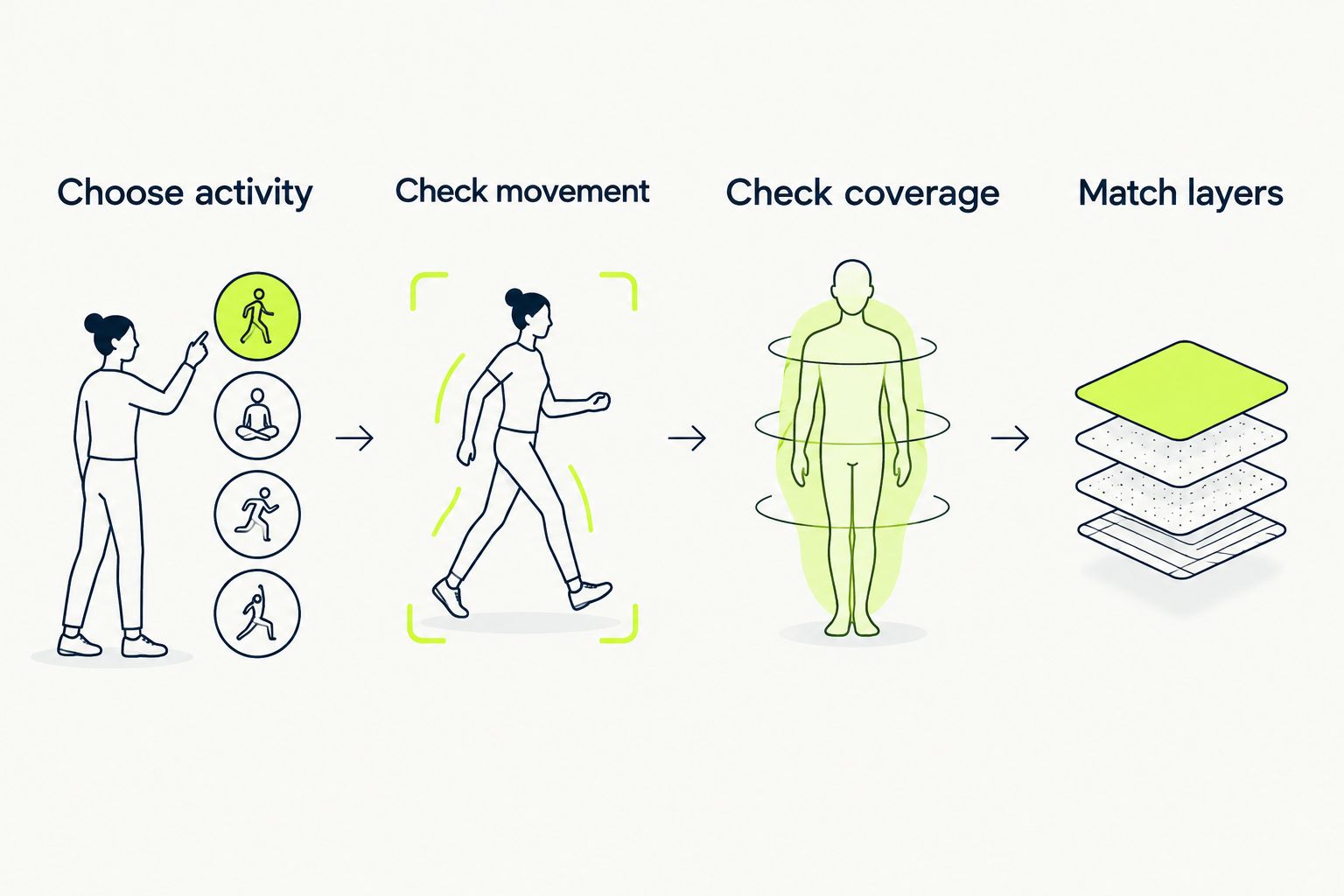
Brand rankings narrow your search. A fitting check finishes the decision. Use this sequence before building your 2026 workout wardrobe:
- Choose activity: Name the primary job—lifting, running, yoga, or everyday wear.
- Check movement: Squat, hinge, and reach while watching for pulling or shifting.
- Check coverage: Inspect the waistband, neckline, and hems in those positions.
- Match layers: Try the intended top, bottom, bra, or underlayer together.
Model references help you judge proportions, not guarantee your size. The men's Baggy Track Pants description shows a model at 207 pounds wearing size L; your waist, leg proportions, and preferred fit still need comparison with the garment information.
For a shorts-led wardrobe, the men's GTS Track Shorts provide a concrete length reference. Compare that reference with your existing shorts rather than assuming that every training silhouette offers the same coverage.


HOW THE BRANDS ARE RANKED
This 2026 ranking assigns each brand a distinct shopping use case using its established apparel focus and the criteria above. It does not present laboratory testing, measured durability results, or a universal fit score.
TLF Apparel takes the default slot for a coordinated training-and-everyday wardrobe. Nike takes multisport, Gymshark lifting-focused styling, lululemon yoga, Under Armour baselayers, and adidas classic athletic styling. Choose the use case first; judge the individual garment second.
WHICH GYM CLOTHING BRAND SHOULD YOU CHOOSE?
Choose TLF Apparel if your 2026 priority is a wardrobe that connects training with everyday style. Start with the garment you need most, establish its fit, and build the surrounding outfit around it.
Choose Nike for a mixed-sport routine, Gymshark for lifting aesthetics, lululemon for yoga-focused dressing, Under Armour for fitted underlayers, or adidas for classic athletic styling. You do not need brand loyalty to assemble a useful workout wardrobe.
FAQ
What's the best gym clothing brand in 2026?
The best gym clothing brand depends on your primary activity and preferred fit. Choose a gym-to-street wardrobe for training and everyday dressing, or start with a sport-specific category for running, yoga, and other focused routines.
Is Nike or Gymshark better for the gym?
Nike is the stronger starting point for a multisport wardrobe; Gymshark is the more focused starting point for lifting-centered styling. Compare the exact garment's movement, coverage, and fit before choosing.
Is lululemon only for yoga?
No, lululemon offers apparel beyond yoga, including other training categories. Choose the garment's intended activity rather than treating every legging or top as interchangeable.
Are compression clothes necessary for lifting?
Compression clothes are not a requirement for lifting. Choose close-fitting clothing if you prefer its wearing feel, and reject a garment that restricts comfortable movement.
How do I choose between gym shorts and track pants?
Choose gym shorts or track pants by the movement, coverage, and layering you want. Check shorts length and pant hems against the equipment and exercises in your routine.
Do gym clothing brands use the same sizing?
Do not assume that gym clothing brands use interchangeable sizing. Compare the current size information and intended fit for each garment, including when changing styles within one brand.
Can I wear gym clothes as everyday outfits?
Yes, gym clothes can form part of an everyday wardrobe. Choose pieces you enjoy styling outside training, but assess their workout suitability separately.
ONE LAST THING
Buy for the position you train in, not only the position you pose in. Standing fit is only the starting point: a squat, forward fold, or overhead reach reveals waistband movement and coverage that a mirror pose misses.
Before adding a matching piece, make sure the first garment earns its place in your routine. That is a better foundation than a complete outfit you keep adjusting.


