

Best overall: lined mesh shorts for mixed gym sessions. Best for separate compression layers: unlined mesh shorts. Best for basketball-style coverage: longer mesh shorts. This 2026 guide to mesh mens shorts ranks constructions by how you train, then separates mesh picks from training-short alternatives.
- For mesh mens shorts, lined mesh is the default for mixed training when the liner fits comfortably.
- Unlined mesh shorts suit men who prefer choosing their own supportive base layer.
- Shorter mesh shorts prioritize leg clearance; longer mesh shorts prioritize coverage.
- TLF Apparel offers training and lifestyle alternatives; its listed nylon stretch Track Shorts are not a verified mesh pick.
WHY THIS MATTERS
Mesh describes the fabric structure, not the whole wearing experience. Openings in the material allow airflow, but the liner, waistband, cut, and pockets determine whether the shorts work for your session. A breathable shell cannot fix a restrictive inner layer.
Start with your actual movements. Squats require thigh clearance; court sessions require coverage through changing positions; running requires a stable waistband and a place for anything you carry. The broader best gym shorts for men guide helps when your priority is training function rather than mesh specifically.
For your 2026 shortlist, separate fabric preference from workout requirements. You want both to work—not a mesh label attached to the wrong fit.
WHAT MAKES THE BEST MESH SHORTS FOR MEN
Use these criteria before choosing a construction:
- Airflow: Look at the complete garment, including any inner layer, rather than judging breathability from the outer mesh alone.
- Coverage: Check opacity standing, seated, and bent over. Open mesh needs an appropriate backing or base layer when it reveals too much.
- Movement: Choose leg openings and a cut that let you squat, lunge, and lift your knees without pulling the waistband down.
- Waist security: The waistband should stay in place during movement without requiring an uncomfortable amount of tightening.
- Carry setup: Check pocket closure and placement if you carry a phone or keys. An open pocket is not a secure pocket.
- Layer control: Decide whether you want an attached liner or prefer separate underwear or compression shorts.
Choose the lining setup first, then the length. That order prevents a common mistake: selecting the right-looking outer short with an inner layer you dislike wearing.
MESH SHORTS AT A GLANCE
These are ranked construction choices, not claims that every product using mesh performs identically. Match the row to your primary use, then check the individual garment against the criteria above.
| Rank and option | Best for | Standout feature | Key limitation |
|---|---|---|---|
| 1. Lined mesh shorts | Mixed gym sessions | Outer mesh paired with an attached inner layer | Liner fit cannot be chosen independently |
| 2. Unlined mesh shorts | Separate compression layers | Control over the layer worn underneath | Coverage and support require separate attention |
| 3. Shorter mesh shorts | Leg-focused lifting | Less hem coverage around the thighs | Less coverage while seated or stretching |
| 4. Longer mesh shorts | Basketball-style coverage | More fabric coverage down the leg | A restrictive hem can interfere with deep bends |
| 5. Double-layer mesh shorts | Everyday mesh outfits | A second fabric layer behind the outer mesh | Added fabric changes the airflow and feel |
The categories can overlap. A shorter pair can also be lined, and a longer pair can use double-layer construction; the ranking identifies the feature you should prioritize, not mutually exclusive product families.
1. LINED MESH SHORTS: BEST FOR MIXED GYM SESSIONS
Lined mesh shorts combine an outer mesh shell with an attached inner layer. That arrangement suits you when you want one garment setup for lifting, warm-ups, and general conditioning. The liner's construction determines its coverage and support; an attached layer is not automatically compression gear.
Lined mesh shorts pros:
- Keep the outer shell and inner layer together.
- Simplify your outfit when you prefer an integrated setup.
- Add coverage behind an open mesh shell.
- Remove the need to coordinate a separate layer with each pair.
Lined mesh shorts cons:
- The liner and shell cannot be sized independently.
- A tight liner can restrict movement even when the shell feels roomy.
- A loose or poorly placed liner seam can create friction.
Best for: Men who want a consistent setup for varied gym sessions.
Before choosing lined mesh shorts in 2026, squat and raise each knee while wearing them. Check whether the liner pulls before the outer fabric does. If it does, a larger shell alone does not solve the underlying fit problem.
Verdict: Buy lined mesh shorts when both layers move comfortably with you.
2. UNLINED MESH SHORTS: BEST FOR SEPARATE COMPRESSION LAYERS
Unlined mesh shorts leave you in charge of what goes underneath. Choose underwear or compression shorts according to the coverage and support you want, then use the mesh garment as the outer layer. This is the clearest option when your preferred base layer already fits well.
Unlined mesh shorts pros:
- Let you choose shell and base-layer sizes separately.
- Work with the supportive layer you already prefer.
- Allow you to change the underneath layer between activities.
- Avoid committing to an attached liner's seams and length.
Unlined mesh shorts cons:
- Open mesh can reveal the underneath layer.
- Separate waistbands can feel crowded.
- A base layer that bunches can spoil an otherwise comfortable fit.
Best for: Men who already train in their own compression shorts or supportive underwear.
Check the combination, not just the outer shorts. A long base layer changes the look, and a thick waistband changes how the shell sits. Test the exact layers you intend to wear together.
Verdict: Buy unlined mesh shorts if control over your base layer matters most.
3. SHORTER MESH SHORTS: BEST FOR LEG-FOCUSED LIFTING
Shorter mesh shorts place the hem higher on the leg. That makes them a useful starting point when extra fabric around your thighs bothers you during squats, lunges, or machine work. A short inseam does not guarantee freedom of movement: thigh width and the shape of the leg opening still matter.
Shorter mesh shorts pros:
- Keep less fabric around the lower thigh.
- Make it easier to inspect leg positioning during training.
- Suit men who prefer an above-the-knee silhouette.
- Pair with a longer separate base layer when additional coverage is wanted.
Shorter mesh shorts cons:
- Provide less coverage during seated and floor exercises.
- Can ride higher during deep knee bends.
- A narrow opening can still restrict larger thighs.
Best for: Lifters who prioritize thigh clearance over a longer silhouette.
Do not choose length from height alone. Your proportions, waist position, and preferred coverage determine where the hem lands. Compare the inseam with a pair you already like, then check the opening around your thigh.
Verdict: Buy shorter mesh shorts for leg days if the opening clears your full range of motion.
4. LONGER MESH SHORTS: BEST FOR BASKETBALL-STYLE COVERAGE
Longer mesh shorts extend farther down the leg and create a basketball-style silhouette. They suit you when coverage matters more than keeping the hem high. The useful distinction is where the shorts sit during movement, not simply how long they look while standing.
Longer mesh shorts pros:
- Provide more leg coverage than a shorter cut.
- Fit a basketball-inspired outfit.
- Give you a longer outer layer over supportive underwear.
- Suit men who dislike a high hem during seated exercises.
Longer mesh shorts cons:
- A tight hem can catch during deep bends.
- Extra fabric can feel distracting during leg-focused work.
- Length alone does not establish court-specific performance.
Best for: Men who prefer a longer silhouette for court-style sessions and casual wear.
Try a lateral step and a deep squat. The hem should move without pulling across your knees or thighs. If you need to hike the shorts upward before every bend, choose a roomier cut or a shorter length.
Verdict: Buy longer mesh shorts for coverage; skip pairs whose hems restrict your movement.
5. DOUBLE-LAYER MESH SHORTS: BEST FOR EVERYDAY MESH OUTFITS
Double-layer mesh shorts place another fabric layer behind the outer mesh. That backing can provide coverage without using a close-fitting compression liner. Inspect the construction carefully, because “double-layer” does not describe one universal fit or fabric combination.
Double-layer mesh shorts pros:
- Place fabric behind the mesh openings.
- Preserve the visible mesh texture.
- Offer an alternative to close-fitting inner shorts.
- Suit outfits where coverage matters as much as the athletic look.
Double-layer mesh shorts cons:
- The additional layer changes airflow through the garment.
- More fabric can feel heavier than an unlined shell.
- A loose backing does not provide compression-style support.
Best for: Men who want the mesh look for everyday wear without relying on a tight attached liner.
Check the shorts against light, then repeat the check while seated. The second layer should deliver the coverage you expect in the positions you actually use. Do not assume a dark color alone makes open mesh opaque.
Verdict: Buy double-layer mesh shorts for everyday coverage; skip them if you want the lightest possible layer setup.
PICK YOUR LAYER SETUP
Choose lined mesh when you want an integrated garment, unlined mesh when you want independent base-layer control, or double-layer mesh when you want backing behind the outer fabric. Then refine the length and leg opening for your movement.
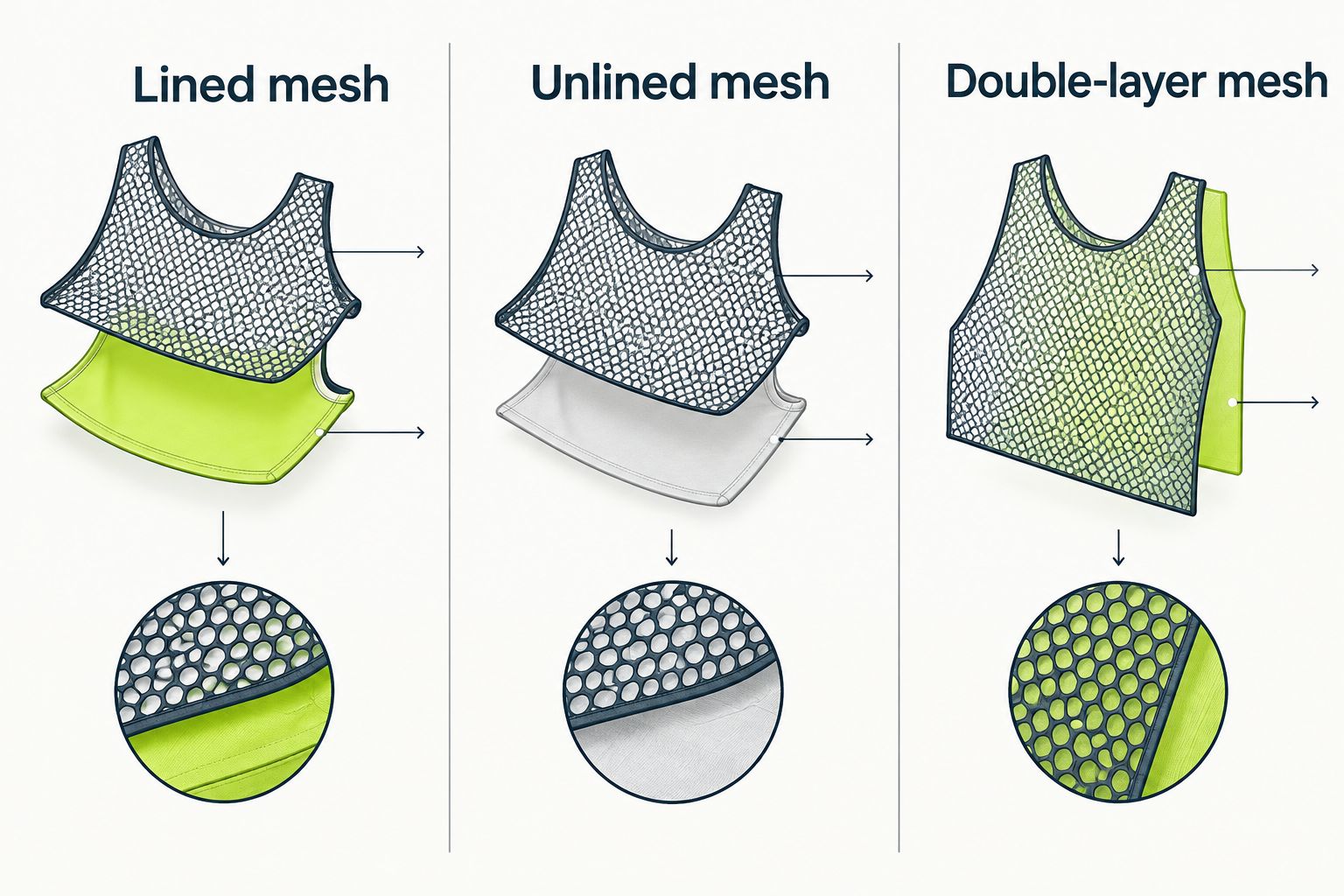
For a 2026 purchase, inspect the inner construction as closely as the outer fabric. Your skin touches the inside, and that is where an otherwise promising pair can lose on comfort.
WHEN A TRAINING-SHORT ALTERNATIVE MAKES MORE SENSE
TLF Apparel is best for men seeking training and Gym-To-Street(R) shorts rather than choosing by mesh alone. Its supplied product descriptions identify nylon stretch Track Shorts and training options with specific inseams and side vents. These are alternatives—not entries in the mesh ranking.
If your real requirement is comfortable movement or a longer everyday silhouette, compare those features directly. Do not treat “breathable,” “stretch,” and “mesh” as interchangeable terms.
| TLF Apparel option | Best for | Stated construction or length | Key limitation for this search |
|---|---|---|---|
| Track Shorts, Men's GTS Edition | Longer training-to-everyday styling | 8.5-inch inseam; nylon stretch | Described as nylon stretch, not established as mesh |
| Train Element 5 Inch Shorts | Shorter training coverage | 5-inch inseam; side vents | Mesh construction is not established by the supplied description |
| Train Element 7 Inch Shorts | More coverage during training | 7-inch inseam; side vents | Mesh construction is not established by the supplied description |
Alternative pros: The stated inseams make length comparisons concrete, and the Train Element descriptions identify side vents for training movement. The Track Shorts description identifies nylon stretch rather than leaving the material category unnamed.
Alternative cons: These descriptions do not establish a mesh shell. Inseam and side vents also do not establish pocket security, liner fit, or opacity.
For TLF Apparel mesh mens shorts shopping in 2026, keep the distinction clear: buy a verified mesh construction if mesh is essential; compare these alternatives if length and training use matter more.
Verdict: Hold the purchase until the actual fabric and layer setup match your requirement.
HOW THE RANKING WORKS
The ranking prioritizes layer setup, movement, coverage, waist security, and carry needs. Lined mesh is the default because it combines shell and inner layer; unlined mesh wins when independent layer choice matters more. Shorter, longer, and double-layer options solve more specific preferences.
This is a construction-based buying guide, not a laboratory comparison of named products. The recommended order changes when your use case changes. A basketball-style outfit and a squat-focused session do not need the same hem position.
WHICH MESH SHORTS SHOULD YOU CHOOSE?
Choose lined mesh shorts if you are undecided and want a single integrated setup. Check the liner first. If you already have a base layer you trust, choose unlined mesh instead.
For leg-focused lifting, prioritize a clear leg opening and a shorter hem. For basketball-style coverage, prioritize a longer cut that stays clear during bends. For everyday outfits, consider double-layer mesh if its backing provides the coverage you need.
The best mesh mens shorts in 2026 are the pair whose construction matches your routine—not the pair with the most athletic-looking product photo.
FAQ
What's the best type of mesh shorts for men?
Lined mesh shorts are the default for men who want an integrated setup for mixed gym sessions. Choose unlined mesh instead if you prefer selecting your own supportive base layer.
Can I wear mesh shorts without a liner?
Yes, provided the shorts give you appropriate coverage with the layer you wear underneath. Check opacity while standing, sitting, and bending; open mesh is not automatically suitable without underwear or a base layer.
Are shorter mesh shorts better for squats?
Shorter mesh shorts suit lifters who want less fabric around the thighs. Leg-opening width and liner fit still determine whether the garment lets you squat without restriction.
Are longer mesh shorts better for basketball?
Longer mesh shorts suit men who prefer basketball-style coverage. Check lateral movement and deep bends, because length alone does not establish that a pair works well on court.
Does mesh mean a pair of shorts is moisture-wicking?
No, mesh construction does not by itself establish moisture-wicking performance. Mesh describes the open fabric structure; moisture management depends on the material and its treatment.
Are TLF Apparel Track Shorts mesh shorts?
The supplied men's Track Shorts description identifies nylon stretch and an 8.5-inch inseam, not mesh construction. Treat them as a longer training-to-everyday alternative rather than a verified mesh recommendation.
Should I choose an attached liner or separate compression shorts?
Choose an attached liner for an integrated setup and separate compression shorts for independent control over fit. Test the complete combination during movement, including how the waistbands and seams sit.
ONE LAST THING
Bring your phone into the fit check. Shorts that feel right with empty pockets can behave differently once you carry your normal essentials. Walk, squat, and sit with the pocket loaded; check whether the contents pull the waistband or swing against your leg.
If you never carry anything during training, do not let pocket count decide your purchase. Choose for the way you actually wear the shorts.


