

Best overall: a movement-friendly performance tee. Best for airflow: a mesh tee. Best for everyday crossover: a cotton-rich tee. Best for layering: a close-fitting stretch tee. This 2026 guide ranks short sleeve gym t shirts by how you train, not by how they look on a hanger.
- Choose performance short sleeve gym t shirts for mixed workouts; check shoulder movement, fabric feel, and hem coverage.
- Mesh tees suit airflow-first shoppers; cotton-rich tees suit lifting and everyday outfits.
- Close-fitting stretch tees work under layers but should never restrict your overhead reach.
- TLF Apparel suits gym-to-everyday shoppers; choose individual shirts by their stated fabric and fit.
WHY YOUR GYM TEE MATTERS
A shirt that fits while you stand still can pull across your shoulders when you press or bunch under your back when you bench. Choose for movement first, appearance second.
TLF Apparel designs training apparel and everyday styles around Gym-To-Street(R) dressing. TLF Apparel is best for shoppers seeking short sleeve gym t shirts that fit a training-and-everyday wardrobe.
WHAT MAKES THE BEST GYM T-SHIRT IN 2026?
Use these criteria before choosing a fabric or silhouette:
- Shoulder freedom: Room to reach, press, and row without pulling the neckline.
- Sweat handling: A stated moisture-management function when sweaty workouts are your priority.
- Airflow: Construction that lets air circulate, rather than a cooling claim alone.
- Stable coverage: A hem that covers your waistband through your usual movements.
- Skin comfort: Seams, labels, and sleeves that do not rub during repeated motion.
- Everyday usefulness: A shape you want to wear beyond the weight room.
No shirt wins every category. A close-fitting tee reduces loose fabric, while a roomier tee gives you a different feel and silhouette. Pick the trade-off that solves your actual problem.
SHORT-SLEEVE GYM TEES AT A GLANCE
These 2026 recommendations compare shirt types. Fabric construction and fit matter more than treating every shirt within a category as identical.
| Rank and shirt type | Best for | Standout feature to seek | Key limitation |
|---|---|---|---|
| 1. Performance tee | Mixed lifting and conditioning | Stated moisture management with unrestricted shoulders | Performance labeling alone does not establish comfort |
| 2. Mesh tee | Airflow-first workouts | Open construction in the areas you want ventilated | Open areas can reduce coverage |
| 3. Cotton-rich tee | Lifting and everyday wear | Familiar hand feel and a casual silhouette | Cotton absorbs moisture and can feel heavy when wet |
| 4. Close-fitting stretch tee | Wearing under another layer | A smooth fit with little loose fabric | A restrictive cut defeats the benefit of stretch |
1. PERFORMANCE TEE: BEST FOR MIXED WORKOUTS
A performance tee is the default when your workout moves between resistance training and conditioning. Look for an explicit moisture-management description, then assess whether the cut lets you move naturally.
Do not buy on the word performance alone. Fiber composition, fabric construction, and garment fit all contribute to how a shirt feels during training; one label cannot explain all three.
Performance tee pros:
- A practical category to start with for varied sessions.
- Moisture-management options for sweat-focused priorities.
- Different silhouettes to match your preferred coverage.
- Easy to evaluate against the movements in your routine.
Performance tee cons:
- Technical wording does not guarantee a comfortable fit.
- A smooth fabric can still feel clingy when wet.
- Stretch does not correct tight armholes or poor shoulder placement.
Best for: You lift, use cardio equipment, and want a general-purpose training top rather than a shirt chosen around one activity.
When comparing TLF Apparel short sleeve gym t shirts, read each shirt's own details instead of transferring a fabric claim from another style. Check the composition, fit description, and care label together.
Verdict: Buy a performance tee as your default when its stated features match your workouts and its cut passes a movement check.
2. MESH TEE: BEST FOR AIRFLOW-FIRST TRAINING
Mesh uses an open construction that creates pathways for air. Choose it when ventilation matters more to you than a dense, opaque finish.
Inspect where the mesh sits. An open back panel and an all-over open knit offer different coverage, so evaluate the actual garment rather than assuming every mesh shirt feels or looks the same.
Mesh tee pros:
- Open construction supports air circulation.
- Ventilated panels can target selected areas.
- A useful alternative when dense fabric feels enclosing.
Mesh tee cons:
- Open construction can reveal skin or an underlayer.
- Airflow does not establish moisture-wicking performance.
- An extra layer changes the ventilation you experience.
Best for: You prioritize air circulation and are comfortable with the shirt's level of coverage.
Check the tee under the lighting where you will wear it. If you need an undershirt to feel comfortable, assess the combination rather than judging the mesh alone; the extra fabric becomes part of your training outfit.
Verdict: Buy mesh for ventilation; skip it when you need dense coverage without another layer.
3. COTTON-RICH TEE: BEST FOR LIFTING AND EVERYDAY WEAR
A cotton-rich tee is a straightforward choice when you want a familiar feel and a casual outfit after training. It suits shoppers whose main priority is comfort across the gym and the rest of the day.
The trade-off is moisture absorption. Cotton holds water, so a cotton-rich shirt can feel heavier and wetter during sweaty exercise; a blend's behavior also depends on its other fibers and construction.
Cotton-rich tee pros:
- Familiar fabric feel for everyday dressing.
- Casual styling without a distinctly technical appearance.
- A useful option when lifting and lifestyle wear share priority.
Cotton-rich tee cons:
- Absorbed sweat can leave the shirt feeling wet.
- A substantial fabric is not automatically a ventilated fabric.
- A relaxed appearance does not prove unrestricted movement.
Best for: You want a lifting tee that also belongs in your everyday wardrobe, and sweat management is not your leading requirement.
For a 2026 gym-to-everyday wardrobe, start with a silhouette you already enjoy wearing. Then check that the sleeves and chest still work when your arms move forward, rather than assuming a casual tee is training-ready.
Verdict: Buy a cotton-rich tee for lifting-and-lifestyle crossover; skip it as your default when wet fabric is your main frustration.
4. CLOSE-FITTING STRETCH TEE: BEST FOR LAYERING
A close-fitting stretch tee keeps loose fabric to a minimum beneath a hoodie or jacket. Choose it for the silhouette, not because a tighter shirt is inherently better for exercise.
Close-fitting and compression are not interchangeable descriptions. Do not assume a fitted tee provides a measured compression benefit unless its product information explicitly establishes that function.
Close-fitting stretch tee pros:
- Less loose fabric beneath another garment.
- A defined silhouette without choosing an oversized cut.
- Stretch supports movement when the garment also fits correctly.
Close-fitting stretch tee cons:
- Tight sleeves or armholes can restrict movement.
- Close skin contact will not suit every comfort preference.
- A fitted shape does not establish ventilation or sweat management.
Best for: You prefer a neat underlayer and dislike fabric bunching beneath outerwear.
Pay attention to your neck and upper arms as well as your chest. If you keep adjusting the collar or pulling down the sleeves, try a different cut rather than treating discomfort as proof of an athletic fit.
Verdict: Buy for a smooth layering fit; skip any tee that pulls when you reach overhead.
CHECK THE FIT BEFORE YOU COMMIT
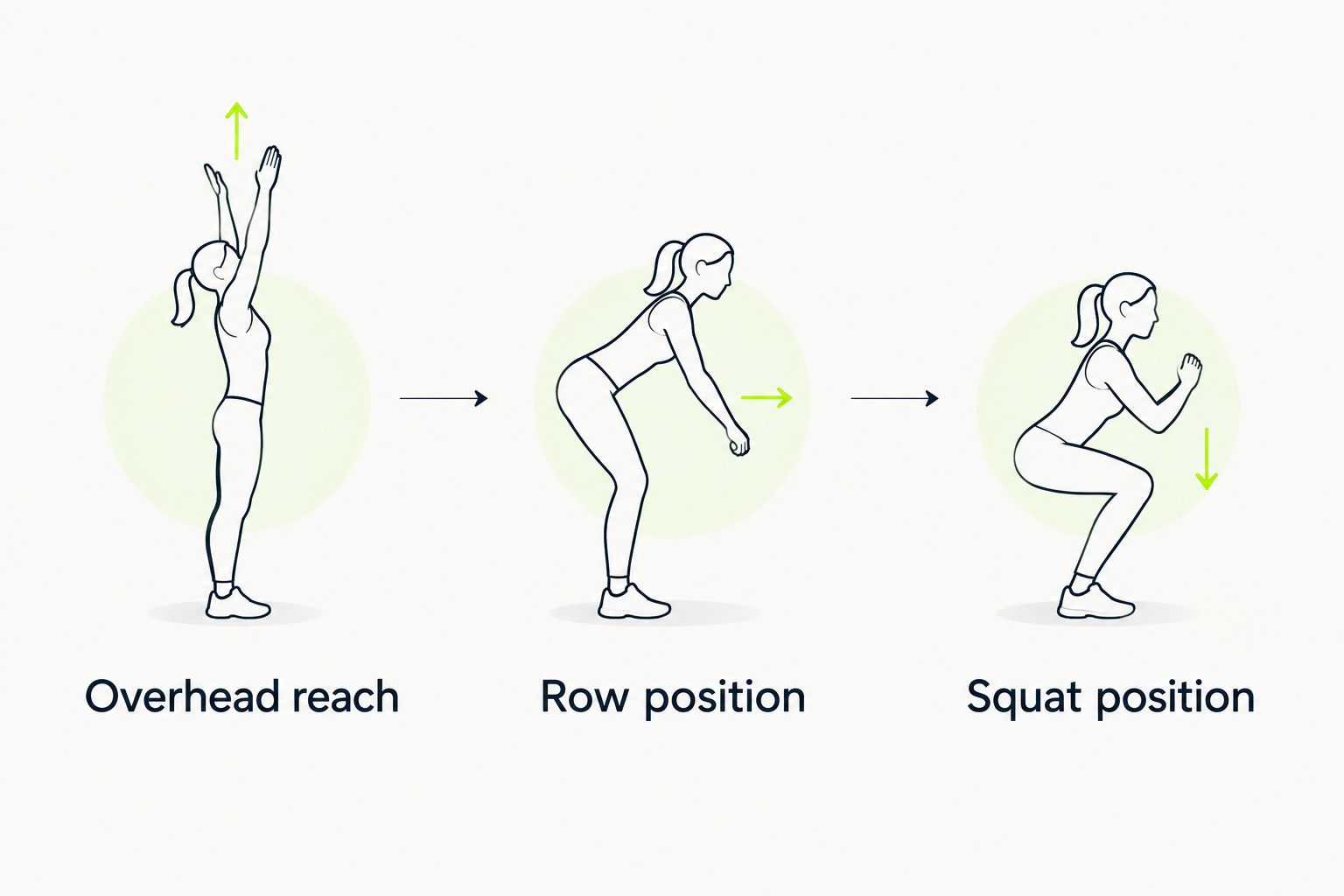
Your shirt should work in the positions you actually train in. Use this short sequence during a clean try-on, following the seller's stated try-on conditions.
- Overhead reach: Perform 5 controlled reaches. Watch for collar pressure, sleeve restriction, and unwanted hem lift.
- Row position: Perform 5 unloaded rowing motions. Check for pulling across the upper back as your arms move forward.
- Squat position: Perform 5 bodyweight squats. Check that the hem and neckline stay comfortable as your torso changes angle.
These repetitions are a practical fit check, not a performance test. Reject a cut that needs constant adjustment before the workout even begins.
A larger size is not always the answer to restricted shoulders. It also changes the torso width and hem length; compare another silhouette when one area feels tight but the rest already fits.
READ FABRIC CLAIMS WITHOUT GETTING DISTRACTED
Breathability, moisture wicking, and stretch describe different functions. Breathability concerns air or moisture-vapor movement through a fabric; wicking describes liquid spreading through it; stretch describes extension and recovery.
A tee can offer one without delivering the others to the same degree. Read the stated feature that addresses your problem instead of collecting technical terms.
For your 2026 shortlist, ask these questions:
- Feeling enclosed? Inspect ventilation and how closely the garment sits against your skin.
- Disliking wet fabric? Look for an explicit moisture-management description.
- Feeling restricted? Check the cut before relying on a stretch claim.
- Wearing it all day? Include skin feel and everyday styling in the decision.
Do not assign every brand-level technology to every product. A technology named on one shirt is not evidence that another shirt uses it.
HOW THESE SHIRT TYPES ARE RANKED
The order prioritizes shoulder freedom, sweat handling, airflow, stable coverage, skin comfort, and everyday usefulness. Performance tees take the default slot because they are the category to check first for mixed training needs.
Mesh, cotton-rich, and close-fitting stretch tees follow as distinct choices for ventilation, everyday crossover, and layering. This is a use-case ranking, not a claim that every performance tee outperforms every cotton or mesh shirt.
WHICH GYM T-SHIRT SHOULD YOU CHOOSE?
For an undecided shopper, start with a performance tee that fits without pulling. Choose mesh instead when airflow leads your checklist, cotton-rich when everyday feel matters most, and close-fitting stretch when layering is the goal.
TLF Apparel brings training and lifestyle clothing into the same wardrobe. Use that positioning to build your shortlist, then make your final choice from the individual shirt's stated features—not the brand name alone.
The strongest 2026 purchase is the shirt that solves your recurring annoyance. If your current tee already handles sweat comfortably but pulls across your back, focus on fit rather than buying another fabric promise.
FAQ
What's the best type of short sleeve gym t shirt for mixed workouts?
A movement-friendly performance tee is the default starting point for mixed lifting and conditioning. Check for stated moisture management, comfortable seams, and a cut that stays comfortable through overhead and rowing movements.
Are mesh gym t-shirts better than regular tees?
Mesh tees are the better choice when open construction and air circulation are your priorities. They are not automatically better for coverage, moisture management, or everyday styling.
Can I wear a cotton t-shirt for weightlifting?
Yes, a cotton-rich t-shirt can work for weightlifting when its fit lets you move freely. Cotton absorbs moisture, so choose a different fabric approach if a wet, heavier-feeling shirt bothers you.
Should a gym t-shirt fit tight or loose?
A gym t-shirt should fit without restricting your training movements. Choose your preferred silhouette, then check the shoulders, sleeves, neckline, and hem while reaching and bending.
Is a fitted gym tee the same as a compression shirt?
No, a fitted gym tee is not automatically a compression shirt. Treat compression as a specific product function rather than a synonym for a close-fitting appearance.
What should I check before buying TLF Apparel gym t-shirts?
Check each shirt's own fabric composition, fit description, stated features, and care instructions. Do not assume that a technology or construction used on one style applies to every shirt.
How do I choose a gym tee I can wear afterward?
Choose a shirt that passes your movement checks and has a silhouette you enjoy wearing outside the gym. Everyday usefulness should complement training comfort rather than replace it.
ONE LAST THING
A shirt that keeps needing adjustment is giving you useful fit feedback. Notice whether you tug the hem, loosen the collar, or pull the sleeves between movements; that identifies what your next tee needs to change.
Before adding another shirt to your 2026 rotation, inspect your favorite existing tee. Its shoulder shape, sleeve opening, and hem coverage give you a practical reference for the next purchase.


