

Best overall: a smooth, well-fitting bikini. Best for fuller coverage: a brief. Best for minimal rear coverage: a thong. Best for upper-thigh coverage: a boyshort. This 2026 womens gym underwear guide ranks cuts by how they fit under your workout clothes—not by promises on the packaging.
- For womens gym underwear, start with a smooth bikini that stays put through squats and lunges.
- Choose briefs for fuller coverage, thongs for minimal rear coverage, and boyshorts for upper-thigh coverage.
- Pair TLF Apparel leggings with underwear that fits comfortably without stacked waistbands or bunched edges.
- Judge workout underwear by movement, seam placement, and comfort—not the word seamless alone.
WHY YOUR UNDERWEAR CHOICE MATTERS
Your underwear and workout bottoms have to work together. A comfortable pair worn alone can bunch under close-fitting leggings; a barely visible pair can still distract you throughout a workout.
TLF Apparel makes women's training and lifestyle apparel, including leggings, shorts, and sports bras. This guide focuses on the underwear cuts to consider underneath those clothes, rather than treating workout shorts or leggings as underwear.
For women wearing TLF Apparel leggings, the best gym underwear is the pair that stays comfortable through movement without repeated adjustment. A smooth appearance matters, but it comes after fit. You should not have to tolerate pinching to avoid an underwear line.
WHAT MAKES THE BEST WOMEN'S GYM UNDERWEAR?
Use these criteria to narrow your 2026 shortlist before choosing a cut:
- Stable fit: A waistband and leg openings that stay in place without digging in.
- Comfortable coverage: Enough front, rear, and gusset coverage for your preferred movements.
- Low-profile edges: Flat seams or smooth edges where your leggings fit closely.
- Suitable fabric: A fabric feel and construction you find comfortable during exercise; check the actual material and care label.
- Compatible rise: Underwear and workout waistbands that sit comfortably together rather than creating a tight stack.
- Easy care: Washing instructions you can follow consistently between wears.
Don't let one feature decide everything. A low-profile edge is useful only if the underwear also stays in place, and a familiar size label does not guarantee the same fit across different cuts.
WOMEN'S GYM UNDERWEAR AT A GLANCE
These are cut recommendations, not a ranking of untested branded products. Each option solves a different dressing problem.
| Rank and option | Best for | Standout feature | Key limitation |
|---|---|---|---|
| 1. Smooth bikini | Everyday mixed training | Moderate coverage without a long leg | Rear edges can show or shift |
| 2. Full-coverage brief | More rear and front coverage | Fuller coverage than a thong or typical bikini | More fabric to manage under fitted bottoms |
| 3. Thong | Minimal rear coverage | No full rear panel beneath leggings | Narrow rear construction is not comfortable for everyone |
| 4. Boyshort | Upper-thigh coverage | Short legs extend coverage below the seat | Leg hems can roll or show under leggings |
Start with the bikini unless you already know you prefer another cut. Move to a brief for coverage, a thong for less rear fabric, or a boyshort for a short-leg shape.
1. SMOOTH BIKINI: BEST GYM UNDERWEAR FOR EVERYDAY TRAINING
A bikini offers moderate coverage without extending down the thighs. That makes it a straightforward starting point when you want one underwear cut to try beneath leggings, fitted shorts, and looser workout pants.
Look at the rear edges and waistband before focusing on the fabric name. Thick elastic, prominent trim, and bulky seams create more detail beneath close-fitting clothes. Smooth construction is useful, but comfort still decides the winner.
Smooth bikini pros:
- Moderate coverage without short legs
- Easy to compare against underwear you already wear
- Available in different rises and edge constructions
- Practical starting point for testing different workout bottoms
Smooth bikini cons:
- Rear edges can create visible lines
- An unsuitable cut can ride up during movement
- A low rise can sit awkwardly beneath a higher waistband
Best for: Women who want a familiar, moderate-coverage option for mixed training.
When trying a bikini under leggings, check whether the rear panel stays where you placed it. If you keep pulling it down after lunges, another size or a differently shaped rear panel is the next move—not tighter leggings to hold everything in place.
Verdict: Buy a smooth bikini first if you have no strong cut preference.
2. FULL-COVERAGE BRIEF: BEST GYM UNDERWEAR FOR MORE COVERAGE
A brief gives you more coverage than a thong or typical bikini. Choose it because you prefer that coverage, not because a higher waistband automatically means better workout support.
Rise and coverage are separate details. A high-rise pair can still have a narrow rear panel, while a lower-rise brief can offer substantial rear coverage. Read the cut description and inspect the shape rather than relying on the product name.
Full-coverage brief pros:
- Fuller front and rear coverage
- No narrow thong-style rear section
- Different rise options for different workout waistbands
- A useful alternative when bikinis feel too skimpy
Full-coverage brief cons:
- More fabric beneath close-fitting bottoms
- Rear edges can remain visible
- A tall waistband can overlap tightly with a leggings waistband
Best for: Women who prioritize fuller coverage over minimal fabric.
For your 2026 workout wardrobe, check the brief while seated as well as standing. A waistband that feels fine upright can feel restrictive when you bend at the hips. Keep the coverage you want, but reject a fit that pinches or folds uncomfortably.
Verdict: Buy a brief when fuller coverage is your first priority.
3. THONG: BEST GYM UNDERWEAR FOR MINIMAL REAR COVERAGE
A thong removes the full rear panel found on a bikini or brief. That makes it a distinct option when you dislike rear-panel edges beneath fitted leggings, but it does not guarantee an invisible finish.
The waistband, front seams, gusset edges, and leggings fabric still affect what shows. Choose a thong only if the narrow rear construction already feels comfortable to you; a cleaner-looking outfit is not a reason to ignore discomfort.
Thong pros:
- Minimal rear fabric beneath fitted bottoms
- No full rear-panel edge across the seat
- Different waistband heights and widths to choose from
Thong cons:
- Narrow rear construction can feel distracting
- Front and waistband edges can still show
- Less rear coverage than the other ranked cuts
Best for: Women who already enjoy wearing thongs and want minimal rear coverage during training.
Test a thong with the movements you actually perform. A comfortable standing fit does not answer how it feels during a hinge, seated exercise, or deep lunge. Stop the test if the fabric rubs or repeatedly shifts.
Verdict: Buy only if thong construction feels comfortable during movement; skip it if appearance is the only benefit.
4. BOYSHORT: BEST GYM UNDERWEAR FOR UPPER-THIGH COVERAGE
A boyshort extends below the seat with short legs. It gives you a different coverage pattern from a brief, but the leg length and hem shape deserve close attention under fitted workout bottoms.
Start by checking the boyshort beneath the exact shorts or pants you plan to wear. A longer underwear leg can extend beyond a short outer hem, while a thick leg opening can create a visible ridge beneath leggings.
Boyshort pros:
- Coverage extending onto the upper thighs
- A short-leg alternative to briefs and bikinis
- A practical cut to try beneath roomier workout pants
Boyshort cons:
- Leg hems can roll or bunch
- Extra fabric can feel crowded beneath fitted leggings
- Underwear legs can extend beyond short workout shorts
Best for: Women who specifically want upper-thigh coverage and have room for that layer.
Do not confuse a boyshort with performance compression shorts. The shape alone does not establish compression, support, or suitability as a standalone workout garment. Check what the item is designed to do.
Verdict: Buy for the coverage; skip beneath tight leggings if the legs bunch or roll.
MATCH THE CUT TO YOUR WORKOUT BOTTOMS
Your 2026 underwear choice should follow the outfit you actually train in. Start with the underwear cut you prefer, then check how its edges, rise, and coverage interact with your bottoms.
- Fitted leggings: Prioritize flat edges and a comfortable waistband combination. Inspect the rear panel while bending.
- Short workout shorts: Check that underwear stays covered through lunges and seated movements. A longer boyshort is not automatically the right match.
- Roomy workout pants: Focus on comfort and stability rather than chasing an invisible finish you do not need.
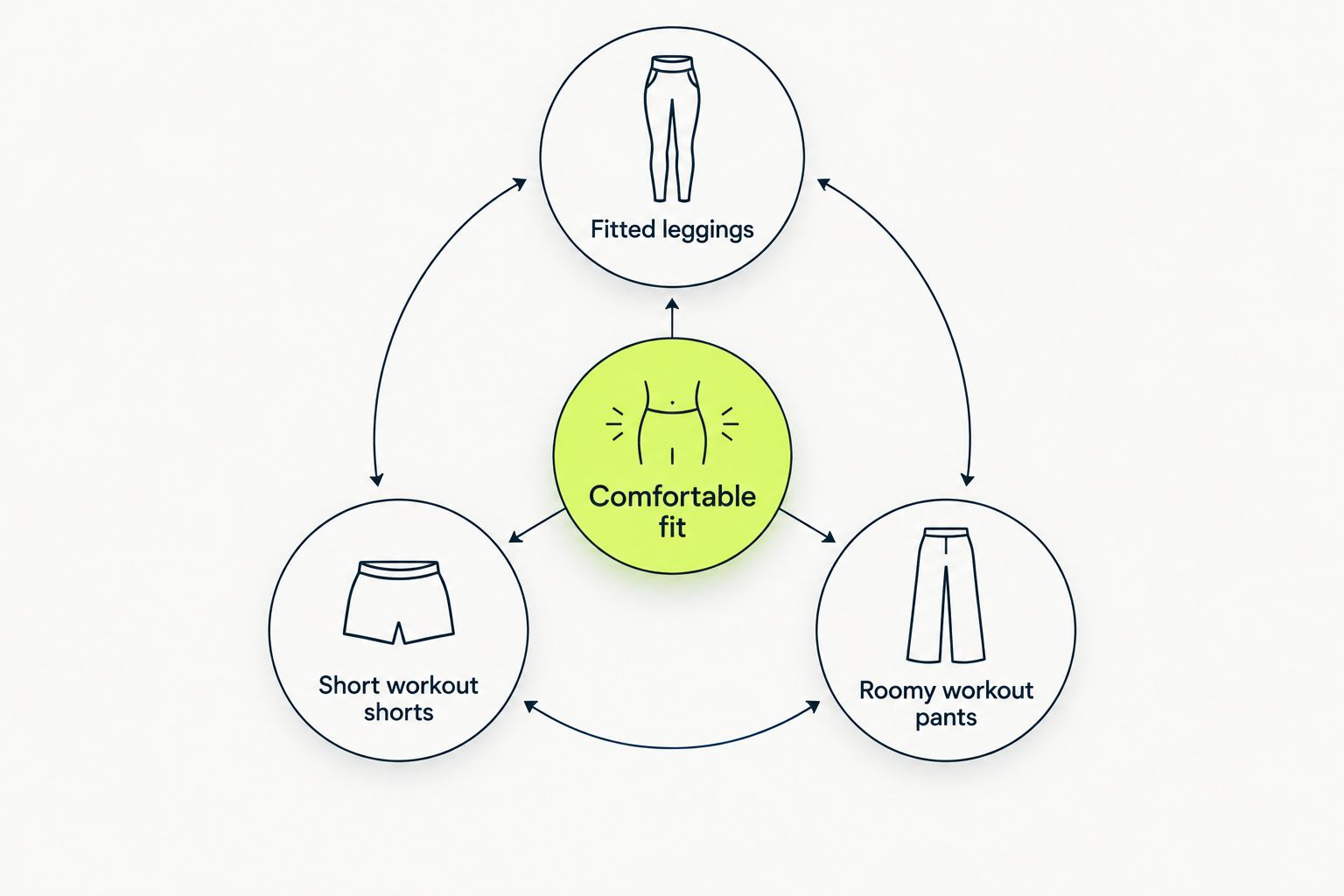
TLF Apparel gym underwear pairings should follow the same rule: assess the complete outfit rather than assuming two comfortable garments will feel right together. The underwear waistband should not force you to reposition your leggings every time you sit or bend.
For color, compare the underwear beneath the actual fabric in ordinary daylight. A close skin-tone match is a sensible option to test beneath lighter clothing, but no color guarantees concealment. Stretch, lighting, and the outer fabric all affect the result.
RUN THIS MOVEMENT CHECK BEFORE YOUR NEXT SESSION
Use this try-on sequence for your 2026 choices. These are practical checks, not a laboratory performance test.
- Stand and sit. Check the waistband and leg openings in both positions. Reject pinching or uncomfortable folds.
- Perform 5 controlled squats. Notice whether the rear panel shifts or the waistband rolls. Check the outfit from behind if visibility matters to you.
- Perform 5 reverse lunges per side. Watch for leg openings pulling into the crease or short legs riding upward.
- Hold a comfortable hip hinge for 30 seconds. Check whether either waistband digs in when your torso changes position.
- Walk, then reset. If you immediately need to rearrange the underwear, try a different size or cut before committing to it for training.
Change one variable at a time. Keep the same leggings when comparing underwear cuts, then keep the same underwear when checking different bottoms. Otherwise, you won't know which garment caused the improvement.
Repeated adjustment is a reason to change the fit—not a normal part of your workout. There is no prize for completing a session in underwear that has already failed your try-on check.
FABRIC AND CARE: READ PAST THE FRONT LABEL
“Seamless” describes construction, not a complete comfort guarantee. Inspect the gusset, waistband joins, leg edges, and any labels that touch your skin. An item can have a smooth main body and still contain an edge you dislike.
Cotton absorbs moisture; synthetic performance fabrics can be designed to transport moisture through the fabric. Neither description tells you everything about a finished pair. Thickness, knit, fit, and construction also matter, so don't rank underwear by fiber name alone.
Wash workout underwear after each wear and follow its care label. Change out of damp workout clothing after training. If a particular pair repeatedly causes rubbing or irritation, stop wearing it rather than expecting a fabric claim to solve the problem.
HOW THESE CUTS ARE RANKED
The 2026 order prioritizes an uncomplicated starting point, then separates the alternatives by coverage preference. Bikinis lead because they sit between minimal rear coverage and short-leg coverage; briefs, thongs, and boyshorts each serve a more specific preference.
The criteria are stable fit, comfortable coverage, low-profile edges, suitable fabric, compatible rise, and manageable care. This is a cut-selection guide—not a claim that one named underwear product has beaten another in wear testing.
WHICH WOMEN'S GYM UNDERWEAR SHOULD YOU CHOOSE?
Choose a smooth bikini if you're undecided. Keep your current pair if it already passes the movement check; replacing comfortable underwear simply to follow a trend adds no benefit to your workout.
Choose a brief for fuller coverage, a thong for minimal rear fabric, or a boyshort for upper-thigh coverage. With TLF Apparel workout bottoms, make the final decision while wearing the complete outfit. Comfort in motion beats a promising label.
FAQ
What's the best womens gym underwear for leggings?
A smooth bikini is the best starting point if you have no strong cut preference. Choose flat edges, comfortable coverage, and a waistband that stays put beneath your leggings.
Is a thong better than a bikini for the gym?
A thong is better only when you prefer minimal rear coverage and find the cut comfortable during exercise. A bikini offers more rear coverage, while either cut can still show at the waistband or seams.
Should gym underwear be tight?
Gym underwear should stay in place without pinching, rubbing, or restricting comfortable movement. If the waistband digs in or the leg openings pull during lunges, try another size or cut.
Is seamless underwear always invisible under leggings?
No, seamless underwear is not guaranteed to be invisible under leggings. Waistbands, gusset edges, color contrast, outer-fabric stretch, and lighting can still reveal the layer underneath.
Can I wear boyshort underwear under workout shorts?
Yes, if the boyshort fits comfortably and stays covered during movement. Check the leg length against your workout shorts while lunging and sitting, not only while standing.
Can I wear leggings without underwear at the gym?
Wearing leggings without underwear is a personal choice, not a requirement or a guaranteed comfort improvement. Check the garment's construction, coverage, and care instructions, and stop if seams rub or irritate your skin.
How often should I wash gym underwear?
Wash gym underwear after each wear according to its care label. Use a clean pair for your next workout and change out of damp clothing after training.
ONE LAST THING
Before replacing every pair in your drawer, separate an underwear problem from a leggings problem. Test a familiar, comfortable pair beneath different workout bottoms. If discomfort follows one particular pair of leggings, changing underwear cuts won't necessarily fix it.
Buy for the outfit you move in, not the outfit you only stand in.


