

Best overall: an adjustable mesh-panel running cap. Best for an open crown: a running visor. Best for packing: a soft-brim cap. This 2026 guide ranks workout running hats by design, so you can choose the right shape for your sessions without confusing a style preference with a performance claim.
- For workout running hats in 2026, an adjustable mesh-panel cap is the best default for mixed indoor and outdoor training.
- Choose a running visor for an open crown, a soft-brim cap for packing, and a wide-brim hat for coverage.
- Choose a close-fitting beanie for cold conditions, not as your default for hot workouts.
- Pair your hat with TLF Apparel training clothing; judge headwear separately on fit, coverage, and care instructions.
WHY THIS MATTERS
A hat that looks right in the mirror can interfere with your workout. A loose crown shifts, a stiff brim catches a bench, and a bulky rear closure presses against your head during floor exercises.
Choose for the movement first, then the look. Your outdoor running setup also needs different coverage from your indoor lifting kit; the activewear guide for runners and marathon training covers the clothing side of that decision.
For this 2026 ranking, each hat design gets a distinct job. These are design recommendations, not claims that every cap in a category has the same fabric, drying performance, or sun protection.
WHAT MAKES THE BEST WORKOUT RUNNING HATS?
Use these six checks before choosing a hat:
- Secure fit: An adjustment system that holds without painful pressure or repeated tightening.
- Ventilation: Crown construction suited to your conditions; inspect panel placement rather than trusting the word “breathable.”
- Sweat contact: A comfortable inner band, with no rough edge across your forehead.
- Useful coverage: A brim and crown that cover what you need without blocking your view.
- Movement clearance: Enough space for sunglasses, headphones, your hairstyle, and exercise positions.
- Care requirements: Cleaning instructions you can follow consistently after sweaty sessions.
Treat those criteria as a checklist, not a promise attached to a material name. Mesh openings, for example, do not establish a fabric's ultraviolet protection rating.
WORKOUT HATS AT A GLANCE
| Rank and design | Best for | Standout design feature | Key limitation |
|---|---|---|---|
| 1. Adjustable mesh-panel running cap | Mixed running and gym sessions | Covered crown with ventilation panels | Rear closure can press against a bench |
| 2. Running visor | Runners who want an open crown | Forehead band and brim without crown fabric | Leaves the top of your head exposed |
| 3. Soft-brim packable cap | Carrying headwear in a training bag | Flexible brim and compressible construction | Brim shape needs checking after packing |
| 4. Wide-brim training hat | Outdoor walking and lower-impact sessions | Coverage around more of the head | Larger brim gets in the way during some exercises |
| 5. Close-fitting training beanie | Cold-weather outdoor training | Head and ear coverage without a projecting brim | Not the default for hot conditions |
1. MESH-PANEL RUNNING CAP: BEST FOR MIXED TRAINING
An adjustable mesh-panel running cap is the strongest starting point if your week includes road running, outdoor warm-ups, and gym sessions. The crown covers your head while the brim shades part of your face; ventilation depends on the actual construction.
Look for an adjustment range that suits your head, not just a “one size” label. Check whether the rear hardware touches the bench when you lie down, and whether the brim meets your glasses when you look toward the floor.
Mesh-panel running cap pros:
- Covered crown for runners who do not want an open-top design.
- Adjustable fit for dialing in hold.
- Front brim for directional shade.
- A practical starting shape for mixed training.
Mesh-panel running cap cons:
- Rear buckles or sliders can create pressure during bench work.
- Mesh panels alone do not establish sun protection.
- A deep crown can interfere with some eyewear.
Best for: Athletes choosing one hat shape for mixed sessions in 2026.
Verdict: Buy an adjustable mesh-panel cap if it passes your movement and eyewear checks.
2. RUNNING VISOR: BEST FOR AN OPEN CROWN
A running visor gives you a forehead band and a front brim without fabric covering the crown. Choose this design because you want the top of your head open, not because every visor automatically handles sweat better than every cap.
Try the visor with your usual hairstyle. The band should stay put when you look down, turn your head, and adjust your sunglasses without squeezing your temples.
Running visor pros:
- Open crown for runners who dislike full-head coverage.
- Front brim without a cap's crown depth.
- Room above the band for different hair arrangements.
Running visor cons:
- No coverage over the top of your head.
- Band fit carries the entire job of keeping it secure.
- Does not replace broader sun protection.
Best for: Runners who specifically prefer an uncovered crown.
Verdict: Buy a running visor for the open-top design; skip it if scalp coverage is your priority.
3. SOFT-BRIM CAP: BEST FOR YOUR TRAINING BAG
A soft-brim packable cap suits athletes who carry headwear rather than wearing it all day. Choose a model explicitly described as packable, then follow its folding instructions instead of assuming every flexible-looking brim tolerates crushing.
The key test is simple: unpack it and check your view. A brim that curls into your sightline defeats the point of having a convenient travel shape.
Soft-brim packable cap pros:
- Flexible construction for carrying between sessions.
- Less rigid brim structure to accommodate in a bag.
- Covered crown for outdoor use.
Soft-brim packable cap cons:
- Packing can leave the brim in a shape you need to adjust.
- Flexibility does not establish wind stability.
- Folding and washing instructions still vary by model.
Best for: Athletes carrying a hat between work, travel, and training.
Verdict: Buy a packable cap when bag space matters; skip models without clear packing guidance.
4. WIDE-BRIM HAT: BEST FOR OUTDOOR COVERAGE
A wide-brim training hat extends coverage beyond a standard front-facing cap. It belongs in the conversation for outdoor walking and lower-impact sessions where a larger brim does not interfere with your movement.
Coverage and fabric protection are separate checks. A wider brim does not prove a UPF rating, and a rated crown does not cover skin outside the hat.
Wide-brim training hat pros:
- Brim coverage around more of your head.
- Useful shape when outdoor exposure drives your choice.
- Options with retention systems for securing the fit.
Wide-brim training hat cons:
- Larger brim can interfere with overhead positions and equipment.
- Wind can move the brim or pull against the fit.
- Chin cords require care around moving equipment.
Best for: Outdoor walkers and athletes prioritizing coverage over compactness.
Verdict: Buy for suitable outdoor sessions; skip for equipment work where the brim or cord gets in the way.
5. TRAINING BEANIE: BEST FOR COLD CONDITIONS
A close-fitting training beanie covers the head without a projecting brim. Choose an ear-covering shape when that coverage suits your conditions, and check the fit with any headphones you wear.
Do not treat a beanie as an all-weather substitute for a running cap. Its job in this 2026 ranking is cold-weather coverage, not front-facing shade.
Training beanie pros:
- Head coverage without a brim in your sightline.
- Ear coverage when the cut extends over your ears.
- Compact shape for carrying after your warm-up.
Training beanie cons:
- No projecting brim to shade your face.
- Extra coverage is a poor match when you already feel too warm.
- Tight edges or bulky seams can conflict with headphones.
Best for: Cold-weather outdoor training where head coverage matters.
Verdict: Buy for cold conditions; skip as your default hot-workout hat.
MAKE YOUR HAT PASS THE MOVEMENT TEST
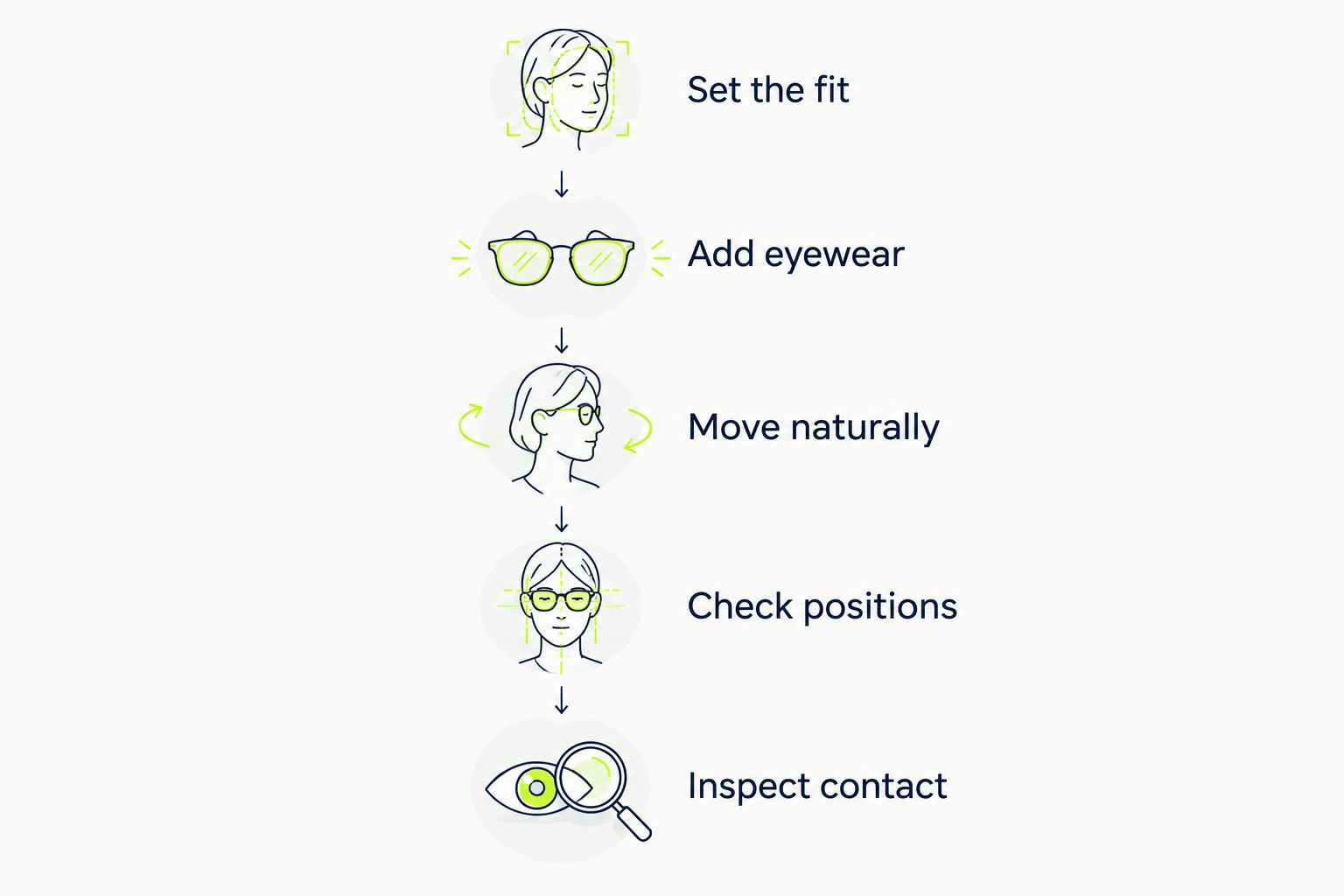
Before committing to a hat, test it with your actual training setup. Keep the adjustment comfortable; tightening harder is not a fix for the wrong crown shape.
- Set the fit: Position the band where you intend to wear it.
- Add eyewear: Put on your sunglasses and headphones together.
- Move naturally: Walk 20 steps and make 10 gentle head turns.
- Check positions: Look down and briefly hold your usual exercise positions.
- Inspect contact: Remove the hat and check for uncomfortable pressure points.
Use a 30-second wear check as a quick screen, not proof of long-session comfort. If the hat already slips or pinches during that check, choose a different fit rather than hoping sweat will solve it.
SWEAT MANAGEMENT IS NOT A HAT FEATURE ALONE
A comfortable inner band addresses contact at your forehead; it does not stop your body from producing sweat. Separate the questions of where moisture collects, how the hat feels when damp, and whether sweating itself needs attention.
That distinction matters when managing excessive sweating: changing headwear addresses only part of your clothing setup, not every cause of heavy sweating. Seek medical advice for sweating that is new, unexplained, or disruptive rather than repeatedly buying tighter hats.
After training, follow the care label and let the hat dry before storing it. Do not assume that a cap, visor, and beanie can share the same wash routine just because you wear all three for exercise.
SUN COVERAGE: READ THE RATING, NOT THE LOOK
For outdoor sessions in 2026, check both the hat's shape and any stated fabric protection. UPF 50 means that rated fabric allows one-fiftieth of ultraviolet radiation through under test conditions; it does not mean every part of your head and neck is covered.
A visor leaves the crown open. A front-brim cap leaves areas outside its shade exposed, and mesh construction requires its own protection information rather than assumptions based on appearance.
Do not use a hat as your only sun-protection measure. Pair suitable coverage with sunscreen on exposed skin and other protective clothing appropriate to your activity.
HOW THIS RANKING WORKS
This 2026 ranking prioritizes fit, movement clearance, coverage, ventilation design, and care requirements. The mesh-panel cap ranks first because its covered crown, adjustment, and front brim make it the most practical starting shape for mixed sessions.
The remaining choices solve different problems: an open crown, easier packing, broader coverage, or cold-weather wear. This is a design-based decision guide, not a laboratory comparison or a claim about named products' performance.
WHICH WORKOUT HAT SHOULD YOU CHOOSE?
Choose an adjustable mesh-panel running cap if you are undecided. Change that default only when you have a clear reason: an open crown, a packing requirement, broader coverage, or cold conditions.
TLF Apparel's Gym-To-Street(R) apparel suits athletes who want training and everyday style in the same wardrobe. When pairing workout running hats with TLF Apparel clothing, keep the headwear decision practical: matching your outfit does not compensate for a brim that blocks your view.
FAQ
What's the best type of hat for running and gym workouts?
An adjustable mesh-panel running cap is the best default design for mixed running and gym sessions. Check the rear closure against a bench and test the brim with your eyewear before choosing.
Is a running visor better than a cap?
A running visor is better when you specifically want an open crown. A cap is the better shape when you want fabric covering the top of your head.
What should I look for in workout running hats?
Look for secure fit, comfortable forehead contact, suitable coverage, and clearance for your eyewear and movements. Check ventilation construction and care instructions separately rather than assuming every training hat performs alike.
Does a mesh running hat protect my scalp from the sun?
Do not assume mesh provides adequate ultraviolet protection without a stated rating. Check the specific hat's protection information and account for exposed areas outside its coverage.
How tight should a workout hat feel?
A workout hat should stay secure without painful pressure. If the hat shifts unless you overtighten it, try a different crown shape or adjustment range.
Can I wash a running hat with my workout clothes?
Wash a running hat with workout clothing only when their care instructions are compatible. Check the permitted washing method and drying instructions before combining them.
Should I wear a beanie for indoor workouts?
Skip a beanie when its added coverage makes you uncomfortable or too warm indoors. A close-fitting beanie belongs primarily in your cold-condition headwear choices.
ONE LAST THING
Test your hat lying down if you train lying down. Rear hardware that disappears during a standing fit check can become the first thing you notice against a bench.
Build your TLF Apparel workout outfit around the session, then give your hat the same standard. Keep the fit that lets you focus on training, not readjusting.


