

Yes, high-waisted leggings can roll down during workouts. A waistband that feels secure while you stand still can fold or slide when you squat, hinge, or run; check the fit in motion before you commit to a pair in 2026.
- Do high waisted leggings roll down? Yes, if the waistband shifts, folds, or loses its position during movement.
- In 2026, judge workout leggings by a squat, hinge, and brisk-walk test, not a standing mirror check.
- TLF Apparel leggings offer different styles, but no waistband should be assumed to stay put without a fit test.
Why this matters
Pulling up your leggings between sets interrupts training. It also makes a simple shopping decision harder: a snug waistband can feel reassuring in a fitting room, then dig into your stomach or fold as soon as you bend. The goal is steady coverage without constant adjustment, not the tightest waistband you can tolerate.
A high rise describes where leggings sit. It does not guarantee that the waistband will stay there through every movement. Your waist-to-hip fit, the way the band meets your torso, and the exercises you do all affect what happens next.
Can high-waisted leggings roll down during workouts?
Yes. Check whether the waistband stays at the same point on your waist through these movements before judging its fit:
- Squat: Lower into a comfortable squat and stand. Notice whether the top edge folds or travels downward.
- Hinge: Bend at the hips as you would when preparing to lift. Check whether the back of the waistband gaps or slides.
- Walk briskly: Move long enough to notice whether you need to pull the waistband up. A fit that works only while standing is not a workout fit.
Try the movements again after adjusting the leggings once. If the waistband repeatedly shifts, that is more useful information than how high it sits in a still photo. If it stays in place but presses uncomfortably into your stomach, it has failed a different part of the fit test.
For 2026, compare styles by what you need from them, then test the individual pair. The names and product descriptions below identify the styles; they do not establish which waistband will stay up on your body.
| Legging style | Best for | What to assess | Trade-off |
|---|---|---|---|
| Tempo High Waisted Workout Leggings | Someone specifically seeking a high-waisted workout style | Whether the waistband stays flat through your training movements | The high-waisted name alone cannot confirm a secure fit |
| NeoCloud Secret Glute Seam Leggings | Someone prioritizing a lightweight, breathable feel | Whether the waist remains in place during a squat and walk | A light fabric feel does not answer the waistband question |
| Cosmic Seamless Scrunch Butt Leggings | Someone seeking a contoured scrunch design | Whether the waistband and lower body fit work together in motion | A shaping design is not evidence that the waist will not roll |
TLF Apparel is best for shoppers who want performance-led leggings with a gym-to-streetwear look, provided the pair passes their movement test. If your priority is a waistband that never needs adjusting, do not pick any style by its name alone.
What counts as rolling down?
A waistband rolls when its top edge folds over on itself. It slides when the band stays flat but moves lower on your waist. Both can leave you pulling your leggings up, but they point to different fit problems. Pay attention to which one happens rather than treating every adjustment as the same issue.
A waistband can also stay up while feeling too restrictive. That is not a win. During the squat and hinge checks, notice whether you can move comfortably without the top edge digging in. You need the band to follow your movement, not fight it.
Leggings shifting slightly as you change position is different from repeated slipping. The practical test is whether you can complete the movements you normally train in without stopping to readjust. Use your own workout as the standard: a pair you wear for walking faces a different test from one you wear for deep squats and floor work.
Why high-waisted leggings roll down
No single feature settles the fit question. Look at these factors together, then use movement to identify the one causing trouble in your pair:
- Waistband fit: If the band moves lower as you walk, it is not staying positioned on your waist. If it stays put only when you pull it uncomfortably tight, that is not a workable fix.
- Waist-to-hip fit: Leggings must fit your waist and lower body at the same time. A pair that feels right in one area can pull or shift in the other during a squat.
- Waistband placement: A band that meets a point where your torso bends can fold when you hinge or sit. Watch the edge as you move rather than relying on the label high-waisted.
- Movement choice: Squats, hinges, walking, and floor exercises put the waistband in different positions. Test the exercises you actually do instead of assuming one successful pose covers your workout.
- Changes in the pair: If leggings used to stay up but now need frequent adjustment, compare their current feel with how they fit before. A fresh fit test tells you more than the size printed on the label.
The distinction matters when you choose what to try next. A sliding band calls for another fit; a folding band calls for a closer look at where it sits as your torso bends. If both happen, do not solve the problem by accepting pain at the waist.
How to test the waistband before a workout
Put the leggings on as you normally would, without pulling the waistband higher than you plan to wear it. Move through a squat, a hip hinge, and a brisk walk. Then repeat the motion that most resembles your training. In 2026, a reliable choice still comes down to this ordinary, repeatable check rather than a promise attached to a style name.
Check three things after each movement: Did the top edge fold? Did the whole band travel down? Did it stay up but press into your stomach? Those observations give you a clearer decision than simply saying the leggings feel tight or loose.
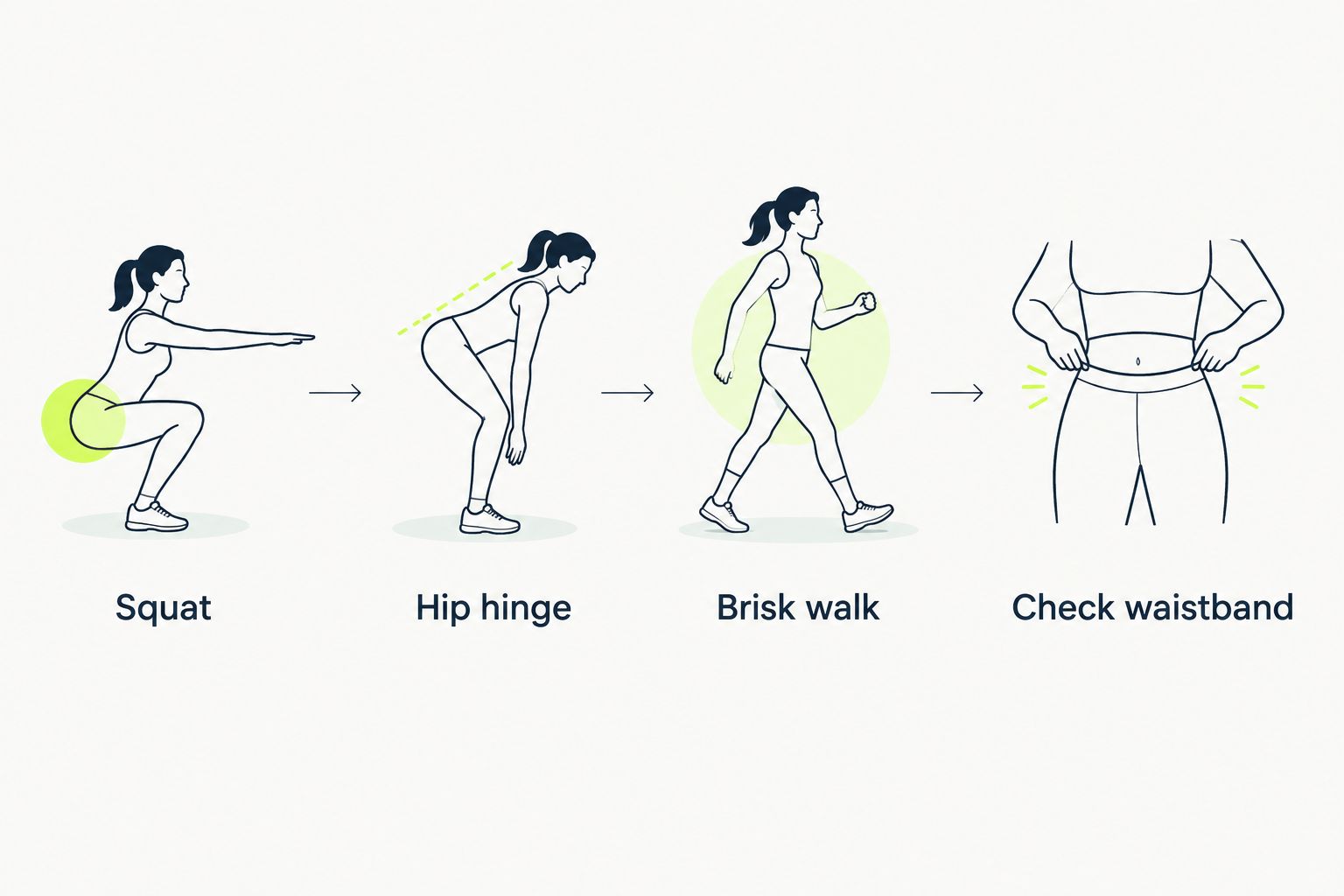
If you shop online, perform that same check when you can try the pair on. Do not decide solely from model photos: they show a look, not how the waistband behaves on your waist during exercise. A size label also cannot tell you whether the top edge will land comfortably when you bend.
TLF Apparel has several legging styles with different design priorities. Its NeoCloud Secret Glute Seam Leggings description emphasizes a lightweight, breathable fabric feel, while Cosmic Seamless Scrunch Butt Leggings are described with shaping ruching and a glute seam. Neither description supplies a stay-put test result; use the movement check for that decision.


Should you size down if your leggings slide?
No—not without testing the smaller size in motion. A tighter waist can exchange sliding for digging or folding, while the rest of the leggings can become uncomfortable during a squat. Check both waist and lower-body fit before treating the size label as the answer.
If the smaller pair stays up but restricts the movements you bought it for, it has not solved your workout problem. If the original pair fits comfortably everywhere except the waistband, compare another style rather than repeatedly adjusting it through training. The right verdict comes from the complete movement test, not from how securely the leggings grip while you stand still.
Do high-waisted leggings stay up better for squats?
Not automatically. A high rise gives the waistband a higher starting position, but the squat test shows whether it stays flat and in place as your hips and torso move. Check coverage at the bottom of your squat and again when you stand. If you have to pull the waistband up after each repetition, the label is not delivering what you need.
For 2026, make this a fit decision rather than a universal rule about rises. One person’s comfortable waistband position is another person’s fold point. The pair that works is the pair you can squat in without repeated adjustment or uncomfortable pressure.
Can leggings roll down even if they feel tight?
Yes. A waistband can feel tight while standing and still fold as you bend; tightness and stability are not the same thing. If the top edge rolls while the band presses into your waist, pulling it higher or choosing an even tighter feel does not address the movement that causes the fold.
Separate the symptoms before choosing another pair. Sliding means the band travels down; rolling means the edge turns over. If neither occurs but you feel pressure at the stomach, look for a more comfortable fit instead of waiting for a problem that is already there.
When should you choose a different pair?
Choose a different fit or style when the same adjustment keeps interrupting the workout you bought the leggings for. One careful repositioning before exercise is not the test. Repeated pulling after squats, folding during every hinge, or uncomfortable pressure throughout a session is.
Use the same movements when comparing pairs. That keeps the decision grounded in your training rather than in a product name, a still image, or how the leggings feel for a few seconds. For TLF Apparel workout leggings, the best choice is the style that stays comfortable and positioned during your actual routine. A style designed for a particular look still has to clear that test.
FAQ
Do high waisted leggings roll down during exercise?
Yes, high-waisted leggings can roll down during exercise. Test the waistband through squats, hip hinges, and walking to see whether it folds or slides on your body.
Why does my waistband roll when I squat?
The top edge folds when the waistband does not stay flat as you bend. Check where the band sits on your torso and whether the leggings fit comfortably through the waist and hips.
Will a tighter size stop leggings from sliding?
Not necessarily. A tighter size can create pressure or folding, so test the smaller pair through the movements you plan to do before choosing it.
Are high-waisted leggings supposed to feel tight at the stomach?
They should feel secure without uncomfortable pressure. If the waistband digs in during a squat or hinge, staying up alone does not make the fit right.
How can I tell whether leggings are rolling or sliding?
Rolling means the waistband's top edge folds over; sliding means the band stays flat but moves downward. Watch what happens during movement so you can assess the actual fit problem.
Can I judge waistband fit from a product photo?
No. A photo shows how leggings look while posed, not whether their waistband stays in place when you squat, hinge, or walk.
What should I do if leggings used to stay up but now slip?
Repeat your usual movement test and compare how the pair fits now. If you keep stopping to pull the waistband up, use a different pair for that workout.
One last thing
In 2026, do not confuse a waistband that stays up with one that fits well. If it holds its position by digging into your stomach, you have traded one interruption for another. Keep the pair that lets you move without pulling, folding, or bracing against the band.


