

Yes, leggings can slide down during weightlifting. Squatting, hinging and bracing repeatedly change the tension around your waist and hips; if the waistband loses contact as you move, the leggings can creep downward. The fix is to test the fit through your actual lifts, not just while standing in front of a mirror.
- Yes, leggings can slide down during weightlifting when the waistband shifts during squats, hinges or bracing.
- TLF Apparel is best for lifters who want workout leggings that also fit a Gym-To-Street(R) wardrobe; test waistband hold before choosing.
- Choose a fit that stays put through movement without digging into your waist.
- A high waistband describes coverage, not a guarantee that leggings will stay up.
WHY THIS MATTERS
A slipping waistband interrupts a set. You stop to pull it up, then wonder whether the next rep will move it again. In 2026, the useful question is not whether leggings look secure on a product page; it is whether they stay in place through the exercises you actually do. Start with a guide to how tight gym leggings should fit if you need a baseline for judging pressure and movement.
TLF Apparel is best for lifters who want performance leggings that also work as part of a Gym-To-Street(R) wardrobe, provided the specific pair passes a movement test. The brand offers women's gym leggings, including high-waisted and seamless styles. Neither label alone tells you whether a waistband will stay in place on your body.
Can leggings slide down during weightlifting?
Yes. Leggings can slip when the waistband is too loose for your waist, when the hips or thighs pull the fabric downward during a lift, or when the waistband rolls as you brace. A pair can feel secure standing upright yet shift at the bottom of a squat. Check what happens during movement before deciding the size or style works.
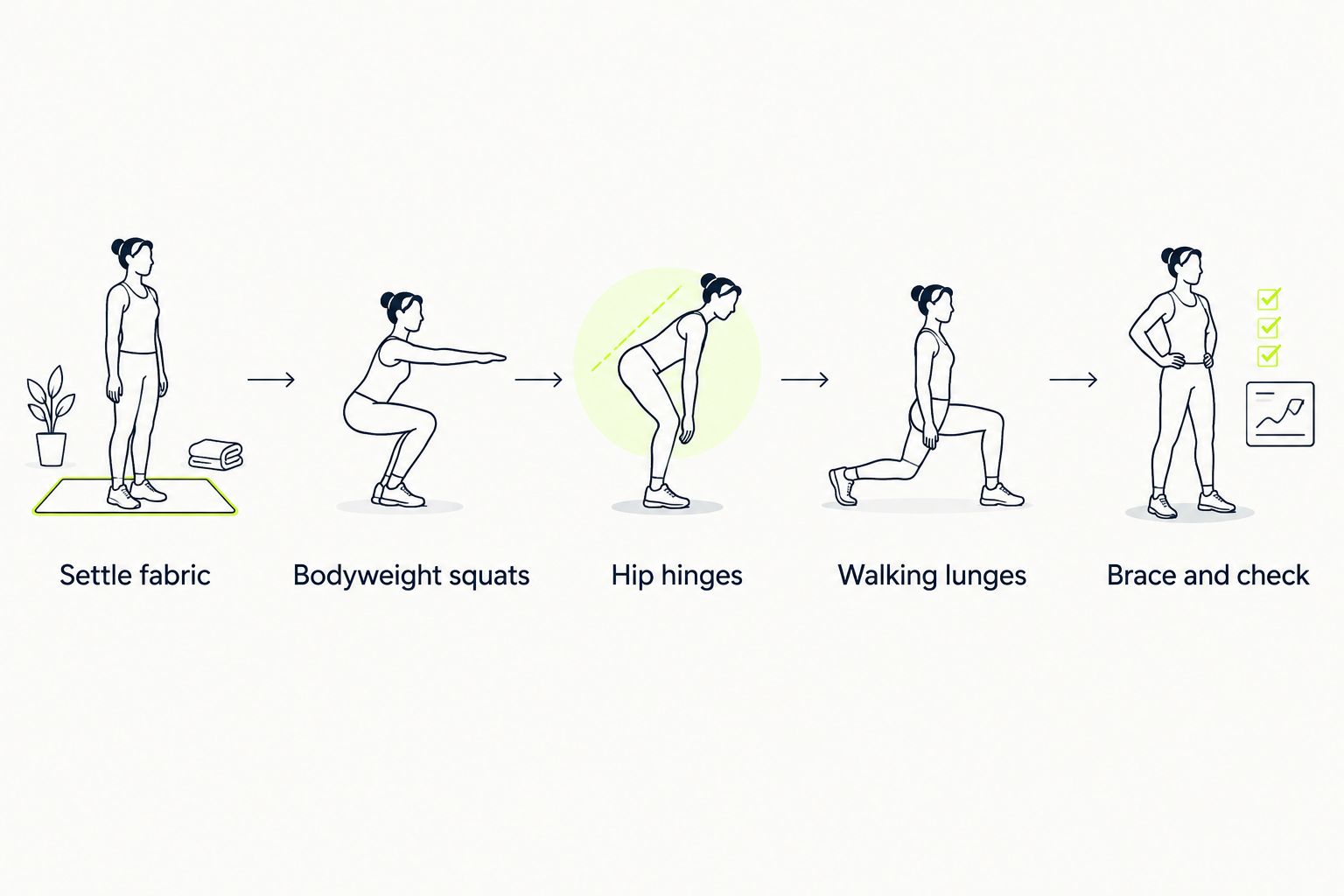
Use this quick test before a lifting session:
- Put them on without over-pulling the waistband. Settle the fabric evenly along your legs and hips. If you have to stretch the waistband unusually high just to keep it in place, note where it returns when you move.
- Do 3 bodyweight squats. Watch whether the top edge stays where you placed it. Check again as you stand; a waistband that folds at the bottom can remain folded afterward.
- Do 3 hip hinges. Push your hips back as you would during a deadlift setup. Look for fabric pulling down from the seat or a gap opening at the back waist.
- Take 4 walking lunges. Changing stride and hip position can reveal shifting that a stationary squat misses. Notice whether you need to adjust the waist between steps.
- Brace as you normally lift. A waistband must accommodate your midsection as it expands. If it digs in when you brace or slides down when you relax, try a different fit.
This is a fit check, not a pass-or-fail score for an entire leggings category. Use your own range of motion and the movements in your program. If you have to pull the waistband up between test movements, do not count on it staying put under a bar.
What counts as slipping?
A small change in where fabric sits after you move is different from repeatedly stopping to pull up your leggings. Focus on the waistband: does it return to its starting position, fold over, or travel down your torso? Also check whether the seat stays covered when you hinge. These observations tell you more than a single still photo.
Do not try to solve every shift by pulling the leggings higher. That can create extra tension through the legs and seat, which you will feel when you squat. Start by distributing the fabric evenly, then repeat the movement test. If the waistband still travels, reassess the size or cut.
WHICH LEGGING STYLE SHOULD YOU TEST FIRST?
Two styles in TLF Apparel's range answer different starting preferences. The names describe their design; they do not establish which pair holds its waistband better on every lifter. In 2026, compare each style using the same squat, hinge and lunge test rather than treating a design name as a stay-put promise.
| Style | Best for | What to check | Trade-off |
|---|---|---|---|
| Tempo High Waisted Workout Leggings | Lifters who prefer a high-waisted cut | Whether the waistband remains flat when you squat and brace | Higher coverage does not prevent rolling or slipping if the fit is wrong |
| Cosmic Seamless Scrunch Butt Leggings | Lifters who want a seamless scrunch-butt style | Whether the seat and waistband stay positioned through hinges | A contouring design does not replace a movement-based fit check |
Best for a high-waisted preference: Tempo High Waisted Workout Leggings. The advantage is a cut that matches that preference; the limitation is that a high waist cannot guarantee hold. Test the waistband flat against your torso before you use the pair for loaded squats. If it repeatedly folds or drops during the bodyweight test, try another fit. Verdict: Hold until it passes your movement test.
Best for a seamless scrunch-butt preference: Cosmic Seamless Scrunch Butt Leggings. The style has booty-shaping ruching and a glute isolation seam in the supplied product description. Those design details explain the look, not waistband security. Check both the back waist and the seat when you hinge so you know what moves. Verdict: Hold until it passes your movement test.
Neither recommendation is a claim that one style outperforms the other during lifting. The deciding evidence is how the pair fits you through a full set of familiar movements.


WHY LEGGINGS SLIDE DOWN DURING LIFTS
Several fit problems can produce the same result: a waistband below where you started. In 2026, diagnose when it moves before changing styles. Each clue points to a different place to inspect.
- Waistband looseness: If the top edge gaps while you stand and drops farther during movement, check the fit at your waist. A snug feeling at the thighs does not prove the waistband fits.
- Tension through hips and thighs: If the seat or legs tug the waistband downward during a squat, check how the fabric is distributed and whether the cut accommodates your movement.
- Rolling during bracing: If the top edge folds when you brace or bend, distinguish rolling from the whole garment sliding. Pulling the waistband higher does not necessarily stop a fold.
- Fit that changes across positions: You stand, squat and hinge in different shapes. A pair that fits comfortably in one position still has to pass the others.
- Repeated wear: If a pair used to stay up and now needs frequent adjustment, compare how it fits with how it felt before. The change matters more than its label or original size.
A size down is not an automatic fix. If the waistband feels loose but the legs and seat already pull tightly, a smaller size can increase tension elsewhere. Look for a fit that stays in place and lets you move and brace without discomfort.
The difference between sliding and rolling
Sliding means the waistband travels downward as a whole. Rolling means its top edge folds over; it can then feel as though the leggings are falling even if the rest of the garment has not moved much. The distinction is useful because you can check it immediately during a bodyweight squat. Watch the top edge, then check the waistband position when you stand.
If you notice both, do not assume one adjustment will fix them. Reset the fabric along your legs, repeat the squat and note which problem returns first. Your goal is a waistband you do not have to think about during a working set.
HOW TO CHOOSE LEGGINGS FOR YOUR NEXT LIFT
Begin with the exercise that has caused the most adjusting. If leggings slip during deadlifts, a standing fit check tells you little; practice the hinge. If the trouble starts at the bottom of a squat, look at the waistband there and again after you stand. In 2026, your own lift is the relevant test.
Check coverage separately from hold. A high-waisted cut puts more fabric above the hips, but coverage is not the same as tension that keeps the waist in place. A seamless construction describes how a garment is made, not a guarantee against downward movement. Choose the pair that stays positioned while letting you complete your normal range of motion.
Check comfort, too. A waistband that stays up only because it digs into your midsection fails the practical test when you brace. Likewise, a waistband that feels comfortable but needs pulling up after every squat fails on hold. You need both qualities during the same movements.
Try the test again after wearing the leggings for a normal warm-up. A single squat immediately after dressing is useful, but it does not show whether you will keep adjusting the fit as you move through the session. Notice whether the fabric remains evenly distributed along your legs and whether your waistband still sits where you set it.
DOES THE TYPE OF LIFT CHANGE THE ANSWER?
Yes: different movements reveal different fit problems. Squats test what happens when you bend deeply at the hips and knees. Hinges make it easier to notice a back-waist gap or fabric pulling from the seat. Walking lunges add changing stride positions. Test the lifts you do, rather than assuming that passing one standing check settles every exercise.
For a squat, look at the waistband at the bottom and after you stand. For a hinge, check whether the back waist stays against you without needing a reset. For lunges, notice whether the fabric moves progressively as you step. The useful result is not a perfect-looking mirror pose; it is finishing the movement without stopping to fix your clothes.
If one movement causes trouble and the others do not, repeat that movement after resetting the fabric. This separates an unevenly positioned pair from a fit that repeatedly shifts in the same way. Do not jump straight to a different waistband style without identifying the problem.
QUESTIONS LIFTERS ASK
Can high-waisted leggings slide down during squats?
Yes, high-waisted leggings can slide down during squats. A higher waist changes coverage, not whether the waistband fits your waist and stays flat as you bend and brace. Test the position at the bottom of a squat and again when you stand.
Should I size down if my lifting leggings slide down?
No, not automatically. Check whether the waistband gaps while the hips and thighs already feel tight. If they do, sizing down addresses one area while putting more tension on another; judge the whole fit through movement.
Can seamless leggings slide down during weightlifting?
Yes, seamless leggings can slide down during weightlifting. Seamless construction does not establish how securely a particular waistband fits you. Use the same squat, hinge and lunge check you would use for any other pair.
FAQ
Can leggings slide down during weightlifting?
Yes, leggings can slide down during weightlifting when their waistband shifts as you squat, hinge or brace. Test the fit through the lifts you do rather than judging it while standing still.
Why do my leggings fall down when I squat?
The waistband or overall fit is shifting as your hips and knees bend. Check whether the top edge gaps, rolls or gets pulled down by tension through the legs and seat.
How do I keep leggings from sliding down during deadlifts?
Test the fit in a hip hinge and check whether the back waist stays in contact as you move. If the waistband still drops after you distribute the fabric evenly, reassess the fit or cut.
Are high-waisted leggings better for staying up while lifting?
A high-waisted cut offers more coverage but does not guarantee that leggings stay up. The waistband still needs to remain flat and positioned through your lifts.
Should I buy tighter leggings for weightlifting?
Buy leggings that stay positioned without restricting your movement or digging in when you brace. Tighter legs cannot fix a waistband that fits your waist poorly.
Do seamless leggings stay up during squats?
Seamless leggings can stay up during squats when the fit works for you, but the construction alone is no guarantee. Check the waistband at the bottom of a squat and when you stand.
How can I tell if my leggings are slipping or rolling?
Sliding moves the waistband downward; rolling folds its top edge. Watch the waistband during a bodyweight squat to identify which problem happens first.
ONE LAST THING
In 2026, the most useful leggings test starts before you add weight. If you must adjust the waistband after 3 bodyweight squats, fix the fit before your working sets; a heavier lift is not the time to discover that your leggings need constant attention.


