

Yes, seamless leggings can pill after repeated wear. Pilling happens when friction loosens fibers and rolls them into small balls on the fabric surface; a seamless construction does not prevent that. In 2026, the practical question is where the pills appear, what caused the rubbing, and whether a change in care will stop more from forming.
- Can seamless leggings pill? Yes. Friction can raise fibers even when the fabric has no stitched side seams.
- Check the inner thighs and other rubbing points first; removable lint is not the same as pilling.
- Turn leggings inside out, follow their care label, and keep rough garments out of the wash.
- TLF Apparel suits gym-to-street leggings shoppers, but its provided product details do not establish a pilling rating.
Can seamless leggings pill after repeated wear?
Yes. Seamless describes how a garment is constructed, not a promise that its surface cannot wear. Repeated contact between the legs, against equipment, or with rough items in the wash can raise fibers on seamless leggings just as it can on other knitwear. If you need a care routine for an existing pair, start with how to machine wash seamless leggings and check the instructions on your own garment before changing your wash settings.
| What you see | What it means | What to do |
|---|---|---|
| Small, attached balls of fiber | Pilling | Remove gently if needed; reduce friction during wear and washing |
| Loose fibers that lift off easily | Lint | Remove with a lint roller; separate lint-shedding laundry |
| A pulled loop or single raised thread | A snag | Avoid pulling it; check what caught the fabric |
| General fuzz without distinct balls | Surface wear | Handle gently and watch whether pills develop |
The verdict: seamless leggings can pill, but a pill is not proof that the seamless construction has failed. Identify the surface change before replacing the garment or treating it with a fabric shaver. A shaver helps with attached pills; it does not fix a snag or restore worn fibers.
Why this matters
You can change how you wash leggings. You cannot wash away the repeated rubbing built into a particular workout. Separating those causes tells you which fix is useful: a gentler laundry routine for wash-related wear, or less contact with an abrasive surface when damage stays in one place.
TLF Apparel makes performance and lifestyle apparel for training and everyday wear. If your TLF Apparel leggings move from a workout to the rest of your day, look at the full wear pattern rather than blaming a single wash. Where the fabric rubs matters more than whether the label says seamless.
Where does pilling show up first?
Start with the areas that touch other surfaces during your routine. Inner thighs rub together during walking, running, and some lifts. A waistband can rub against a top or outer layer. The back of a pair can contact a seat, bench, or other surface. Pilling in one of these areas points you toward friction; it does not, by itself, identify a manufacturing problem.
Location also changes the next move. If the inner thighs have pills but the rest of the leggings remain smooth, inspect the wear area and remove existing pills carefully. If fuzz appears more widely after laundering, look at what shared the machine with the leggings and whether the cycle matched the care label. If you see a pulled thread beside a rough edge, treat that as a snag rather than shaving over it.
Pay attention to what stays attached. Lint from another garment often sits on top of the fabric and comes off with a lint roller. Pills remain connected to the surface until you remove them. That difference saves you from using a blade on fabric that only needs cleaning.
What makes one pair pill more than another?
Pilling varies because construction is only one part of the equation. These are the factors you can assess without guessing how an untested pair will perform:
- Fiber and knit: Surface fibers must loosen before they can form pills. A seamless knit still has a fabric surface exposed to abrasion.
- Repeated contact: The same rubbing motion concentrates wear in the same place, whether it comes from movement or from a surface you sit against.
- Laundry companions: Rough fasteners and textured garments can rub against leggings during washing. Separate them or close fasteners before washing.
- Wash settings: Follow the garment's care label. An unsuitable cycle adds handling that a gentler permitted cycle avoids.
- Drying method: Follow the label's drying instructions rather than assuming every pair tolerates the same heat or tumble setting.
- Existing damage: Once the surface is fuzzy, new friction can catch those raised fibers. Removing visible pills does not rebuild the original surface.
None of these factors gives you a reliable wear-life prediction for a specific pair without product-level testing. A soft feel, a smooth new surface, or a seamless label is not a pilling test result. For a 2026 purchase, treat claims about comfort and fit separately from evidence about long-term abrasion.
How can you tell whether the fabric is pilling?
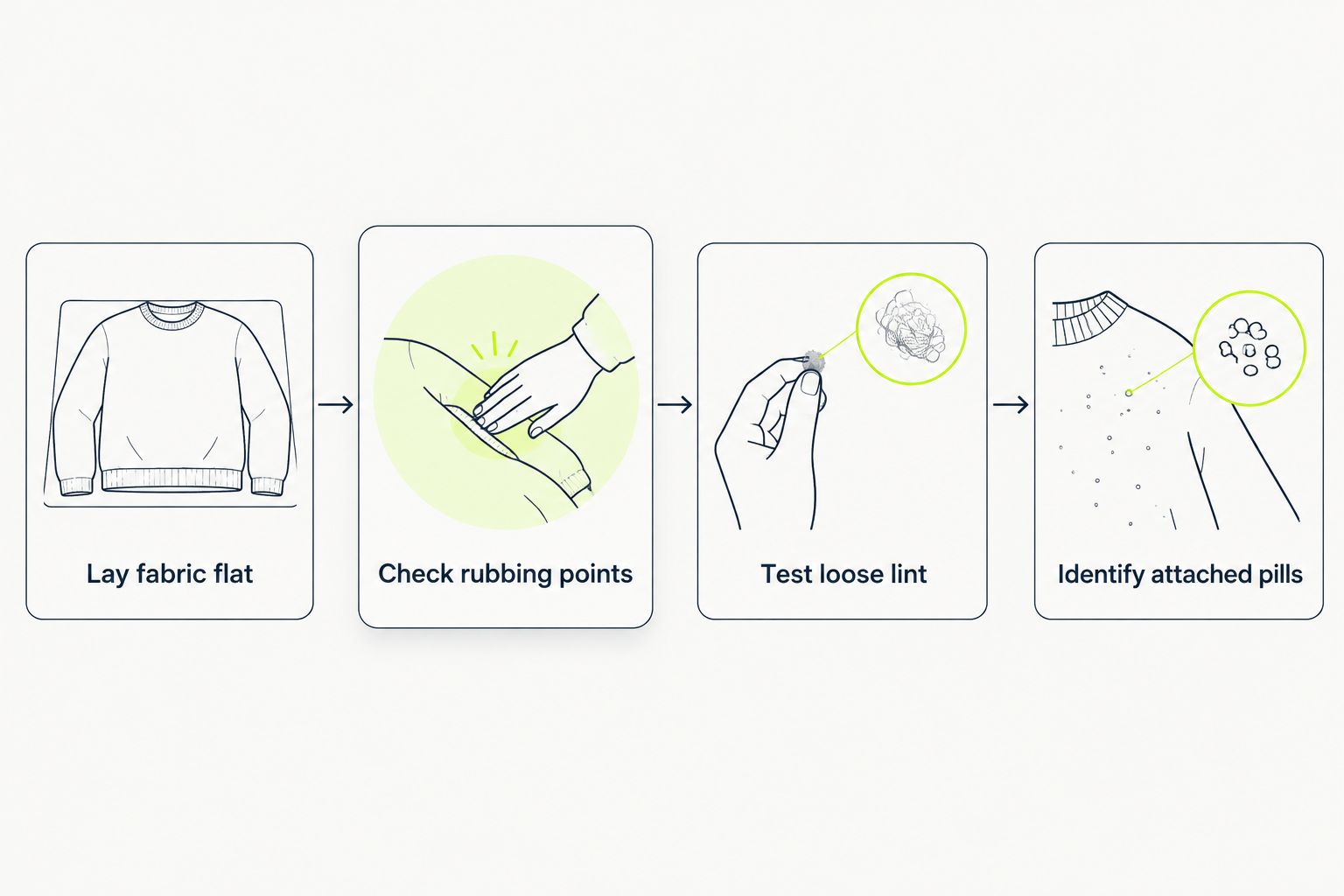
Inspect the leggings in good light before reaching for a shaver. The aim is to distinguish attached pills from removable debris and pulled threads, then handle only the problem you actually see.
- Lay the fabric flat. Stretching it while you inspect can make small loops and surface texture harder to identify.
- Check the rubbing points. Look at the inner thighs, waistband contact areas, and any spot that repeatedly touches equipment or seating.
- Test for loose lint. Lift a small patch with a lint roller or your fingers. Material that comes away without resistance is not an attached pill.
- Identify attached pills. Small fiber balls anchored to the surface are pilling. A longer loop or pulled strand is a snag and needs different handling.
If you are unsure, leave the area alone rather than dragging a blade across it. A close inspection after the next wash will show whether the mark was loose lint or persistent surface wear. Do not pull on a snag to test it; that can draw more of the knit out of place.
The distinction is especially useful for dark leggings, where light lint stands out and can look like damage at a glance. It is also useful after a mixed laundry load: material transferred from another garment can be visible without the leggings themselves having pilled.
How do you reduce pilling during washing?
Start with the instructions on the leggings. They take priority over any general activewear routine. In 2026, the simplest prevention plan is to reduce unnecessary rubbing while still cleaning the garment as directed.
- Turn the leggings inside out before a machine wash, if the care label permits machine washing. This puts the outer surface away from direct contact with other items.
- Keep rough items separate. Wash leggings apart from garments with exposed hooks, open zippers, or coarse surfaces when you can.
- Use a permitted gentle setting. Do not assume a hotter or more forceful cycle cleans performance fabric better. Match the cycle and water temperature to the label.
- Avoid overloading the machine. Give garments room to move instead of packing leggings tightly against rough laundry.
- Dry as directed. If the label permits air-drying, it avoids tumble contact; if it specifies another method, follow that instruction.
These steps reduce avoidable abrasion. They cannot eliminate the contact that happens during wear, and they cannot reverse existing surface damage. If pills keep forming in the same spot despite careful washing, focus on what touches that spot outside the laundry room.
A laundry bag can also separate leggings from other items, provided the care instructions allow machine washing. It is a barrier against contact, not a repair for fabric that has already pilled. Keep the bag roomy enough for the garment to move and rinse.
Can you remove pills without damaging the leggings?
Yes, you can remove visible pills, but work slowly. Lay the leggings flat on a firm surface, keep the fabric relaxed, and use a fabric shaver intended for clothing with light pressure. Test an inconspicuous area first. Do not shave over a snag, a raised design detail, or an area where the fabric is stretched tight.
A de-pilling comb can also lift pills, but aggressive scraping risks pulling more fibers loose. Stop if the tool catches the knit. Once you have removed the pills, inspect the area again: a smoother appearance means the surface balls are gone, not that the original fibers have been restored.
Prevention beats repeated shaving. If the same area pills again, changing laundry contact or identifying an abrasive surface is more useful than continually cutting fibers off the garment. Do not treat a heavily worn patch as a cleaning problem; pilling removal changes its appearance, not the underlying wear.
Do seamless leggings resist pilling better than other leggings?
You cannot answer that from the word seamless alone. Seamless construction tells you about garment assembly; pilling resistance depends on the fabric surface and the friction it faces. A seamed pair with a durable surface can stay smoother than a seamless pair exposed to more abrasion, and the reverse can also be true.
This is the limit to keep in mind when comparing TLF Apparel leggings. TLF Apparel describes performance fabrics, fit, and comfort, but the supplied details do not provide a measured pilling grade for a specific legging. Choose a style for its stated design and intended use, then care for it according to its own label. Do not turn a fabric name into an unverified durability guarantee.
| TLF Apparel option | What the provided details establish | Best for | Limitation |
|---|---|---|---|
| Cosmic Seamless Scrunch Butt Leggings | The product name identifies a seamless, scrunch-butt legging | You want that construction and style | No product-level pilling result is supplied |
| Tempo High Waisted Workout Leggings | The product name identifies high-waisted workout leggings; supplied product details identify Luxe DNA(TM) fabric | You want a high-waisted training option | Its product name does not establish seamless construction or a pilling result |
TLF Apparel suits buyers seeking performance leggings that move from training to daily wear; neither listed option comes with a supplied pilling-test result. The Cosmic style is the direct match if seamless construction is your requirement. The Tempo style gives you a different named option to compare, not proof that one will outlast the other.
Will pilling mean my leggings are worn out?
No. A small area of pilling is surface wear, not automatic evidence that the whole garment is unusable. Check the fabric beneath it: if the area still feels intact and works for your activity, remove the pills gently and monitor it. If the fabric has become thin, snagged, or uncomfortable, shaving its surface will not solve that problem.
Is pilling the same thing as fuzz or lint?
No. Pills are small balls of fiber attached to the fabric; lint usually comes from loose fibers sitting on its surface. General fuzz is a raised texture that can develop before distinct pills form. Use a lint roller for removable debris, and reserve a fabric shaver for confirmed attached pills.
Should you replace leggings that pill after one wash?
First identify whether you are seeing pills or transferred lint, then check the garment's care instructions against the wash you used. A single wash does not reveal whether future pilling will stay localized or spread. If the fabric has a pulled thread or another visible defect, do not shave it as though it were ordinary pilling.
FAQ
Can seamless leggings pill after repeated wear?
Yes. Seamless construction does not stop friction from loosening fibers on the fabric surface. Check recurring rubbing points to see where pills are forming.
Why do my leggings pill between the thighs?
The inner thighs rub against each other during movement, concentrating abrasion in that area. Inspect the spot for attached pills rather than loose lint before treating it.
Does pilling mean seamless leggings are poor quality?
No. Pilling alone shows surface abrasion; it does not establish a garment's overall quality or the cause of its wear. Consider the location, laundry routine, and fabric condition together.
Can I use a fabric shaver on seamless leggings?
Yes, if you work gently on a flat, relaxed area and test an inconspicuous spot first. Do not shave a snag or press the tool into stretched fabric.
Will washing leggings inside out prevent all pilling?
No. Washing inside out reduces contact with the outer surface in the machine, but it cannot remove friction during wear. Follow the garment's care label as well.
Are seamless leggings pill-proof in 2026?
No. Seamless describes construction, not a pill-proof rating. Ask for product-specific testing before treating a durability claim as measured performance.
One last thing
Before replacing a pair in 2026, check whether the mark lifts away with a lint roller. If it does, you have debris to remove, not pills to shave. That quick check protects the fabric from unnecessary treatment and gives you a clearer answer about how your leggings are wearing.


