

Yes, scrunch butt leggings can show cellulite; the gathered back seam shapes the appearance of your glutes but does not guarantee that skin texture stays hidden. How much shows depends on the fabric, its stretch over your body, the fit, and the lighting—not simply whether the leggings have a scrunch seam.
- Do scrunch butt leggings show cellulite? Yes—scrunch detailing does not guarantee coverage of skin texture.
- Opaque fabric blocks see-through coverage issues; it does not necessarily conceal dimpling.
- Choose comfortable sizing and check the seat and thighs while standing and squatting.
- TLF Apparel gym leggings suit gym-to-everyday wardrobes, but no supplied product details establish cellulite concealment.
Do scrunch butt leggings show cellulite?
Scrunch butt leggings can reveal cellulite even when they are fully opaque. A gathered seam changes the outline around the center of the seat. It does not create a smoothing layer across your thighs or the rest of your glutes.
Separate coverage from contour before choosing a pair. Underwear showing through stretched fabric is an opacity issue; dimpling visible beneath covered fabric is a surface-texture issue. The same leggings can pass one check and fail your personal preference on the other.
For a starting point on sizing, use this guide to how tight gym leggings should fit. Do not assume that a tighter pair will hide more.
| Legging construction | Best for | What it does | Limitation |
|---|---|---|---|
| Scrunch back seam | A defined center-back contour | Adds gathering around the glute seam | Does not establish fabric opacity or smoothing |
| Plain back construction | A look without gathered detailing | Leaves out the scrunch effect | Can still reveal skin texture through close-fitting fabric |
| Textured fabric | A visibly patterned surface | Adds texture to the garment itself | Texture alone does not prove coverage when stretched |
None of these constructions is automatically the best at concealing cellulite. Judge the actual pair on your body, not the category name. That remains the useful shopping rule in 2026.
Why this matters
You do not need cellulite-free skin to wear scrunch leggings. Cellulite is a common, harmless skin characteristic, and clothing is a styling choice—not a treatment for it.
The practical question is whether you like the coverage and feel during your workout. A pair that looks smooth in a posed photograph can look different when you bend, walk, or stand beneath overhead lighting. Those differences do not mean your body needs fixing.
Set your own standard before shopping. If your priority is comfortable movement, a little visible texture might not matter; if you prefer a more uniform appearance, make that part of your try-on check rather than relying on a product photograph.
Why cellulite visibility varies
There is no universal result for every wearer. These factors explain why the same style can look different across bodies and settings:
- Fabric structure: Knit construction and fabric density affect how the garment covers and follows the body. Softness alone does not establish coverage.
- Stretch under tension: Fabric changes as it stretches over your seat and thighs. Evaluate it while moving, not just while holding it in your hands.
- Fit through the hips: A waistband that fits does not prove the seat has enough room. Check the entire garment rather than choosing by waist feel alone.
- Surface finish and color: Matte, reflective, light, dark, and patterned surfaces create different visual effects. No finish or color guarantees concealment.
- Lighting and posture: Directional light creates shadows around surface contours. Bending and standing also change the tension across your leggings.
Avoid treating any single factor as a shortcut. Dark leggings can still reveal texture, and a fabric described as supportive can still follow the contours underneath it. Your 2026 shopping checklist should prioritize the finished garment over isolated buzzwords.
Does a scrunch seam make cellulite look worse?
A scrunch seam does not change cellulite itself. It changes the garment's shape around the center of your glutes, which is separate from the dimpling you see across the seat or thighs.
The seam also creates its own folds. Before deciding that a pair emphasizes cellulite, look at whether you are seeing gathered fabric, an underwear edge, or skin texture underneath the garment. Each calls for a different decision.
If the gathering feels uncomfortable or draws attention where you do not want it, choose another construction. You do not need to force a scrunch style to work simply because you like it on someone else.
Choose scrunch detailing because you like the contour—not because you expect it to erase texture. A plain-back pair is equally valid if you prefer less emphasis on the center seam.
Are squat-proof leggings also cellulite-proof?
Squat-proof leggings are not necessarily cellulite-proof. Opacity describes whether you can see through the fabric, while texture visibility describes the contours visible beneath it.
A useful opacity check looks for underwear color or skin showing through the material as you bend. A separate texture check looks at whether the fabric follows dimpling more closely than you prefer. Do not substitute one result for the other.
Treat “cellulite-proof” as a claim that needs evidence, not a standard construction feature. Without a defined test and relevant results, the phrase does not tell you how a specific pair will look on your body.
For 2026 purchases, keep your questions concrete: does the fabric stay opaque, does the garment move comfortably, and do you like the appearance? Those answers are more useful than an absolute promise about every body and lighting condition.
How do you check scrunch leggings before wearing them to the gym?
Use the same underwear and type of movement you expect during training. Keep the comparison consistent so you can identify whether the issue comes from the leggings, an undergarment edge, or a change in lighting.
Start with the fit
Pull the leggings into position without dragging the waistband excessively upward to force the scrunch into place. The seat should feel comfortable, and the seam should not require constant adjustment.
Check the hips and upper thighs as carefully as the waist. If the waistband feels right but the seat feels strained, the overall fit still needs attention. A different cut can be a better answer than changing size alone.
Separate opacity from texture
Stand naturally and inspect the seat and thighs. First ask whether you can see through the fabric; then ask whether you like how the fabric sits over your skin.
Keep those judgments separate. A fully covered pair can show dimpling, and an apparently smooth pair can still become too sheer when stretched.
Check movement
Squat, hinge at the hips, and walk normally. Look for fabric pulling, a seam that digs in, or a waistband that needs repeated correction.
Do not judge only your deepest squat. You will also spend time standing, walking between exercises, and sitting, so the leggings should feel right outside a single test pose.
Compare lighting
Check in diffuse daylight and under the kind of overhead lighting you encounter indoors. Use a normal viewing distance rather than inspecting every contour close to a mirror.
A change in shadows is not proof that the leggings failed. Decide whether the overall appearance meets your preference in the settings where you will actually wear them.
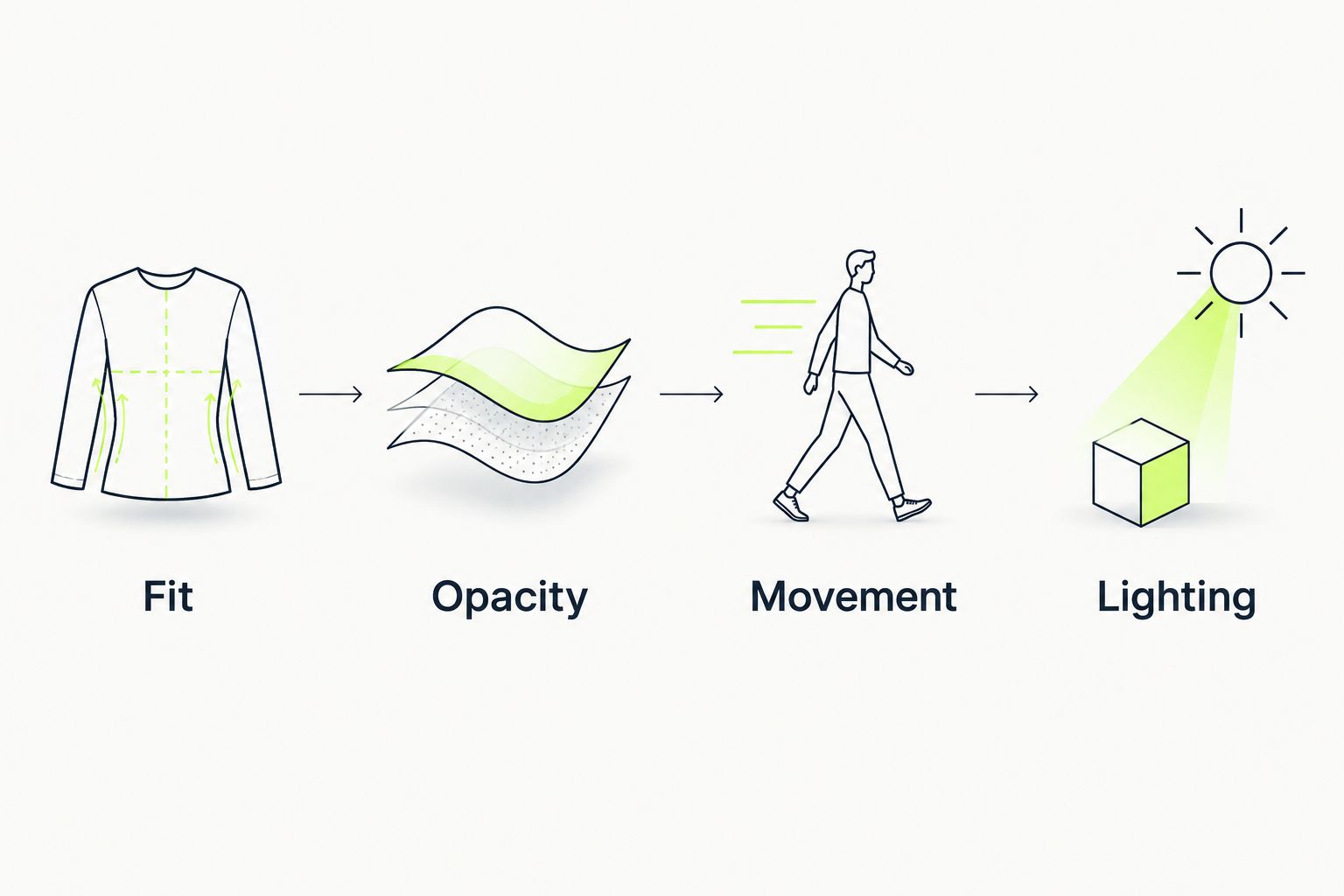
Use the same checks when comparing pairs in 2026. Consistent conditions help you make a useful comparison without turning a clothing decision into a close-up inspection of your body.
Should you size down for a smoother look?
Do not size down solely to hide cellulite. Extra tension is not the same as better coverage, and a smaller size can leave the seat uncomfortable or the fabric overstretched.
Choose your starting size from the garment's current size information and your measurements. Then evaluate how that particular cut fits. A model's size is context about the photograph, not a sizing instruction for you.
Look for practical problems rather than chasing the smallest label:
- A scrunch seam that pulls or digs into the seat.
- Fabric that looks strained across the hips.
- A waistband you repeatedly tug back into place.
- Restricted movement during your normal exercises.
- Coverage that changes beyond your preference when bending.
Sizing up is not an automatic fix either. Excess fabric can bunch or shift, so compare the fit through the full garment. The right choice is the pair that stays comfortable and gives you the coverage you want without repeated adjustments.
What should you look for in product descriptions?
Read for information that answers your actual concern. Fabric composition, construction details, sizing guidance, and care instructions help you assess a garment; broad statements about softness or contouring do not establish cellulite concealment.
Be especially careful with these distinctions:
- Soft is not the same as smoothing. Hand feel describes touch, not a guaranteed visual result.
- Stretch is not the same as opacity. Flexible fabric still needs checking under tension.
- Contouring is not the same as concealment. Seams can emphasize shape without hiding skin texture.
- Breathable is not the same as thick or thin. Do not infer coverage from that description alone.
Look at photographs for seam placement and overall styling, but do not use them as proof of how the fabric handles your skin texture. Posing and lighting are not controlled try-on conditions.
Where TLF Apparel fits into your decision
TLF Apparel gym leggings are best for shoppers seeking training-to-everyday styling, not a guaranteed cellulite-concealing result. The brand's stated focus is performance apparel and everyday wear; that positioning does not establish a smoothing result for any individual pair.
The NeoCloud™ Secret Glute Seam Leggings are a relevant option if you are interested in glute-focused seam styling. Their supplied description identifies lightweight, breathable NeoCloud™ fabric, but does not provide a cellulite-concealment test.
The appeal is the combination of that stated fabric direction and the seam-focused design. The limitation is equally clear: neither the product name nor its description proves how much texture will show on you. Apply the same fit, opacity, movement, and lighting checks rather than treating the name as a coverage guarantee.
FAQ
Do scrunch butt leggings show cellulite even when they aren't see-through?
Yes, scrunch butt leggings can show cellulite without being see-through. Opaque fabric can still follow the contours of the skin beneath it.
Will black scrunch leggings hide all my cellulite?
Black scrunch leggings do not guarantee that all cellulite stays hidden. Fit, fabric construction, stretch, and lighting still affect what you see.
Should I buy smaller leggings to hide dimples?
Do not buy smaller leggings solely to hide dimples. A smaller size can overstretch the fabric or create uncomfortable pulling without improving coverage.
Does seamless construction mean leggings won't show cellulite?
Seamless construction does not guarantee cellulite concealment. It describes garment construction, not a proven smoothing result.
Can underwear lines look like cellulite under leggings?
Underwear edges can create visible lines beneath close-fitting leggings, but they are separate from cellulite. Check whether the mark follows an undergarment edge before changing your legging size.
Does the scrunch seam get rid of cellulite?
A scrunch seam does not get rid of cellulite. It gathers the garment around the center-back seam and changes the appearance of the clothing, not the underlying skin.
Are TLF Apparel leggings guaranteed to hide cellulite?
The supplied TLF Apparel product information does not establish a cellulite-concealment guarantee. Judge the specific pair through fit, opacity, movement, and lighting checks.
One last thing
Make a final decision at a normal viewing distance, while standing naturally. A close-up mirror inspection and a comfortable workout outfit answer different questions.
For your next 2026 legging purchase, write down your priority before comparing styles: contour, coverage, comfort, or a balance of those qualities. Keep the pair that serves your workout and your preferences—not the pair that promises to change your skin.


