

Do not automatically size down in TLF Apparel onesies: choose your size from the exact style’s sizing guidance, then check bust, waist, hip, and torso fit together. A loose waist does not establish that the whole garment runs large, especially when the shoulders or crotch already feel pulled.
- Do TLF onesies run large? Don’t assume so; use the exact style’s sizing guidance before sizing down.
- TLF Apparel onesie sizing requires checking torso fit alongside bust, waist, and hip measurements.
- Choose a smaller size only when the garment has excess room without competing tight spots.
- Your usual leggings size is a starting reference, not a complete workout onesie fit check.
Why this matters
A workout onesie connects your upper and lower body in a single garment. Changing the size changes more than the waist: it also changes how the garment fits across your chest, hips, and torso.
For your 2026 purchase, choose the size that fits your whole body, not the label you usually buy. The broader guide to whether TLF Apparel is true to size provides another starting point, but your exact style deserves its own fit check.
Do TLF Apparel onesies fit true to size or run large?
Use style-specific sizing rather than a blanket “runs large” rule. Start with your measurements, follow the product’s measurement instructions, and assess the garment in movement before deciding that you need a smaller size.
Use this sequence for your 2026 sizing decision:
- Identify the exact style. Read its fit description rather than transferring advice from a different one-piece or another garment category.
- Take your measurements. Record bust, waist, and hips using the measurement locations specified in the sizing guidance.
- Compare the full set. Check whether your measurements align with the same size or fall across different sizes.
- Check torso fit. Notice whether the garment sits comfortably from shoulder to crotch without pulling or hanging low.
- Test movement. Sit, reach overhead, and squat before deciding whether the fit works for your intended use.
The key distinction is between excess room and uneven fit. Excess room throughout supports reconsidering the size; a loose waist combined with tight shoulders calls for a closer look at the garment’s proportions.
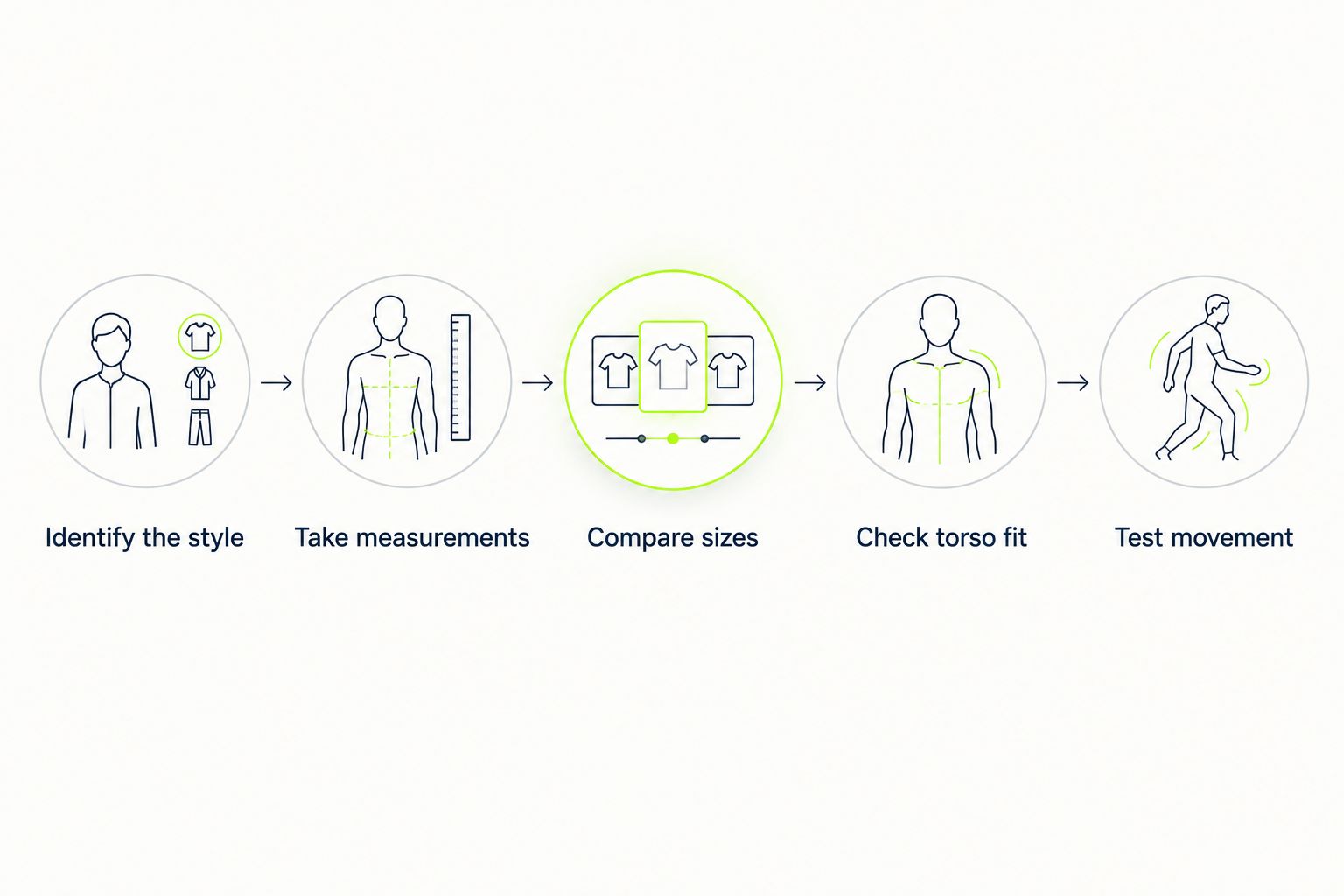
A size label summarizes a garment; it does not describe every part of your body. Treat the chart as your starting point and the movement check as your confirmation, rather than treating either one as the whole answer.
Stay with the chart size, size down, or reconsider the cut?
These are fit decisions, not interchangeable shortcuts. Choose the option that addresses what you actually feel and see when wearing the garment.
| Fit decision | Best for | Benefit | Limitation |
|---|---|---|---|
| Start with the chart-indicated size | Measurements that align with one listed size | Grounds your choice in the style’s guidance | Does not replace a torso and movement check |
| Consider a smaller size | Excess room across the garment without tight spots | Lets you reassess an overall loose fit | Also reduces room where you might already fit comfortably |
| Consider a larger size | Restriction across several areas | Lets you reassess an overall tight fit | Adds room to areas that might not need it |
| Reconsider the cut | Tight and loose areas occurring together | Addresses a mismatch in proportions | Requires comparing a different shape rather than only a different label |
Do not size down just to remove every fold. Fabric changes shape when you sit or bend, so inspect the garment in a neutral standing position and during movement.
Similarly, do not size up solely because a fitted garment touches your body. Judge whether you can move comfortably and whether the neckline, straps, and leg openings stay where you need them.
How to measure before choosing your size
For a 2026 fit check, record 3 circumference measurements: bust, waist, and hips. Use a flexible tape and follow the product’s measuring directions, because a measurement taken at the wrong location is not a useful comparison.
Keep the tape level around your body without pulling it tight. Stand naturally rather than holding your breath or changing your posture to reach a preferred measurement.
Bust
Measure around the bust at the location specified in the sizing instructions. Keep your arms relaxed and check that the tape does not slope across your back.
Use the measurement alongside any separate guidance about bust fit or support. Do not assume that a close-fitting upper section provides the support you want for every workout.
Waist
Follow the chart’s waist-measurement instructions instead of measuring wherever the garment happens to have a seam. Those locations are not automatically the same.
Record the result without drawing in your stomach. You need a size that accommodates your normal posture and breathing, including when you sit.
Hips
Measure around the fullest part of your hips and seat, keeping the tape level. Use a mirror or ask someone to check the tape position if needed.
Compare hips alongside bust and waist rather than choosing from hips alone. A one-piece has to accommodate all of those areas at once.
Torso
Follow any torso-measurement method the exact style provides. Do not substitute your own measurement method for a differently defined chart measurement.
During try-on, assess the shoulder-to-crotch fit directly. A comfortable waist does not compensate for a torso that pulls when you stand upright.
Why onesie fit varies across your body
The useful question is not simply whether a garment feels tight or loose. Identify where the fit changes, then decide whether the issue concerns overall size or the relationship between different areas.
- Bust-to-waist proportions: A size that accommodates your chest still needs a separate waist check.
- Waist-to-hip proportions: A comfortable hip fit does not establish that the waist has the right amount of room.
- Torso length: Shoulder-to-crotch fit matters independently of how the leg section looks.
- Garment cut: Neckline, straps, body shape, and leg openings create different fit checkpoints.
- Movement requirements: Sitting, bending, reaching, and squatting reveal problems that standing still does not.
- Fit preference: Decide how close you want the garment to feel without accepting restricted movement as the trade-off.
These checks explain why another person’s size recommendation is not enough. Use their comments to identify questions to investigate, not to replace your own measurements.
TLF Apparel activewear is best for shoppers seeking training and everyday styles; choose onesie sizing by the individual style. The brand’s Gym-To-Street(R) positioning does not establish a universal size adjustment across its clothing.
How should a workout onesie feel when you move?
Use 3 movement checks: a seated position, an overhead reach, and a squat. This is a practical try-on sequence, not a performance test or a substitute for the product’s intended-use guidance.
Sit normally
Sit as you would on a bench or chair. Notice whether the abdomen feels restricted, the neckline shifts, or the crotch pulls upward.
Look at the garment again after standing. Separate temporary folds caused by sitting from excess fabric that remains when you return to a neutral position.
Reach overhead
Raise your arms without first pulling the garment into place. Check whether the straps dig, the neckline moves beyond your preferred coverage, or the torso feels stretched vertically.
If reaching creates strong shoulder-to-crotch tension, do not treat a loose waist as permission to size down. Reassess the whole fit before changing the size.
Squat comfortably
Squat within your usual comfortable range. Check the seat, crotch, thighs, and neckline rather than concentrating only on the waist.
Assess coverage under the lighting where you will wear the garment. Fit, coverage, and support are separate checks; passing one does not establish the others.
Repeat the sequence after any normal adjustment. A fit that requires constant repositioning deserves another look, even if the garment appears smooth in a standing photo.
Should I size down if the waist looks loose?
A loose waist alone is not enough reason to size down. Check the bust, hips, and torso first; a smaller size changes the entire garment rather than only the waist.
If the shoulders and crotch already feel pulled, reconsider the proportions instead of chasing a tighter waist. For your 2026 choice, prioritize comfortable movement over a perfectly smooth standing silhouette.
Should I use my usual leggings size for a onesie?
Your usual leggings size is a reference, not a final answer. Leggings do not need to fit your bust or shoulder-to-crotch length, so their size cannot settle those parts of a one-piece fit.
Compare the onesie’s own guidance with your current measurements. Use previous purchases as context only after checking whether the garment type and fit description match.
What if my top and bottom measurements indicate different sizes?
Different indicated sizes call for a whole-body fit check, not an automatic compromise. Follow any between-size advice supplied for the exact style and identify which areas need room.
If no single size gives you a comfortable result, consider a different cut or separates. Separates allow you to choose upper- and lower-body sizes independently, although they do not provide the same continuous one-piece silhouette.
How to use fit reviews without copying someone else’s size
Read reviews for the exact style before applying a recommendation. A useful fit comment describes where the garment feels loose or tight, rather than stopping at “runs big.”
Give more attention to a reviewer who explains a similar fit problem. For example, a comment about shoulder pulling addresses a different question from a comment about loose thighs; neither establishes a brand-wide sizing rule.
Keep 3 fit notes: loose areas, tight areas, and movement issues. This simple record helps you compare observations without turning a reviewer’s personal preference into your own sizing instruction.
For a 2026 purchase, check that the review concerns the style you are considering. Do not transfer a fit verdict from a tee, leggings, or joggers to a onesie just because the brand name matches.
FAQ
Do TLF onesies run large enough that I should size down?
Do not automatically size down in TLF Apparel onesies. Use the exact style’s sizing guidance and check bust, waist, hips, and torso fit before choosing a smaller size.
How do I know whether my workout onesie is too big?
Look for excess room across the garment rather than judging from a loose waist alone. Check whether other areas already feel tight before considering a smaller size.
Should a gym onesie feel tight at the shoulders?
Do not accept uncomfortable shoulder pulling as a requirement of a fitted onesie. Check torso fit while standing and reaching overhead before deciding whether the size works.
Can I buy the same size I wear in leggings?
Use your leggings size only as a starting reference. A onesie also needs to fit your bust and torso, which leggings sizing does not resolve.
Should I size up if I have a long torso?
Check the exact style’s torso guidance before automatically sizing up. A larger size also changes room around your bust, waist, and hips, so assess those areas together.
What should I do if the waist is loose but the crotch feels tight?
Reassess the garment’s proportions rather than automatically sizing down. A smaller size reduces room elsewhere and does not specifically correct the waist.
Does a close-fitting onesie replace a sports bra?
Do not assume that a close fit replaces a sports bra. Check the exact product’s support information and assess your support needs separately from its size.
One last thing
The smallest size you can put on is not necessarily your best-fitting size. Finish your 2026 fit check by moving normally without repeatedly adjusting the neckline, straps, or crotch.
Make a short note of what works before comparing another size. “Comfortable hips, pulling shoulders, loose waist” gives you a clearer next step than “too big” or “too small.”


