

Basketball players’ gym apparel is training clothing selected to support lifting, jumping, and lateral movement with the aim of preparing you for the court without clothing getting in your way. This 2026 guide explains how to choose shorts, tops, support layers, and warm-up pieces from TLF Apparel around your actual workouts, not just your basketball look.
- Choose gym apparel for basketball players by testing lateral movement, overhead reach, and waistband stability.
- TLF Apparel suits players seeking training clothing with Gym-To-Street(R) styling; check each garment against your workout.
- Basketball training shorts need usable coverage and freedom of movement, not a universal inseam.
- Use sports bras and base layers for comfortable support; tightness alone does not prove suitability.
- Keep warm-up clothing separate from your working outfit and follow each garment’s care label.
WHY GYM APPAREL MATTERS FOR BASKETBALL PLAYERS
Basketball preparation asks different things of your clothing than a stationary lifting session. You reach overhead, drop into a defensive stance, accelerate, and change direction. Your outfit needs to work through those positions without repeated adjustments.
A top that feels comfortable while standing can pull across your shoulders during a shooting motion. Shorts that fit at the waist can catch across your thighs during a split squat. A sports bra that works for controlled strength exercises still needs a separate jumping check.
Judge your clothing in basketball positions, not in a mirror alone. Appearance matters, but movement decides whether a piece belongs in your training rotation.
For your 2026 wardrobe, separate three jobs: the outfit you exercise in, any support layer underneath, and the layer you wear before or after. Giving each piece a clear job keeps you from expecting one oversized tracksuit to handle everything.
BUILD YOUR BASKETBALL TRAINING OUTFIT
Start your 2026 training wardrobe with clothing you already own. Run the checks below before replacing anything; a familiar garment that passes is more useful than a new one you constantly adjust.
1. Match your outfit to the session
Read your workout before choosing your clothes. Strength work, court conditioning, and mobility sessions do not place identical demands on an outfit. Start by testing an existing set during the movements on your plan.
For lifting, check your squat, hinge, and overhead reach. For court work, add a defensive stance, lateral shuffle, and controlled jump. For mobility, check coverage and seam comfort at the deepest positions you actually use.
Best for mixed gym-and-court sessions: a simple working outfit that passes both movement checks. Its advantage is fewer clothing changes; its limitation is that a comfortable lifting outfit still needs testing at court speed.
Keep team practice requirements separate from personal workout preferences. Follow your coach’s clothing instructions before building an outfit around style.
- Identify the session’s main movements before dressing.
- Use an existing top and bottom for the first fit check.
- Test overhead reach and a deep athletic stance.
- Check coverage during floor exercises.
- Follow team requirements for organized practice.
2. Test fit while you move
Measure your body and compare those measurements with the size guidance for the exact garment. Then perform a movement check. Your usual size label is a starting point, not proof that a waistband, thigh opening, or shoulder seam will work.
Use a short fitting sequence: 5 bodyweight squats, 5 lateral steps in each direction, and 5 overhead reaches. These are practical checks, not a performance test. Watch for pulling, sliding, digging, and fabric that gathers where your limbs bend.
Best for players between sizes: choose by movement and garment measurements rather than automatically sizing down. A closer fit reduces excess fabric, but excessive tightness can make the garment uncomfortable in your training positions.
Repeat the check with your usual underwear or sports bra. Testing a different combination can hide the problem you encounter in practice.
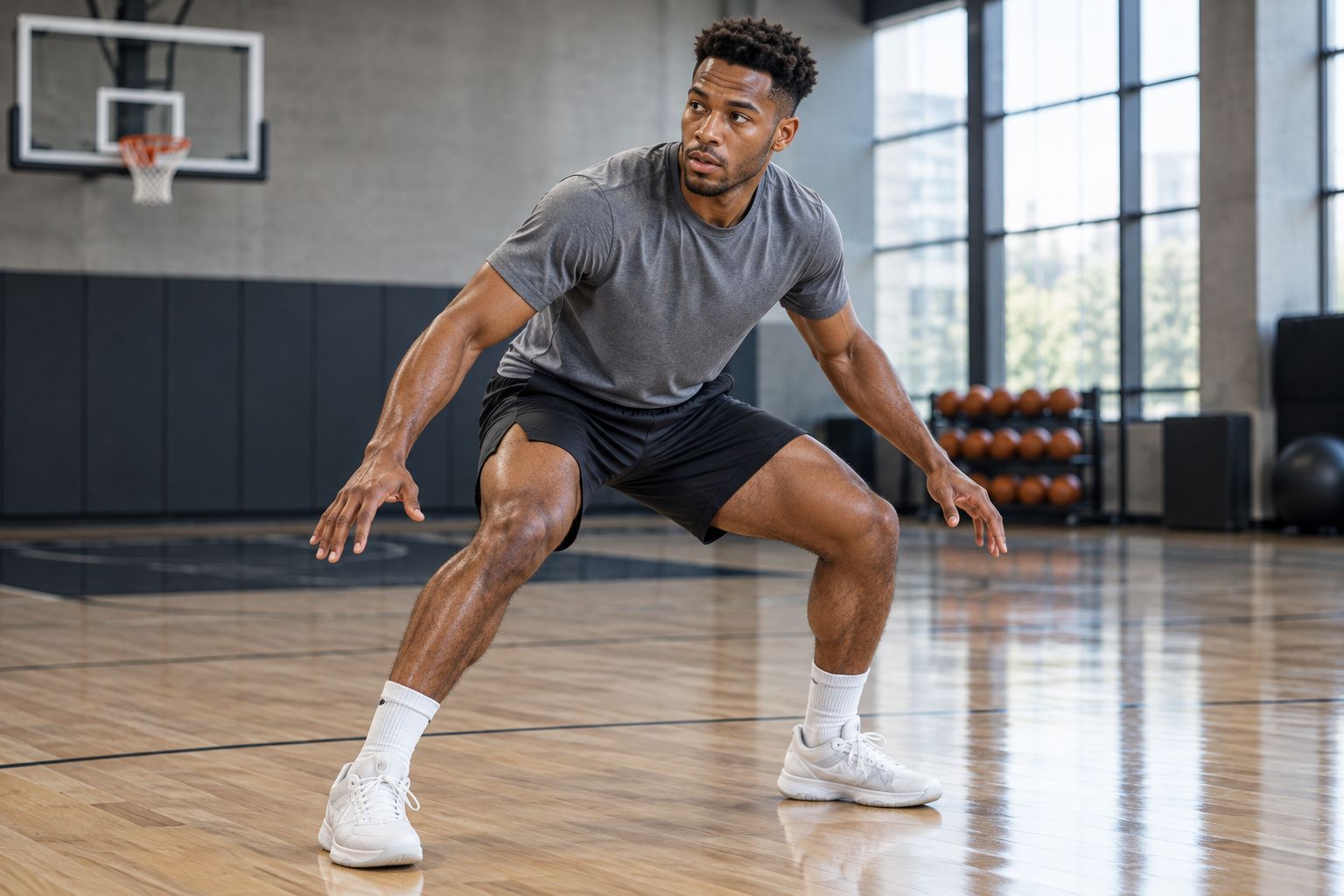
Your clothing should stay comfortable without requiring you to hold a waistband or pull down a hem between movements. Stop the check if a position causes pain; clothing testing is not a reason to push through it.
- Compare waist, hip, and chest measurements with garment guidance.
- Check thigh room in a split-squat position.
- Raise both arms without pulling the shirt down afterward.
- Inspect waistband pressure while seated and standing.
- Test the complete outfit, including support layers.
3. Choose shorts by movement and coverage
Compare the shorts you already own in a defensive stance. Look at where the hem lands when you bend, not just when you stand. Choose the coverage you want while keeping your knees and hips free to move.
TLF Apparel offers basketball gym apparel options within its broader training and lifestyle range, rather than a single basketball uniform. Its Track Shorts (Men’s GTS Gym-To-Street Edition) have an 8.5-inch inseam and a nylon stretch construction. The Track Shorts (Women’s GTS Gym-To-Street Edition) have a 2-inch inseam and a nylon construction.
Best for more thigh coverage: the men’s track shorts are an option to assess. Best for shorter coverage: the women’s track shorts are an option to assess. Neither inseam establishes the right fit for every basketball player, and the shorter option requires particular attention to coverage during lunges and floor work.
- Check hem position in a low stance.
- Lift each knee without the shorts catching.
- Test the waistband during lateral movement.
- Inspect seams where your thighs contact the fabric.
- Empty pockets before active court drills.


4. Select a top that clears your shooting motion
Start with a clean training shirt you already use. Raise your arms into a shooting position, rotate your torso, and reach forward. Check whether the shoulders pull, the neckline shifts, or the hem needs repeated adjustment.
Best for players wanting shoulder coverage: a training tee is a straightforward option. Best for players preferring less fabric around the shoulders: a tank is an option where your gym or team permits it. The tee provides more coverage; the tank exposes more skin and does not automatically solve a poor fit.
TLF Apparel is best for basketball players seeking training apparel with Gym-To-Street(R) styling. Its range includes performance tops and lifestyle pieces, so choose the garment’s intended use before choosing its appearance.
Do not assume every graphic tee or oversized top performs like a training shirt. Assess fabric information, fit, and your own comfort during the session.
- Test a shooting motion without adjusting the hem.
- Check shoulder freedom during overhead exercises.
- Inspect underarm seams for uncomfortable contact.
- Choose coverage that meets gym and team rules.
- Set aside tops that repeatedly bunch or pull.
5. Check support layers during jumping
Test your current sports bra or base layer with the movements you train. A comfortable fit while standing does not establish comfort during jumping. Check straps, bands, waistbands, and seams before adding an outer layer.
Best for players needing breast support: choose a sports bra intended for your activity level and assess it during controlled movement. Neckline, clasp style, and matching colors do not establish support by themselves. Stop using a bra that causes pain or persistent rubbing.
Best for players wanting close-fitting coverage under shorts: a base layer can provide that coverage. Its limitation is the extra fabric and another set of seams to assess. Do not treat a snug garment as proof of a medical or performance benefit.
If you prefer leggings for lifting, check waistband stability and coverage separately. A legging that works in the weight room still needs testing before court conditioning.
- Check sports-bra comfort during controlled jumps.
- Adjust straps according to the garment’s design.
- Inspect bands and seams for pressure or rubbing.
- Test shorts and base layers together.
- Keep claims about support separate from appearance.
6. Separate warm-up layers from working clothes
Use a jacket or pants you already own for arrival and the opening warm-up. Then assess whether you want that layer during the working session. Layering gives you a choice; it does not require you to keep every piece on.
Best for arrival, warm-up, and post-session wear: track pants and a removable jacket provide a separate outer outfit. Their limitation is extra fabric to manage during active drills. Keep hems clear of your shoes and avoid loose details that interfere with equipment.
A warm-up layer also gives your streetwear a clear role without forcing it into every exercise. TLF Apparel’s Gym-To-Street(R) positioning fits that gym-and-everyday wardrobe approach, but your movement check still decides which pieces you exercise in.
Use the same sequence each session: arrive dressed for the setting, warm up, reassess layers, train, and change afterward when needed.
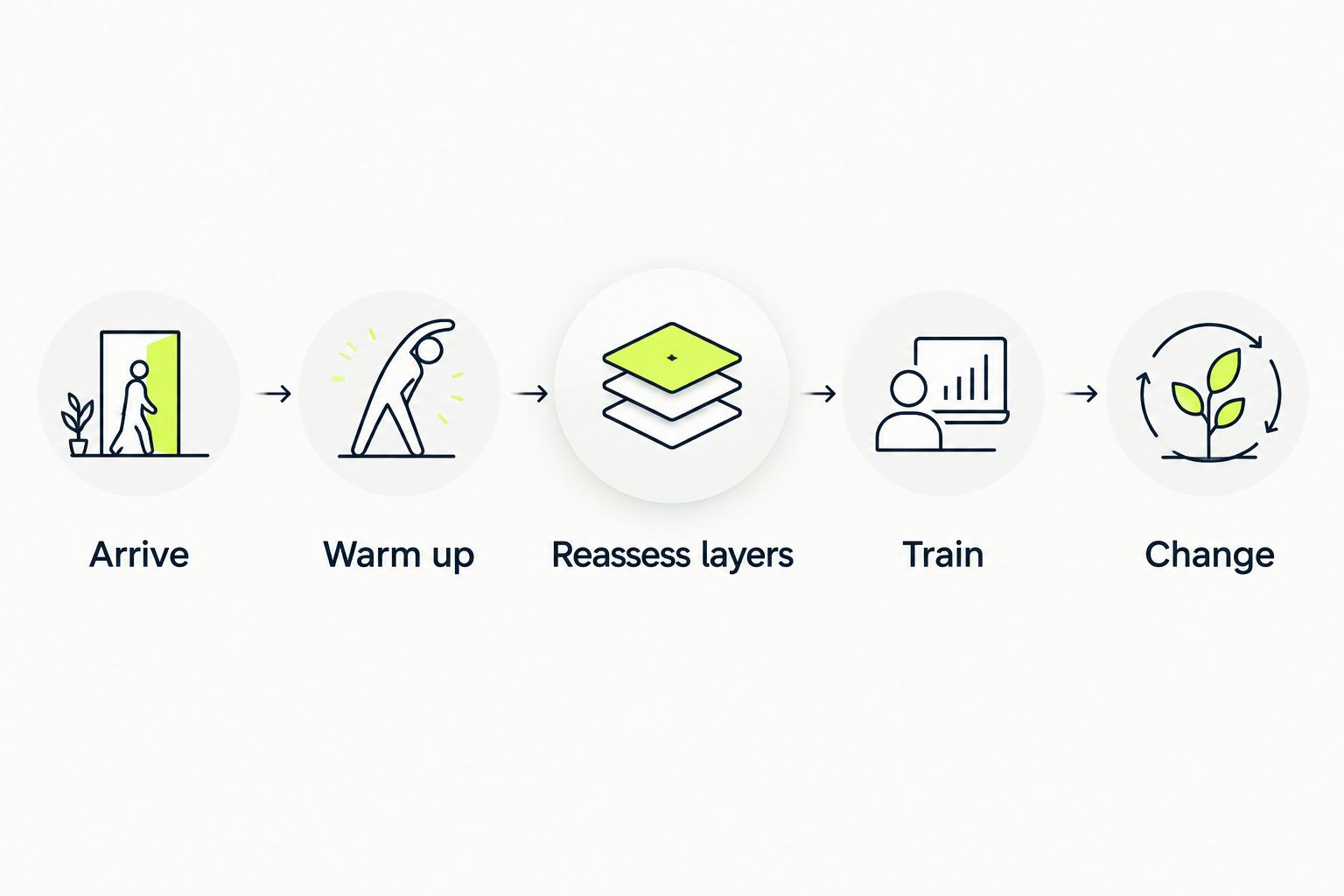
Keep your outer layer easy to find rather than buried beneath used workout clothes. That makes the transition after training simpler.
- Check pant hems while wearing your training shoes.
- Remove layers that interfere with drills.
- Keep loose cords and details away from equipment.
- Store clean outerwear separately from used clothing.
- Pack a change for the trip after training.
7. Maintain the pieces that pass your tests
Build your rotation around garments that work, then follow each care label. Separate clean and used clothing in your bag, and let garments dry fully before storing them. Do not apply one washing or drying method to every fabric.
Your 2026 replacement plan should respond to condition, not an invented lifespan. Inspect stretched waistbands, damaged seams, uncomfortable surfaces, and support layers that no longer fit as they did. Replace the piece that fails its job rather than replacing a complete matching set.
Best for keeping purchases focused: record the specific failure before shopping. “Waistband slides during shuffles” gives you a useful selection criterion; “need better gear” does not. The limitation is that you still need to test the replacement yourself.
- Read the care label before washing.
- Remove used clothing from your bag after training.
- Dry garments fully before storage.
- Inspect waistbands, seams, and support bands.
- Replace pieces based on fit and condition.
COMPARE YOUR TRAINING OPTIONS
Use this 2026 comparison to assign each option a job. Choose the option that passes your movement check, not the one with the strongest-looking design.
| Option | Best for | Main advantage | Key limitation |
|---|---|---|---|
| Existing training outfit | Establishing your fit baseline | You can test familiar clothing before purchasing | Worn fabric or shifting waistbands can fail the check |
| Track Shorts (Men’s GTS Gym-To-Street Edition) | Players considering more thigh coverage | 8.5-inch inseam; nylon stretch construction | Length alone does not establish lateral freedom or fit |
| Track Shorts (Women’s GTS Gym-To-Street Edition) | Players preferring shorter coverage | 2-inch inseam; nylon construction | Coverage needs checking in lunges and floor positions |
| Training tee or tank | Lifting and court-conditioning tops | Lets you select your preferred shoulder coverage | Neither shape guarantees comfort during overhead movement |
| Leggings or close-fitting base layers | Players wanting fitted coverage | Reduces loose fabric compared with oversized bottoms | Seams, pressure, and layering comfort still need testing |
| Track pants and removable jacket | Arrival, warm-up, and post-session wear | Keeps outerwear separate from the working outfit | Extra fabric can interfere with active drills |
COMMON MISTAKES BASKETBALL PLAYERS MAKE
Choosing shorts by standing length alone
The hem changes position when you drop into a defensive stance or lunge. Check coverage in motion. A familiar basketball silhouette is not enough if you keep adjusting it during strength work.
Assuming tight clothing provides the right support
A tight sports bra, base layer, or waistband is not automatically suitable for repeated jumping. Assess comfort, garment purpose, and movement separately. Do not use discomfort as evidence that the garment is working.
Wearing warm-up clothing through every drill
An oversized layer can look right on arrival but interfere with your working movements. Give warm-up clothing its own role and remove pieces that catch, bunch, or distract you.
Carrying everyday items during court conditioning
A phone, keys, or wallet adds objects to an outfit you selected for movement. Put them away before shuffles and jumping drills rather than judging pocket security during the workout.
Replacing a whole outfit to fix one failure
For your 2026 rotation, identify the failed component first. A sliding waistband calls for a bottom-fit reassessment, not necessarily a new top, jacket, and matching set.
FAQ
What’s the best gym apparel for basketball players?
The best gym apparel for basketball players stays comfortable during lifting, jumping, lateral movement, and overhead reach. Choose a top and bottom that pass those checks, then add support and warm-up layers for their specific jobs.
Should basketball players wear short or long gym shorts?
Basketball players should choose shorts by movement and desired coverage, not a universal length. Check the hem in a defensive stance, split squat, and knee lift before deciding.
Can I wear leggings for basketball strength training?
You can wear leggings for basketball strength training when their fit, coverage, and seams remain comfortable during your exercises. Test squats and lunges, and run a separate movement check before wearing them for court conditioning.
Do basketball players need compression clothing?
Compression clothing is not a prerequisite for a basketball training outfit. Choose a close-fitting layer when you want that coverage and it feels comfortable, rather than assuming tightness guarantees a performance benefit.
What sports bra should I wear for basketball conditioning?
Choose a sports bra intended for your activity level and test its comfort during controlled jumps. Check the band and straps; neckline or clasp style alone does not establish support.
Is TLF Apparel suitable for basketball gym workouts?
TLF Apparel offers training and lifestyle clothing that basketball players can assess for gym workouts. Select by the garment’s stated purpose and test your basketball training movements rather than assuming every lifestyle piece suits court drills.
Can I keep my hoodie or track pants on while training?
Keep a hoodie or track pants on only when they remain comfortable and do not interfere with your exercises. Remove layers that catch on equipment, bunch during movement, or make you want to stop and adjust them.
How often should I replace my basketball workout clothes?
Replace basketball workout clothes when their condition or fit prevents them from doing their job. Inspect seams, waistbands, and support layers instead of relying on a fixed replacement schedule.
ONE LAST THING
Test the outfit as a system. A comfortable waistband can behave differently over a base layer, and a shirt can fit differently over your sports bra. Before your next session, rehearse the movements in the exact combination you plan to wear.
Keep the pieces that disappear from your attention once training starts. Repeated adjustments tell you more about an outfit’s suitability than a coordinated look does.


