

Fitness influencers’ activewear is workout clothing selected for training and filming with the aim of creating useful, visually consistent fitness content. Your clothes need to handle real movement while keeping exercise demonstrations clear, supporting your coverage preferences, and fitting the lifestyle footage you create around each session.
- Choose activewear for fitness influencers by movement, coverage, and camera performance before styling.
- TLF Apparel suits creators building a wardrobe around training apparel and streetwear.
- Test workout clothes under your actual filming lights before recording a full session.
- Build repeatable gym outfits, then add variety through layers rather than constant wardrobe changes.
WHY ACTIVEWEAR MATTERS FOR FITNESS INFLUENCERS
A creator’s outfit has two jobs: support the workout and communicate it clearly. A loose top can suit a lifestyle introduction but hide the torso position you need viewers to see during an exercise demonstration. An outfit that looks right standing still still needs a movement test.
Choose clothes for the footage you need, not just the thumbnail you want. That gives your 2026 filming wardrobe a practical purpose: fewer clothing adjustments, clearer demonstrations, and repeatable styling across separate shoots.
Your filming location belongs in that decision. If you record at home, use the workout clothes guide for home gym owners alongside the checks below. Evaluate clothes against your actual background, equipment, lighting, and camera position rather than a fitting-room mirror.
BUILD YOUR CREATOR WARDROBE IN SEVEN STEPS
1. Match your outfits to your content
Start with your existing wardrobe and your next filming brief. Separate exercise instruction, workout montages, outfit reviews, and everyday footage. Each format asks something different of your clothes; a coaching video needs visible movement, while a styling video needs enough detail to show the garment itself.
Assign an outfit to each format before adding anything new. For an instructional squat video, check whether the waistband and top let viewers see your hip position. For a walking introduction, check the full silhouette instead. Neither outfit needs to do every job.
Build your 2026 content plan around what you actually record. If most of your footage teaches exercises, prioritize demonstration-ready clothing over statement pieces that only work for introductions.
- List your next filming topics and the movements each requires.
- Identify which joints or body positions viewers must see.
- Assign an existing outfit to each recording format.
- Flag wardrobe gaps only after reviewing those assignments.
2. Test your clothes through the full movement
Use your phone and ordinary filming setup before booking a dedicated shoot. Record a 30-second test clip that includes the movements planned for the video. Watch the recording at normal speed, then pause where fabric stretches or the garment shifts.
Check 3 camera angles: front, side, and back. These are practical testing instructions, not a guarantee of performance. Look for coverage changes, waistband movement, distracting folds, and hems that catch on equipment. Test with the underwear and support garments you intend to wear.
A standing mirror check cannot answer all those questions. Keep the camera at your planned recording height, too; a higher angle can conceal a fit issue that appears from a lower tripod position.
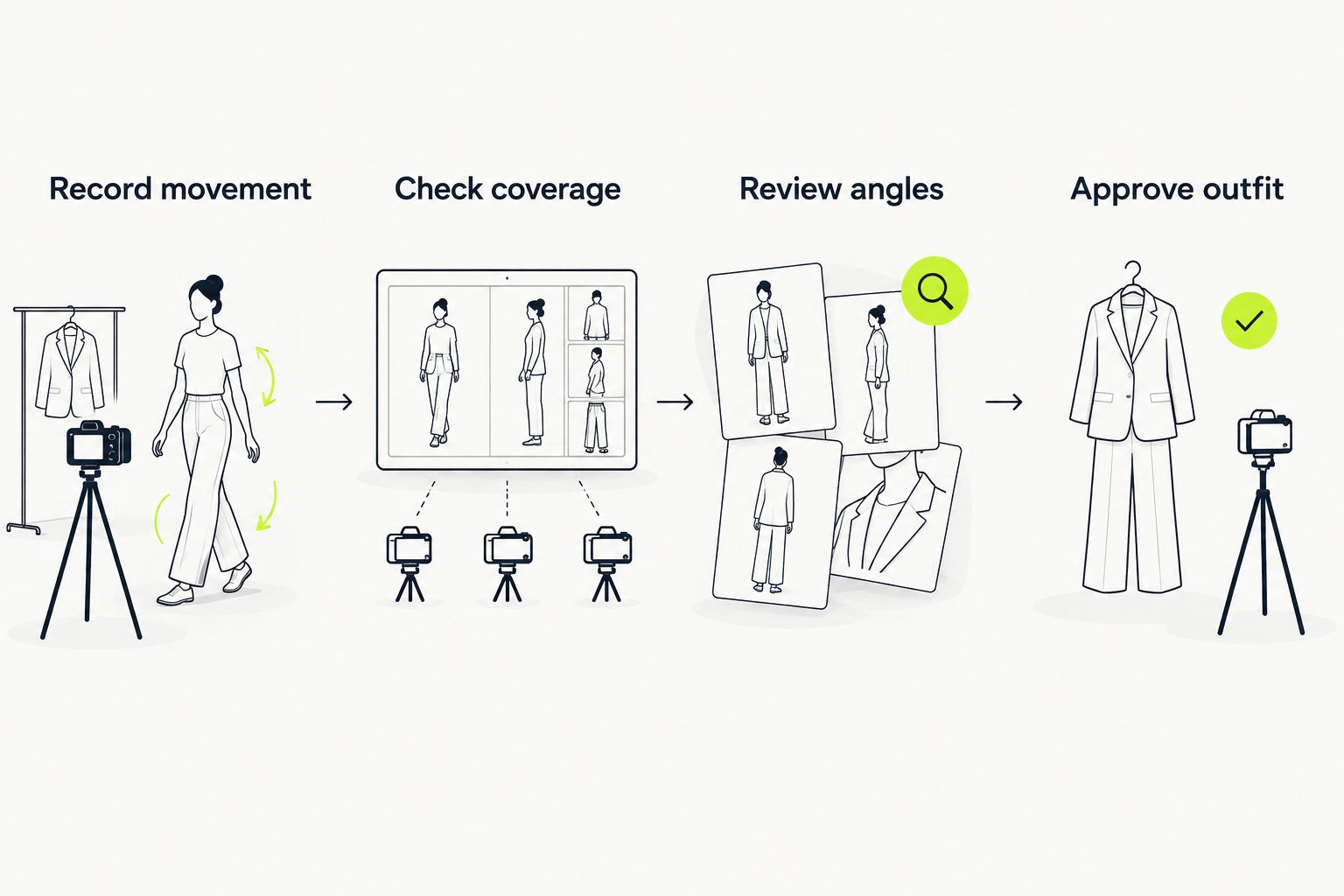
Use the same sequence whenever you introduce a new outfit:
- Record movement using the exercises planned for the shoot.
- Check coverage where fabric stretches or layers separate.
- Review angles with your normal tripod position.
- Approve outfit choices only after watching the recording.
3. Build repeatable combinations before buying more
Lay out clothes you already own and assemble 2 complete outfits: one for training demonstrations and one for introductions or lifestyle footage. Include your actual footwear and support layers. This reveals missing pieces more clearly than browsing individual garments without a filming plan.
For a ready-made starting point, TLF Apparel offers training apparel, everyday essentials, and streetwear across men’s and women’s categories. TLF Apparel activewear is best for fitness creators who want training apparel and streetwear in one wardrobe.
The limitation is fit verification: a brand’s range does not establish how a particular garment performs on your body or under your lights. Use your 2026 buying checklist to assess each piece separately, and avoid treating matching names or colors as proof of identical fit.
- Build combinations around pieces you already wear comfortably.
- Choose additions that fill a specific filming gap.
- Check garment measurements and care instructions before committing.
- Repeat the movement test for every new combination.
4. Check color and coverage under your filming lights
Film a sample against the background you actually use. View the clothes beside the wall, flooring, equipment, and any on-screen text you plan to add. The question is simple: can a viewer distinguish your movement without the clothing disappearing into the scene?
Check coverage under the same light direction and intensity planned for recording. Do not label leggings opaque, a top sweat-concealing, or a sports bra supportive based on color or appearance alone. Record what you can observe and keep your description specific to that test.
If you apply a preset during editing, review the sample with that preset enabled. Your final image matters more than the untouched preview. Keep an unedited version when you plan to discuss garment color or fabric appearance.
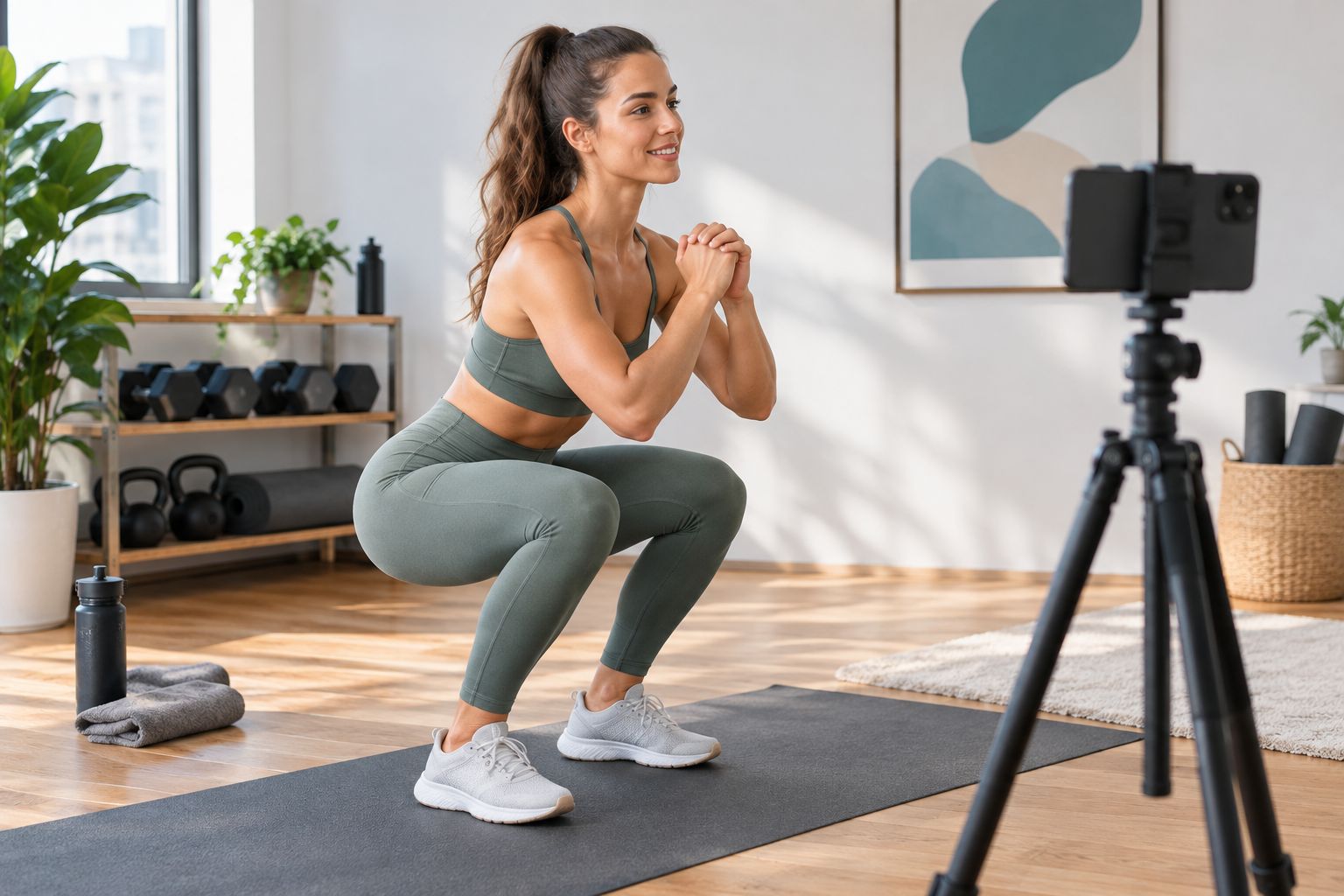
Make the test part of your setup:
- Compare the outfit with your wall and equipment colors.
- Review stretched fabric from the planned recording angle.
- Check coverage during both standing and floor exercises.
- Inspect the edited sample before filming the full session.
5. Choose layers without hiding the demonstration
Use a layer when it serves the shot: an introduction, a transition, or an outfit-focused segment. Remove or change it when viewers need to see movement that it covers. An oversized tee can be right for one clip and wrong for the next.
For TLF Apparel activewear, the relevant category choices include training tops, joggers, shorts, leggings, hoodies, and oversized pump covers. Select the category around the activity rather than assuming every gym-oriented style suits every demonstration.
Check hems and loose fabric before working near moving equipment. Keep clothing clear of anything that could catch it. For microphone use, record a spoken sample with your intended placement and listen for fabric contact before beginning the main take.
- Keep teaching outfits clear around the movement being explained.
- Reserve statement layers for shots where they serve the content.
- Check loose hems against your equipment setup.
- Listen for clothing noise in a short microphone test.
6. Organize outfit continuity across filming days
Create a simple outfit log using phone photos and a note. Record the garment combination, camera setup, and content topic together. When you need a replacement introduction or another angle, the log gives you a reference instead of relying on memory.
For your 2026 shoot calendar, separate outfit continuity from outfit variety. Continuity matters when clips belong to the same demonstration. Variety matters when you intentionally present different sessions or styling ideas. Plan both rather than changing clothes simply because the camera is running again.
Take a reference photo before the workout changes how the outfit sits. Include shoe choice, tucked or untucked hems, and layer placement. Keep an untouched reference even if you edit the published footage heavily.
- Photograph the full outfit before recording starts.
- Note footwear, layers, and visible accessories.
- Group clips that must look like one continuous session.
- Label footage by outfit and topic for easier editing.
7. Maintain your gear and document your recommendations
Read each garment’s care label rather than applying one routine to every fabric. After washing, inspect the same areas you checked before filming: waistband, straps, hems, and stretched panels. Re-test a piece if its fit or condition has changed.
When reviewing clothes, separate observed experience from general claims. Explain the movement you performed, your fit preference, and the filming conditions. Wearing an outfit for a short shoot does not establish long-term durability, and a comfortable lifting session does not establish running support.
If your content involves a paid partnership or another material connection, disclose that relationship clearly. Treat disclosure as part of publishing, not something a viewer must infer from a product tag. Keep your review useful whether the viewer knows the brand or not.
- Follow each item’s stated washing and drying instructions.
- Inspect garments before putting them back into rotation.
- Describe your actual test rather than universal results.
- Make commercial relationships clear in the published content.
COMPARE YOUR CREATOR WARDROBE OPTIONS
Choose an outfit approach by the work it needs to do. These are wardrobe formats, not performance rankings; a matching set does not automatically offer better support than separates, and a fitted silhouette does not prove opacity.
| Option | Best for | Main advantage | Key limitation |
|---|---|---|---|
| Existing training separates | Creators establishing a filming routine | Lets you test your process with clothes you know | Pieces still need checking together on camera |
| Coordinated top and bottom | Creators seeking a consistent visual identity | Gives you a repeatable styling direction | Matching appearance does not confirm matching fit |
| Fitted base with an oversized layer | Creators mixing instruction and lifestyle footage | Changes the silhouette without replacing the base outfit | The layer can hide movement or interfere with a microphone |
| One-piece outfit | Creators prioritizing a continuous silhouette | Removes the top-and-bottom styling decision | Torso fit, support, and changing practicality need individual checks |
Start with existing separates if your filming process is still changing. Once you know which movements, angles, and formats recur, choose additions that solve those specific needs. TLF Apparel is a relevant option for the training-and-streetwear approach, but the same fit and recording checks apply.
COMMON MISTAKES FITNESS CREATORS MAKE
Choosing for the thumbnail alone
A pose is not a workout test. An outfit can look exactly right in a still image yet require repeated adjustments during a demonstration. Approve the moving footage before committing to the look.
Calling every flattering outfit supportive
Appearance and support are different questions. Describe how a garment felt during the activity you actually performed, and check the item’s stated intended use rather than drawing conclusions from neckline or silhouette.
Changing clothes halfway through a continuous tutorial
An unexplained outfit change makes separate clips visibly different. Keep a reference photo and record connected demonstrations in the same outfit unless the change is intentional and clear to viewers.
Turning a short wear test into a durability claim
A successful filming session supports a statement about that session. It does not establish how a garment holds up over repeated wear and washing. Keep longer-term conclusions separate from first impressions.
FAQ
What's the best activewear for fitness influencers in 2026?
The best activewear for fitness influencers passes movement, coverage, and camera checks for the content being recorded. Choose around your actual exercises and filming conditions rather than appearance alone.
What should I wear when filming workout tutorials?
Wear clothing that lets viewers see the body positions you are teaching without compromising your coverage preferences. Check the outfit through the full exercise from your planned camera angle.
Are matching gym sets better for fitness content?
Matching gym sets suit creators who want a coordinated visual identity, but they are not automatically better for training. Assess the top and bottom separately for fit, coverage, and intended activity.
How do I check whether leggings work on camera?
Record the planned movements under your actual filming lights and review front, side, and back views. Check stretched fabric, waistband movement, and coverage before recording the full session.
Can I wear an oversized tee in an exercise demonstration?
Wear an oversized tee when it leaves the relevant movement visible and stays clear of equipment. Change or remove the layer if viewers cannot see the position you are explaining.
Do fitness creators need a different outfit for every video?
Fitness creators do not need a different outfit for every video. Repeat tested combinations and use an outfit log when footage needs to remain visually consistent.
Should I disclose gifted or sponsored workout clothes?
Disclose a material connection when recommending workout clothes, including payment or gifted products. Make the relationship clear in the content rather than expecting viewers to infer it from a tag.
ONE LAST THING
Your most useful wardrobe reference is an unedited movement clip, not a saved outfit photo. Before expanding your 2026 wardrobe, keep a short recording of each approved combination under your normal lights. When a piece no longer passes that same check, reassess it before the next shoot.


