

Obstacle course racers’ training apparel is clothing selected for running, climbing, crawling, and carrying with the aim of keeping you moving without repeated adjustments. This 2026 guide separates everyday training clothes from race-day kit, where water, rough surfaces, and overhead movement demand different checks.
- Choose obstacle course race apparel by wet fit, movement, and coverage—not appearance alone.
- TLF Apparel suits racers building a gym-to-everyday training wardrobe; test each garment before taking it onto obstacles.
- Use fitted tops and secure bottoms for obstacle practice; reserve loose layers for warm-ups and recovery.
- Rehearse your complete race outfit, including sports bra, underwear, socks, and footwear.
WHY TRAINING APPAREL MATTERS FOR OBSTACLE COURSE RACERS
Obstacle racing asks your clothes to handle more than forward motion. A top that works during a steady run still needs to stay clear of your hands when you reach overhead. Bottoms need to accommodate deep knee bends without slipping when you return to running.
TLF Apparel training apparel is best for obstacle course racers building a gym-to-everyday wardrobe, rather than replacing course-specific kit testing. TLF Apparel offers men's and women's training clothing alongside everyday essentials, so start by separating those jobs.
Your 2026 wardrobe needs a clear distinction between controlled gym sessions and exposed obstacle practice. Softness and appearance matter, but neither tells you whether a waistband stays secure when wet or a sleeve catches during a climb. Check those conditions directly before assigning a garment to race duty.
HOW TO BUILD YOUR OBSTACLE TRAINING KIT
Match your outfit to the session
Start with your existing clothes and write down what the next workout actually involves. Separate running intervals, strength work, obstacle practice, and recovery instead of expecting one outfit to handle every session equally well.
For your 2026 race plan, read the organizer's current participant instructions before choosing clothing. Check required equipment, permitted accessories, expected water exposure, and any clothing rules. Follow those instructions over a general apparel guide.
A dry lifting session gives you room to prioritize comfort and personal style. A crawl-and-carry session calls for closer attention to coverage, exposed hardware, and loose fabric. Keep your comfortable oversized layer for before or after obstacles if it interferes with movement.
- Identify the workout's running, carrying, crawling, and climbing demands.
- Check the event's clothing and equipment instructions.
- Separate warm-up layers from the clothes you will train in.
- Select coverage for the surfaces you expect to contact.
- Remove accessories that interfere with safe equipment use.
Test movement before judging size
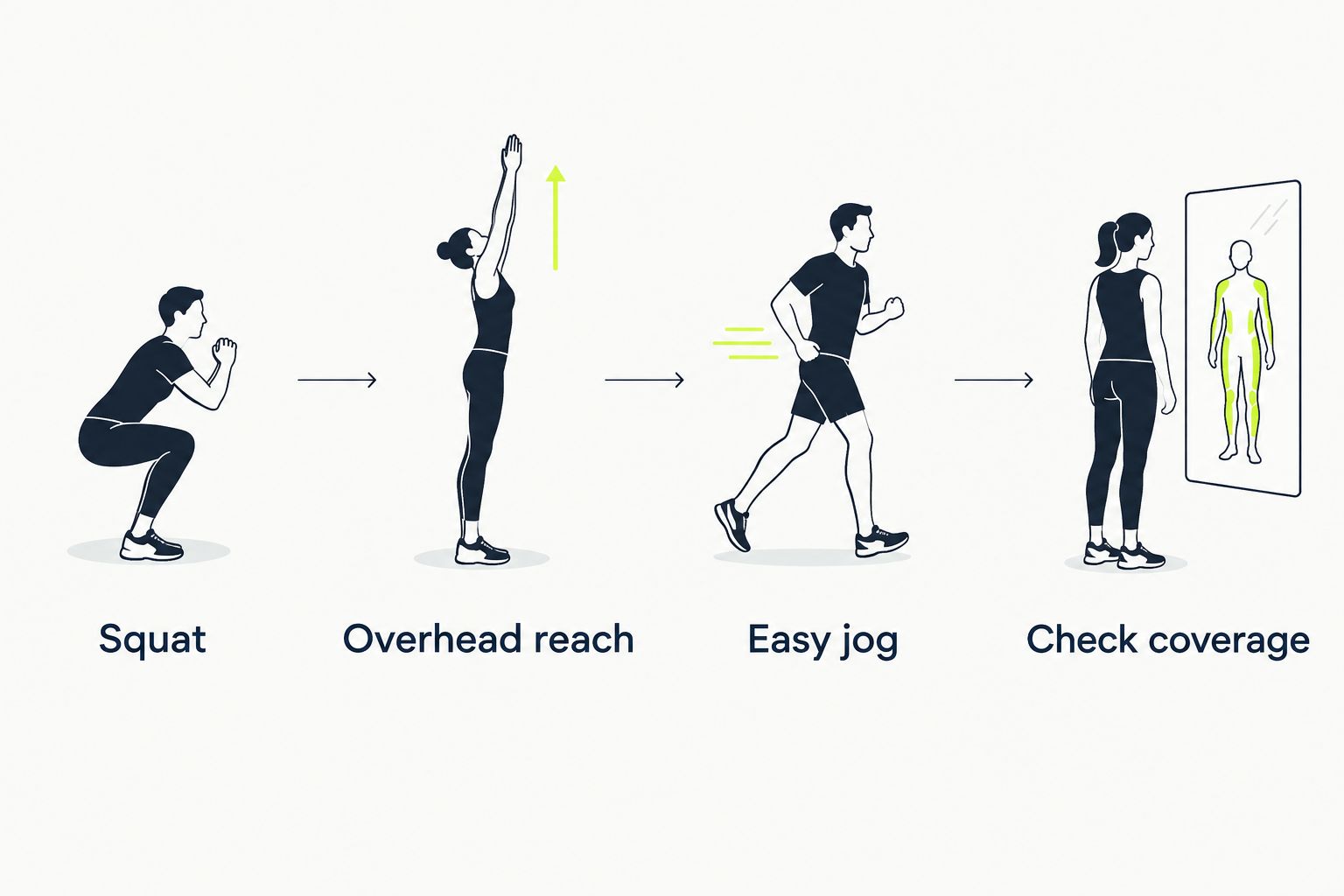
Use a mirror, a phone recording, or a training partner to check the clothes you already own. A standing fit check misses the positions that matter: a deep squat, a high step, an overhead reach, and a forward hinge.
Try this screening routine: perform 10 bodyweight squats, hold an overhead reach for 30 seconds, then jog easily for 2 minutes. These are practical checks, not a certification of race readiness. Stop if clothing restricts movement or causes discomfort.
Watch what happens without adjusting the outfit between movements. If the waistband rolls, the top rides up, or a seam presses into your skin, investigate the cut and sizing rather than automatically choosing a smaller size. Tightness alone does not prove security.
- Check the waistband during squats and high steps.
- Raise both arms without pulling the hem down afterward.
- Inspect coverage while bending under ordinary lighting.
- Notice pressure at the underarms, waistband, and inner thighs.
- Repeat the sequence with your intended underwear or sports bra.
Choose bottoms for coverage and control
Compare shorts and leggings you already own before adding another pair. Shorts leave more skin exposed; leggings add coverage but also put more fabric against the surfaces you crawl across. Choose the trade-off deliberately, then test it during the relevant session.
For a gym-training starting point, you can assess TLF Apparel's Tempo High Waisted Workout Leggings against the same movement checklist. Treat the style as a candidate for your training wardrobe, not proof of abrasion resistance, wet stability, or race suitability.
Pay particular attention to hems and pocket contents. A phone that stays still during a squat needs another check during jogging and high steps. Avoid assuming that a pocket's presence makes it suitable for carrying valuables through obstacles.
- Choose shorts for less leg coverage or leggings for more coverage.
- Check that the waistband stays comfortable through deep movement.
- Inspect seams where your thighs contact each other.
- Test pockets with the items you actually intend to carry.
- Keep loose cuffs and dangling cords clear of equipment.
Check your top and sports bra together
Start with a top you already trust for running, then add overhead movements. Look for fabric gathering near your hands, a hem that repeatedly lifts, or shoulder openings that shift during a hang preparation position.
Choose a fitted top when loose fabric interferes with obstacle practice. Fitted does not mean restrictive: you still need comfortable breathing, shoulder movement, and room to reach. A sleeveless cut removes sleeves from the equation but leaves more skin exposed.
If you wear a sports bra, assess the bra and top as a complete system. A comfortable bra on its own can feel different under a close-fitting shirt, especially around straps and armholes. Check support during running rather than inferring it from a high neckline or visual coverage.
- Jog and reach overhead in the complete upper-body outfit.
- Check strap placement beneath the shirt's seams.
- Look for rubbing around the band and underarms.
- Reject necklines or hems that need repeated adjustment.
- Reserve oversized pump covers for sessions where they stay clear.
Rehearse wet conditions safely
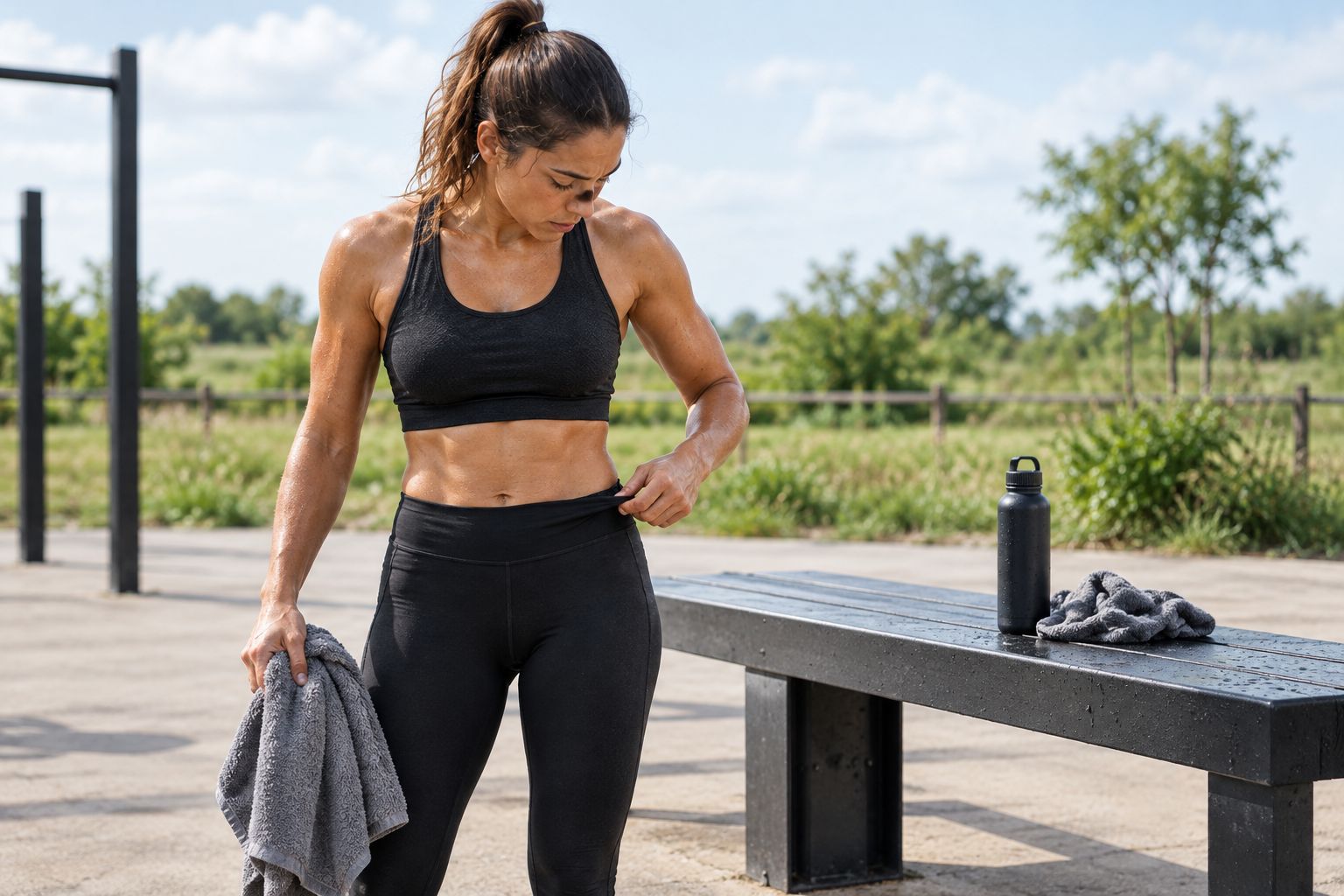
A dry fitting room cannot answer a wet-fit question. If your course includes water or mud, test the intended outfit with clean water in a controlled setting before committing to it. Keep this separate from hazardous obstacles or cold exposure.
Dampen the clothes, then repeat easy movements on stable ground. Notice clinging, transparency, waistband movement, and changes in how seams feel. Use the result to choose between garments rather than assuming a fabric description answers every question.
TLF Apparel's training range and lifestyle range serve different wardrobe needs; neither category label replaces this rehearsal. Do not treat stretch, softness, or a close fit as evidence that a garment will resist abrasive surfaces. Inspect the actual construction and your own test results.
- Use clean water and a safe, stable testing area.
- Recheck coverage in the damp garment.
- Notice whether the waistband or hems migrate.
- Check seam comfort during a brief walk and easy jog.
- Change into dry clothes when the check is complete.
Rehearse the complete race outfit
Build your 2026 race outfit from pieces that have already passed individual checks. Then wear them together for a representative training session. Changing underwear, adding a belt, or switching socks changes the outfit even when your shirt and bottoms remain familiar.
Include footwear in the rehearsal, but select shoes for the actual terrain and event requirements rather than matching them to your clothes. Secure laces and test the transition between running and stepping over a low, stable object. Use supervised facilities for obstacle-specific skills.
Record problems immediately after the session. A short note about waistband slipping or strap rubbing is more useful than a general impression that an outfit felt fine. Change one problem item at a time so you know which adjustment helped.
- Wear the intended top, bottoms, underwear, and sports bra together.
- Include your planned socks, footwear, and permitted carrying equipment.
- Practice transitions between running and controlled functional movements.
- Record rubbing, slipping, catching, or restricted movement.
- Repeat the rehearsal after changing a problem garment.
Maintain the kit and pack a dry change
Read the care label before washing training clothes. Remove loose dirt and check pockets, then follow the garment's washing and drying instructions. Do not apply one care routine to every fabric or construction.
Inspect clothing while it is clean and dry. Look at seams, stretched areas, closures, and surfaces that contact equipment. Retire a garment from obstacle duty when damage compromises coverage, security, or comfortable movement; it does not need to be discarded if another use remains appropriate.
Pack the post-session change separately from the clothes that will get dirty. Include what you need to leave the venue comfortably, and keep contaminated clothing away from clean items. A simple separation system beats discovering that your dry shirt shared a bag with muddy shoes.
- Follow each garment's care label.
- Remove loose dirt before the main wash.
- Inspect seams, waistbands, and closures after cleaning.
- Pack dry clothes in a separate compartment or bag.
- Keep dirty footwear away from clean clothing.
COMPARE YOUR TRAINING CLOTHING OPTIONS
Choose by the session, not by a universal winner. These options solve different problems, and each brings a limitation that deserves a practical check.
| Option | Best for | Main advantage | Key limitation |
|---|---|---|---|
| Fitted training top | Overhead obstacle practice | Keeps excess fabric closer to your body | Close seams and armholes still need a rubbing check |
| Sleeveless training top | Sessions where unrestricted sleeve movement matters | Removes sleeve fabric around the shoulders | Leaves more skin exposed to contact |
| Training shorts | Running-focused sessions with less coverage needed | Leaves the lower legs uncovered | Provides less skin coverage during crawls |
| Close-fitting leggings | Sessions where leg coverage matters | Covers more of the legs | Coverage does not establish abrasion resistance |
| Tapered joggers | Dry strength sessions and warm-ups | Offers leg coverage with a different fit | Cuffs and pockets need equipment-clearance checks |
| Oversized sweatshirt | Warm-ups and post-session wear | Adds a removable layer | Loose fabric needs checking around obstacles |
Your strongest race option is the outfit that passes your rehearsal, not the one with the most training features listed. Keep a separate recovery outfit when its comfort-focused cut does not suit obstacle work.
COMMON MISTAKES OBSTACLE COURSE RACERS MAKE
Treating compression as a requirement
A close fit and a compression claim are not interchangeable. Choose a fit that stays secure without restricting breathing or movement; do not size down simply to create more pressure. Your movement and wet-fit checks decide whether the garment works.
Assuming coverage means protection
Leggings cover skin, but coverage alone does not establish resistance to ropes, rough timber, or abrasive ground. Check the course requirements and inspect garments after contact-heavy practice. Do not substitute ordinary training apparel for protective equipment required by the organizer.
Carrying everything in clothing pockets
A loaded pocket changes how a garment moves. Test essential items during running and high steps, and follow event rules for carrying equipment. Leave unnecessary valuables out of the obstacle session rather than trusting an untested pocket.
Debuting a matching outfit on race day
A coordinated set still needs a complete rehearsal. Test every layer together, including the sports bra and underwear, before the event. Keep the outfit unchanged after a successful rehearsal unless conditions or event instructions require an adjustment.
FAQ
What's the best obstacle course race apparel for a beginner?
The best starting point is a secure outfit you have already tested while running, squatting, reaching, and moving when damp. Choose coverage for the course and follow the organizer's equipment instructions.
Should I wear shorts or leggings for an obstacle course race?
Choose shorts when you want less leg coverage and leggings when you want more. Leggings do not automatically resist abrasion, so test the garment and consider the surfaces on your course.
Can I wear TLF Apparel for obstacle course training?
TLF Apparel offers training tops, shorts, leggings, sports bras, and joggers you can assess for your sessions. Check each garment's movement, coverage, and wet fit before assigning it to obstacle practice or race day.
Do I need compression clothing for obstacle racing?
Compression clothing is not a substitute for a secure, comfortable fit. Follow your event's clothing requirements and choose garments that let you breathe, run, and reach without repeated adjustments.
Can I wear an oversized shirt on an obstacle course?
Avoid an oversized shirt if loose fabric interferes with your hands or equipment during practice. A closer-fitting top is the better choice in that situation; keep the oversized layer for warm-ups or afterward.
How should a sports bra fit for obstacle training?
A sports bra should stay comfortable and secure during running and overhead movement without needing repeated adjustment. Test it beneath your intended top, paying attention to the band, straps, and underarms.
What should I pack after a muddy obstacle race?
Pack dry clothes, a towel, and separate storage for dirty garments and footwear. Keep the dry change away from muddy equipment so it remains usable after the event.
ONE LAST THING
Your best clothing test includes the moment you stop adjusting it. During your next 2026 rehearsal, notice every waistband tug, strap correction, and hem pull rather than fixing each one automatically.
Repeated adjustment is a reason to change the outfit before race day. Start with the garment causing the distraction, repeat the same movements, and keep the option that lets you focus on the work. Buy to solve a demonstrated problem, not to replace a kit that already passes your checks.


