

Choose TLF Apparel if you want training clothes and Gym-To-Street(R) outfits from one athletic brand; choose Macy's if you want to compare multiple brands or shop beyond activewear. This 2026 comparison separates a focused gym wardrobe from a department-store shopping trip, then shows you how to choose by fit, function, and intended use.
- TLF Apparel vs Macy's comes down to focused gym clothing versus multibrand department-store shopping.
- Choose TLF for training-led outfits that extend into everyday wear.
- Choose Macy's for brand comparison and shopping across clothing categories.
- Neither store name guarantees better fit, sports-bra support, or fabric performance.
Why this matters
You're comparing an apparel brand with a retailer, not two equivalent clothing manufacturers. That distinction changes what a useful recommendation looks like. One offers its own design direction; the other lets you compare products from different labels.
A department store's breadth doesn't prove that a particular pair of leggings performs better. Likewise, an athletic brand's focus doesn't establish that every garment suits every workout. Choose the shopping destination first, then judge the actual garment.
For your 2026 wardrobe, start with the job: lifting, studio sessions, casual wear, or several unrelated clothing needs. A clear brief makes the comparison useful instead of turning it into a contest between logos.
At a glance
| Dimension | TLF Apparel | Macy's |
|---|---|---|
| Best for | Training-led wardrobes with everyday styling | Multibrand and broader wardrobe shopping |
| Standout feature | Gym-To-Street(R) design direction | Department-store assortment across brands and categories |
| Assortment breadth | Athletic, lifestyle, and streetwear focus | Broader shopping beyond gym clothing |
| Comparing brands | Explore one brand's styles | Compare different labels within one retailer |
| Workout-to-everyday styling | A central part of the brand's positioning | Build the combination across individual labels |
| Fit confidence | Check each garment's measurements and intended silhouette | Check each label's measurements and intended silhouette |
| Performance confidence | Evaluate the specific fabric and construction | Evaluate the specific fabric and construction |
| Pricing model | Retail purchases from the apparel brand | Retail purchases across multiple brands |
TLF is the better starting point for a training-led wardrobe
TLF Apparel is best for shoppers building a training-led gym-to-everyday wardrobe. Its stated range includes men's and women's training clothing, everyday essentials, and streetwear. That gives you a relevant starting point when exercise drives the purchase.
The advantage is focus. You can build around leggings, sports bras, shorts, tanks, joggers, and layers without treating activewear as one unrelated department among many. That focus suits you when your shopping list starts with what you'll wear to train.
Macy's makes more sense when training is only part of your brief. If you also need clothing for work, a social occasion, or another part of your wardrobe, a department store addresses the broader task.
The limitation of shopping one athletic label is equally clear: you're choosing within its design direction. Choose TLF for a gym-first brief; choose Macy's when the brief extends well beyond the gym.
Gym-To-Street(R) gives TLF a clearer styling direction
TLF's Gym-To-Street(R) positioning connects training clothes with everyday outfits. The brand describes a range that includes performance gear, lifestyle pants, comfort sets, graphic tees, hoodies, and streetwear. That is a more specific styling brief than department-store shopping as a whole.
For example, the TLF Swole Tee uses Cotton Luxe DNA(TM), described in its product information as an ultra-soft stretch fabric. It is a concrete option to examine if your brief includes a gym-oriented tee for casual outfits. Read the garment details rather than treating the collection name as a performance rating.
Macy's gives you room to combine different labels instead. That suits shoppers who prefer to assemble an outfit piece by piece rather than follow one brand's aesthetic.
The tradeoff is direction versus choice. TLF wins when you want an athletic styling starting point; Macy's wins when you want to create your own mix across brands. Neither approach requires wearing one label from head to toe.
Macy's wins on shopping beyond activewear
Macy's is the better destination when your shopping list crosses departments. Its department-store model covers more than workout clothing, so you can consider activewear alongside other wardrobe categories.
That breadth matters when you aren't building a dedicated gym wardrobe. You might need an exercise outfit and clothing for an unrelated occasion. Keeping those decisions within one retail destination is a different benefit from finding a focused athletic collection.
TLF's own range extends beyond training into lifestyle apparel and streetwear. But that doesn't make it an equivalent substitute for a department store serving a wider shopping brief.
Breadth has a downside: a larger search space gives you more products to sort. Use Macy's when that wider choice solves a real need, not because a longer results page automatically means a better garment. For broad wardrobe shopping in 2026, Macy's wins this dimension.
Macy's is better for comparing different clothing labels
Choose Macy's when you specifically want to assess competing brands within a retailer. You can approach the category with a garment brief, then compare how different labels interpret it.
Keep that brief narrow. Comparing a relaxed casual tee with a fitted training top tells you little about which is better for your session. Compare intended use, silhouette, fabric information, and care requirements before deciding.
Shopping directly with TLF answers a different question: which of this brand's styles suits you? That's useful when you already like its direction, but it isn't a substitute for comparing unrelated labels.
Macy's wins for brand exploration; TLF wins for staying within a chosen athletic identity. The department-store route also asks you to reassess sizing and product details as you move between labels. Don't carry assumptions from one brand into the next.
Neither destination wins fit without a garment-level check
A store name can't tell you whether a waistband stays comfortable, a shoulder seam sits correctly, or a leg opening matches your preference. Fit belongs to the particular garment and your body.
Start with the intended silhouette. A relaxed tee and a close-fitting training top should not feel identical in the same labeled size. Likewise, wide-leg pants and tapered joggers serve different preferences even when both fit correctly at the waist.
Use this fit check before choosing from either destination:
- Measurements: Compare your measurements with the relevant garment or brand guidance.
- Silhouette: Decide whether you want close, relaxed, oversized, tapered, or wide-leg styling.
- Movement: Check how the garment behaves when you reach, bend, sit, and squat.
- Coverage: Assess length and coverage in the positions you'll actually use.
Don't use a model's size as your only sizing reference. Height and weight don't describe every proportion, and liking an outfit in a photograph doesn't establish how it will fit you.
Fit is a tie at the retailer level. Buy the cut that works for your body and activity, not the size label you feel obliged to wear.
Neither destination proves better workout performance by name
TLF describes its clothing as performance-driven and uses proprietary fabric technologies. Macy's sells garments from different labels, each with its own materials and construction. Neither fact establishes a universal performance winner.
For a useful 2026 comparison, match the garment to the session. A comfortable everyday tee isn't automatically your preferred choice for a sweat-heavy workout. A legging's shaping details don't establish sports-bra support, opacity, or suitability for every activity.
Check the features that address your actual concern:
- Sweat management: Read the specific garment's fabric and performance description.
- Movement: Examine stretch, cut, and seams where you need freedom.
- Support: Choose sports bras by stated support information and personal fit.
- Practical use: Check pocket placement, closures, and garment care.
Avoid transferring a claim from one product to an entire brand. Cotton Luxe DNA(TM) appears in the supplied Swole Tee description; that doesn't establish the fabric composition of another top, a legging, or a sports bra.
Performance remains product-specific. Choose the garment with relevant details and a suitable fit, rather than declaring either shopping destination better for every workout.
Pricing models: one brand versus multiple labels
Both destinations sell individual garments through retail purchases. The useful distinction is who sets the product direction: you're comparing one apparel brand's range with a retailer's assortment of different labels.
At TLF, assess value within the brand's styles and your intended use. At Macy's, assess value across the particular labels and garments you're considering. Neither model makes every item the better purchase.
Build an equivalent comparison before checking current totals. Compare leggings with leggings, training tops with training tops, and casual layers with casual layers. Different garment purposes make a basket comparison misleading before cost even enters the decision.
For either destination, check the current checkout total and the terms attached to the exact purchase. There is no defensible blanket value winner without comparing equivalent garments. A piece you'll use for its intended job is a better starting point than a purchase justified only by the retailer's name.
Make the choice with a clear shopping brief
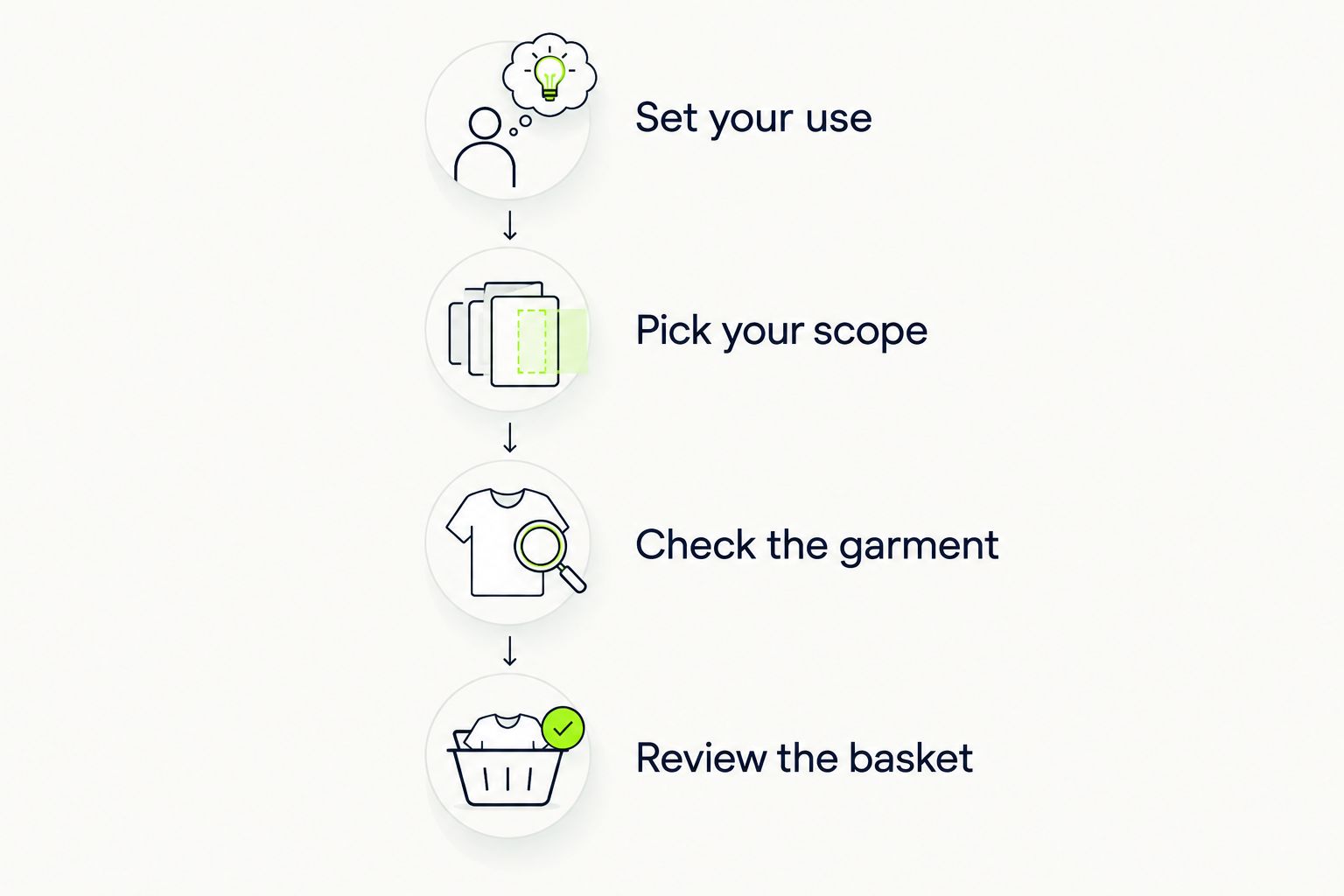
Use this decision sequence for your 2026 purchase. It keeps the destination decision separate from the garment decision, so you don't mistake a good shopping experience for proof of a good fit.
- Set your use. Write down the main activity and whether everyday styling matters.
- Pick your scope. Decide between a focused athletic label and multibrand shopping.
- Check the garment. Review fit, fabric, construction, and care for the actual item.
- Review the basket. Remove pieces that don't serve the brief.
Keep the brief practical. If you're replacing workout leggings, don't let unrelated categories decide the purchase. If you're shopping for several different occasions, don't force one athletic label to cover every need. The strongest choice is the one that addresses your original task.
Final verdict: choose focus or breadth
Choose TLF Apparel if you're the gym-first shopper
Your wardrobe starts with training, but you also want athletic clothing for casual plans. You prefer exploring one brand's gym, lifestyle, and streetwear direction rather than comparing a long list of unrelated labels.
TLF is the named winner for this profile. Its focus matches the brief. Still assess each garment's fit and function; a brand-level match doesn't make every style the right purchase.
Choose Macy's if you're the multibrand wardrobe shopper
You want to compare labels, shop beyond activewear, or cover several different clothing needs. Your priority is retail breadth rather than committing to one training-led aesthetic.
Macy's is the named winner for this profile. Its department-store model fits that task. Keep your comparisons specific so the wider assortment doesn't distract you from the features you need.
One-glance scorecard
| Dimension | Winner |
|---|---|
| Training-led wardrobe | TLF |
| Defined Gym-To-Street(R) direction | TLF |
| Shopping beyond activewear | Macy's |
| Comparing different labels | Macy's |
| Fit confidence | Tie: garment-level decision |
| Workout performance | Tie: garment-level decision |
| Purchase value | No blanket winner |
FAQ
Is TLF Apparel better than Macy's for gym clothes?
TLF Apparel is the better starting point for a focused, training-led wardrobe; Macy's is better for comparing different activewear labels. Judge the actual garment's fit and features before buying.
What's the main difference between TLF and Macy's?
TLF is an athletic and lifestyle apparel brand, while Macy's is a multibrand department-store retailer. The comparison is focused brand shopping versus a broader retail assortment.
Which is better for workout clothes I can wear casually?
TLF has the clearer brand-level focus through its Gym-To-Street(R) positioning. Macy's suits you if you prefer assembling casual and workout outfits across different labels.
Does Macy's have better-fitting activewear?
Macy's does not have a universal fit advantage. Fit depends on the selected label, garment cut, measurements, and how the clothing moves on your body.
Which option offers better value for workout clothing?
Neither destination is a blanket value winner. Compare garments with equivalent purposes, check current purchase totals, and prioritize the fit and features you'll use.
Should I buy the same size across different activewear brands?
Don't assume the same labeled size will fit identically across activewear brands. Use each garment's sizing guidance and account for its intended silhouette.
Are all gym clothes suitable for high-impact workouts?
No, a gym-clothing label alone does not establish suitability for high-impact exercise. Check the specific garment's intended use, and assess sports-bra support separately from styling.
One last thing
Don't confuse outfit coordination with identical fabric. Pieces that look good together don't necessarily share the same construction, care needs, or training purpose.
Before your final 2026 purchase, read each garment's details separately. Build the outfit around your session first, then choose the styling you'll want to wear afterward.


