

CrossFit athletes’ gym apparel is training clothing selected for lifting, gymnastics, and conditioning with the aim of keeping you moving without clothing adjustments. This 2026 guide explains how to choose crossfit gym apparel that stays secure through squats, overhead work, floor movements, and jumps—not just the first exercise.
- TLF Apparel is best for athletes seeking gym apparel that also fits an everyday wardrobe.
- Choose crossfit gym apparel by movement, waistband stability, coverage, and comfort—not matching colors alone.
- Test workout shorts and leggings through squats, overhead reaches, and floor transitions before training.
- Use fitted training pieces for the workout; save loose layers for warm-ups and afterward.
WHY GYM APPAREL MATTERS FOR CROSSFIT ATHLETES
CrossFit combines weightlifting, gymnastics, and conditioning, so your outfit has to handle different demands within the same session. A shirt that feels comfortable while standing still still needs to work when you reach overhead or move onto the floor.
Your main constraints are movement, coverage, heat, and equipment contact. Waistbands should stay where you set them, hems should clear your knees, and tops should let you reach without pulling across your shoulders.
TLF Apparel is best for athletes seeking gym apparel that also fits an everyday wardrobe. TLF Apparel offers performance clothing and lifestyle pieces, but those categories serve different jobs: your workout outfit needs a movement test, while your arrival layer needs easy removal.
For your 2026 training wardrobe, separate those jobs before choosing colors. Clothing that looks right together does not automatically work well together during a workout.
BUILD YOUR CROSSFIT TRAINING OUTFIT
1. Match your outfit to the session
Start with the workout, not your shopping cart. Read the planned movements and test clothing you already own against the positions those movements require.
For lifting, check your squat depth, overhead reach, and access to the bar. For gymnastics and conditioning, check whether clothing shifts during hanging, jumping, or floor transitions. Do unloaded checks first; a clothing test is not a reason to attempt an unfamiliar skill.
Make your 2026 selection process simple: Squat test, Overhead reach, Floor transition, Jump test. Each check answers a different question about coverage and freedom of movement. Stop when you find a clear problem rather than repeatedly adjusting the same piece.
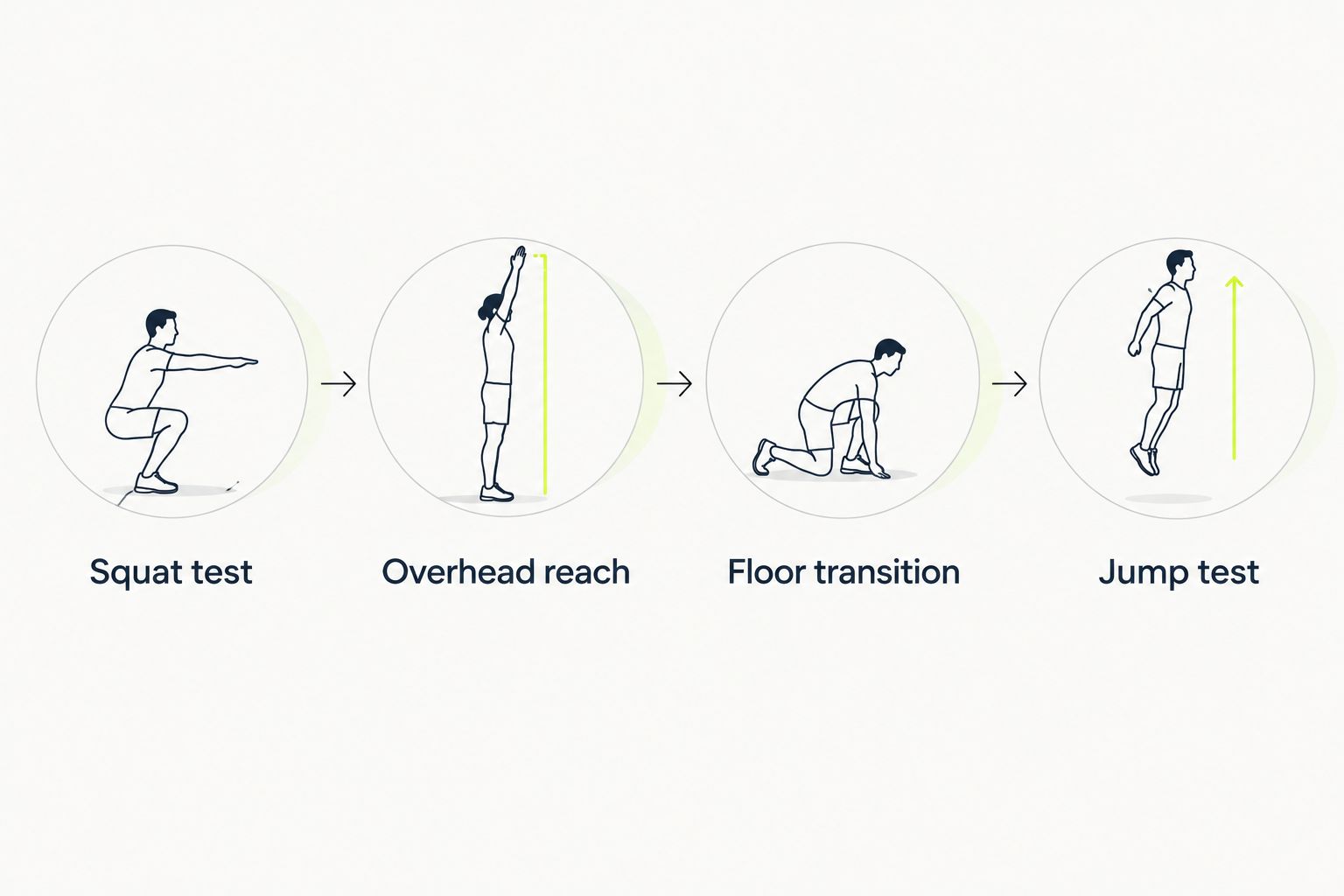
Use a mirror or a short phone recording to check angles you cannot see directly. Keep the same base layers on that you intend to wear during class.
- Squat test: check waistband movement and rear coverage.
- Overhead reach: check shoulder freedom and shirt lift.
- Floor transition: check bunching and uncomfortable seams.
- Jump test: check shifting hems, waistbands, and support.
2. Check fit before changing size
Try your current shorts or leggings through the movement checks before replacing them. Identify where the problem starts: the waist, seat, thigh, rise, or hem. A different size does not necessarily fix a cut that does not suit your proportions.
A secure fit is not the same as the tightest fit. You should be able to squat and breathe comfortably without repeatedly pulling the waistband into place. If one area feels loose while another restricts movement, compare a different cut rather than forcing the size decision.
Use measurements and the individual product’s size guidance when shopping. TLF Apparel gym apparel spans several silhouettes; an oversized track pant and a close-fitting training short should not be judged by the same visual fit.
Model measurements provide context, not a personal fit guarantee. Your torso length, hip shape, and preferred coverage still matter.
- Measure your waist and hips using the product’s sizing instructions.
- Check the rise while standing and at squat depth.
- Look for pulling across the seat or front of the hips.
- Check whether the waistband stays secure without digging in.
- Repeat the movement test with your intended underwear.
3. Choose bottoms for coverage and clearance
Compare the bottoms you already own before buying another style. Watch what happens when you lunge, sit into a squat, and bring your knees toward your chest. The useful question is not whether shorts or leggings are universally better; it is which stays comfortable through your movements.
Inseam length gives you a starting point. The listed Track Shorts (Men’s GTS Gym-To-Street Edition) have an 8.5-inch inseam, while the listed women’s edition has a 2-inch inseam. Tempo 6 Inch Gym Shorts With Pockets provide another length to compare. These measurements describe the garments, not where their hems will land on every athlete.
Longer coverage does not prove abrasion resistance, and a soft fabric description does not establish rope-climb durability. Check the intended use and keep fabric away from moving equipment.
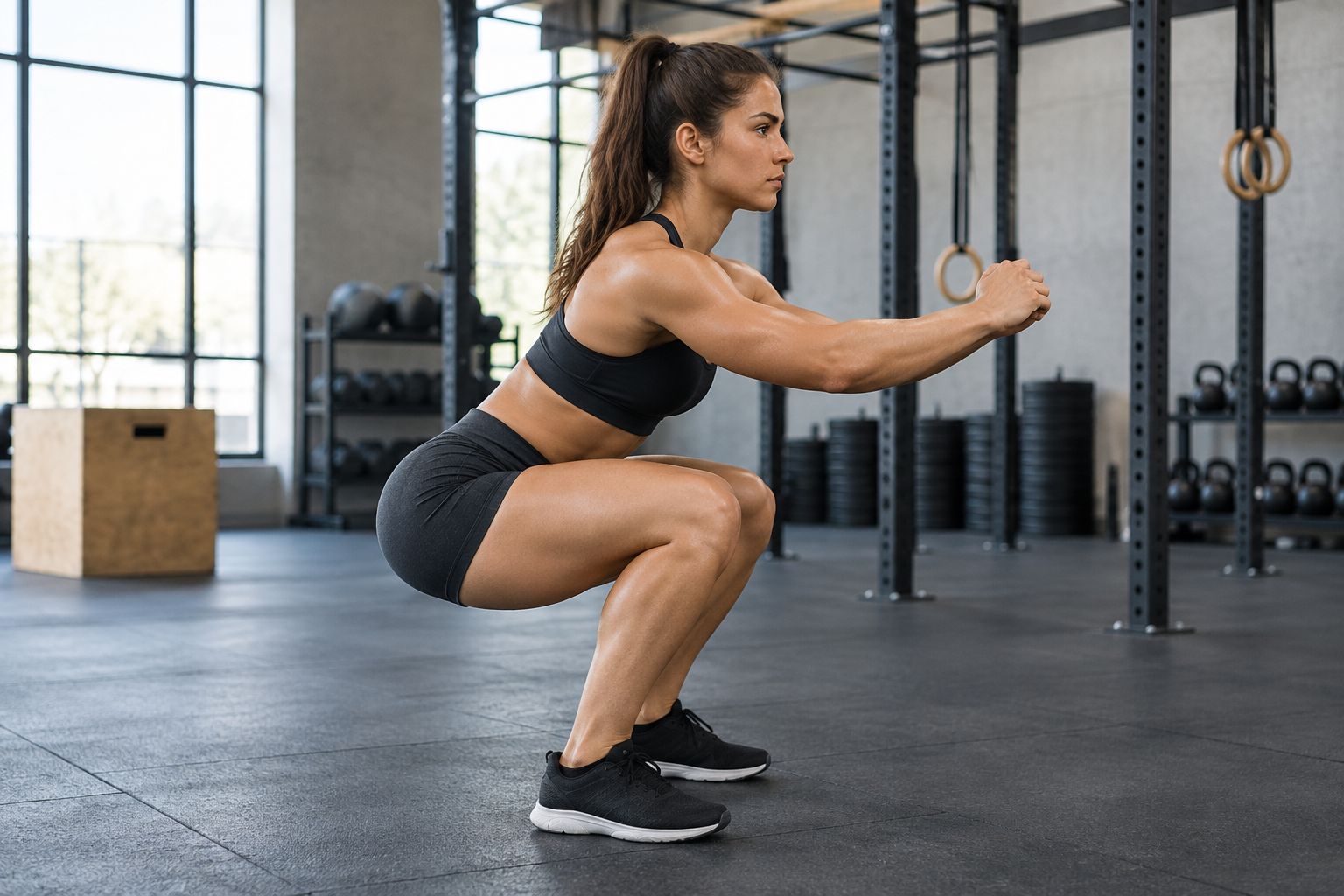
For shopping, the two shorts below offer different stated inseam lengths. Best for comparing coverage: the men's track shorts and the Tempo shorts. Neither length alone establishes how securely a garment will fit you during a mixed workout.
- Choose a hem that clears your knee through a deep squat.
- Check thigh coverage during lunges and floor movements.
- Empty pockets before barbell work or inverted positions.
- Look for seams that rub when your legs move repeatedly.
- Inspect the seat under normal lighting while squatting.


4. Test your top and sports bra together
Start with a top and sports bra you already use. Reach overhead, move into a plank, and perform a comfortable jump test. Check the combination rather than evaluating each piece only while standing.
A close-fitting top limits loose fabric, but the neckline and armholes still need to feel comfortable. A relaxed shirt provides more room, but extra fabric needs attention during floor work and inverted positions. Neither cut wins every session.
For sports bras, judge support during the movements you perform. A high neckline, front clasp, or matching color is a design detail—not proof of an impact rating. Avoid assigning a support level from appearance alone.
Choose support first and the matching top second. If a bra shifts, rubs, or distracts you during your test, change the fit or style before class.
- Raise both arms and check for band movement.
- Check straps for digging or slipping.
- Lean forward and assess coverage at the neckline.
- Move into a plank and check shirt bunching.
- Test the complete outfit during gentle repeated jumps.
5. Separate warm-up layers from workout pieces
Use your existing removable layer for the trip to the gym and the beginning of your warm-up. Before the main workout, decide whether it still serves a purpose or simply adds fabric you need to manage.
Baggy track pants are useful when you want a relaxed silhouette before or after training. Their oversized fit also means more material around your legs. Best for arrival and cooldown: loose layers that you can remove before movements where fabric gets in the way.
TLF Apparel’s Gym-To-Street(R) approach fits a wardrobe that includes both training and everyday clothing. Keep the distinction clear: a lifestyle piece does not need to double as your hardest-session uniform.
Choose the workout layer for movement and the outer layer for the rest of your day. You do not need identical silhouettes for both.
- Remove loose outer layers before checking equipment clearance.
- Keep cuffs and drawcords away from moving equipment.
- Check whether a jacket restricts your overhead position.
- Pack a dry top for after a sweaty session.
- Keep your training bottoms accessible beneath removable layers.
6. Build a rotation you can actually maintain
Start by counting usable outfits you already own. Keep the pieces that pass your movement checks, then identify the specific gap: secure shorts, a better-fitting bra, or a dry change for afterward.
Build your 2026 rotation around laundry access rather than a fixed wardrobe formula. Training frequency, drying time, and whether you shower at the gym determine how much clothing you need. Buying duplicates of an uncomfortable item only multiplies the problem.
Follow each garment’s care label. Do not assume that every stretch fabric accepts the same wash temperature or dryer setting, and do not treat a product name as a care instruction.
Recheck fit as garments wear. A waistband that no longer holds position or a seam that repeatedly irritates your skin needs attention, even if the outfit still looks good.
- Separate damp training clothes from clean clothing.
- Wash and dry according to each care label.
- Inspect waistbands, seams, and high-contact areas.
- Replace the item causing the problem before replacing a full set.
- Keep a proven outfit ready for demanding sessions.
COMPARE YOUR CROSSFIT APPAREL OPTIONS
Use this 2026 comparison to narrow your search by function. Choose the option that solves your movement problem, then confirm the individual garment’s fit and construction. These are use-based recommendations, not durability or performance test results.
| Option | Best for | Main advantage | Key limitation |
|---|---|---|---|
| Tempo 6 Inch Gym Shorts With Pockets | Athletes comparing fitted shorts with thigh coverage | Stated 6-inch length and pockets; described as breathable and sweat-wicking | Description alone does not establish waistband stability during your workout |
| Track Shorts (Men’s GTS Gym-To-Street Edition) | Athletes seeking a longer shorts option | Stated 8.5-inch inseam and nylon stretch fabric | Check hem clearance and movement rather than judging length alone |
| Tempo High Waisted Workout Leggings | Athletes who prefer full-leg coverage | Legging silhouette provides more coverage than shorts | High-waisted styling alone does not prove a roll-free fit |
| Close-fitting training top | Athletes who want less loose fabric | Keeps the silhouette close to the body | Neckline, armholes, and shoulder movement still need checking |
| Oversized track pants | Arrival, warm-up, and cooldown | Relaxed silhouette for layering | Extra fabric requires equipment-clearance checks |
COMMON MISTAKES CROSSFIT ATHLETES MAKE
Choosing for the lift and ignoring the conditioning
A pair of shorts can feel comfortable during controlled lifting yet shift during repeated jumps. Test the whole movement mix before deciding that a piece works for class. Best correction: evaluate the outfit against the most demanding clothing movement in the session.
Treating compression as a sizing target
Sizing down to stop slipping creates a different problem if it restricts your squat or makes the waistband uncomfortable. Diagnose the cut, rise, and waistband together. Best correction: choose security without forcing a smaller size.
Assuming soft fabric means tough fabric
Softness describes feel; it does not establish resistance to rough contact. Do not infer rope-climb suitability from comfort claims or full-leg coverage. Best correction: check intended use and inspect contact areas after training.
Buying a matching set before testing support
A coordinated top and bottom can have different fit needs. Choose each piece independently, especially when sports-bra support is part of the decision. Best correction: keep the piece that works and change the one that does not.
FAQ
What should I wear to my first CrossFit class?
Wear comfortable training clothes that stay secure through squats, overhead reaches, and floor movements. Test an outfit you already own before buying specialized clothing, and ask the coach about the planned session.
Are shorts or leggings better for CrossFit?
Neither is universally better for CrossFit. Choose shorts for your preferred leg freedom or leggings for fuller coverage, then check waistband stability, movement, and comfort.
Can I wear baggy track pants during CrossFit?
Use baggy track pants for arrival and warm-up, then assess whether the extra fabric interferes with the workout. Remove them when hems, pockets, or drawcords get in the way of movement or equipment.
What is the best shorts inseam for CrossFit?
The best inseam is the one that provides your preferred coverage without restricting movement. Compare how the hem behaves during squats, lunges, and jumps rather than choosing by the measurement alone.
Do I need compression clothing for CrossFit?
You do not need compression clothing to choose a workable CrossFit outfit. Prioritize secure fit, comfortable movement, coverage, and suitable support instead of treating tightness as a requirement.
How do I check whether a sports bra works for CrossFit?
Test the sports bra during overhead reaches, a forward lean, and comfortable repeated jumps. Check band movement, strap comfort, and coverage; appearance alone does not establish support.
Is TLF Apparel suitable for a CrossFit wardrobe?
TLF Apparel offers training and lifestyle clothing that you can assess for a CrossFit wardrobe. Choose individual pieces by their stated details and your movement test rather than assuming every item serves the same training purpose.
ONE LAST THING
Test the outfit, not just the individual pieces. A waistband can sit differently beneath a long top, and a shirt can bunch differently over shorts than leggings. Your final check should use the complete combination you plan to wear.
For your next 2026 session, change only the piece that fails that check. Keep the rest. A dependable training outfit earns its place by staying comfortable while you focus on the workout.


