

TLF fabrics are not a blanket guarantee for sensitive skin: choose by the individual garment’s composition, fit, and your known triggers. Soft fabric can feel comfortable without being hypoallergenic, and sweat, rubbing, or laundry residue can still cause irritation. This 2026 guide separates useful clothing details from claims that do not establish skin compatibility.
- TLF fabrics sensitive skin verdict: softness is a comfort feature, not proof of allergy safety.
- The TLF Swole Tee uses Cotton Luxe DNA(TM); that fabric name does not establish eczema suitability.
- Check the complete fiber blend, inside seams, fit, and care instructions before choosing workout clothing.
- Stop wearing clothing that causes itching, burning, or a rash; seek medical advice for persistent symptoms.
Why this matters
Your workout clothing touches your skin while you move, heat up, and sweat. A fabric that feels pleasant during a dry try-on can feel different under a loaded waistband or across damp underarms.
TLF Apparel is best for shoppers seeking performance and lifestyle activewear, not a substitute for allergy-specific clothing advice. Explore TLF Apparel with that distinction in mind: training comfort and medical suitability are separate questions.
You do not need to reject every synthetic fabric or buy only clothing described as natural. You need to identify what bothers your skin and check whether a particular garment exposes you to it.
Are TLF fabrics good for sensitive skin?
Some garments can suit your comfort preferences, but a brand name cannot establish how your skin will respond. In 2026, the useful buying question is not simply whether the fabric feels soft. It is whether the complete garment works with your skin history and training conditions.
Use this order when assessing a potential purchase:
- Check your known triggers. Start with any clinician-identified allergy or material you already know you cannot tolerate.
- Read the complete composition. A proprietary fabric name does not replace the fiber-content label.
- Inspect skin-contact details. Check the inside of seams, labels, waistbands, cuffs, and straps.
- Assess fit during movement. Look for rubbing, bunching, or concentrated pressure rather than judging appearance alone.
- Read the care instructions. Confirm that you can clean the garment using a routine your skin tolerates.
This is a shopping checklist, not a home allergy test. If you have a diagnosed textile allergy, use your clinician’s avoidance guidance rather than experimenting with an unidentified blend.
What counts as useful evidence?
A complete fiber list tells you more than a word such as soft. Construction details help you identify where fabric or elastic touches a sensitive area. Care instructions tell you how to wash the item without guessing.
An allergy or eczema claim needs evidence specific to that claim. Do not treat a performance benefit, a fabric trademark, or another customer’s comfort experience as equivalent evidence.
Compare fabric descriptions without assuming skin benefits
The following comparison uses the supplied product descriptions. Neither option earns a sensitive-skin recommendation from its name alone. The best-for labels describe shopping priorities, not medical suitability.
| Option | Best for | Stated detail | Useful benefit to assess | Limitation |
|---|---|---|---|---|
| TLF Swole Tee | Shoppers prioritizing a soft, stretchy tee | Cotton Luxe DNA(TM), described as ultra-soft stretch fabric | Whether the handfeel and movement suit your comfort preferences | Softness does not establish hypoallergenic status or disclose the complete blend |
| TLF Bamboo Stringer Tank | Shoppers seeking a lightweight stringer style | Lightweight fabric and a racerback stringer back | Whether reduced coverage suits your training preferences | The product name alone does not establish fiber percentages or skin compatibility |
The tee offers a stated softness feature; the tank offers a stated lightweight construction feature. Neither tells you whether a particular dye, finish, elastic component, or laundering product will agree with your skin.
Avoid choosing a color on the assumption that it is medically safer. Color names do not identify the dyes used, and appearance cannot tell you whether a garment contains an allergen relevant to you.
For your 2026 shortlist, compare complete labels rather than turning fabric names into a safety ranking. If a detail matters because of a diagnosed allergy, confirm it before wearing the garment.
What Cotton Luxe DNA(TM) does—and does not—tell you
The supplied Swole Tee description identifies Cotton Luxe DNA(TM) and describes an ultra-soft stretch fabric. That gives you a comfort characteristic to assess. It does not establish the exact cotton percentage, the identity of every other fiber, or a clinical skin benefit.
Treat softness as a feel preference, not an allergy credential. A smooth surface does not rule out a reaction to another part of the garment, and a cotton-related fabric name does not mean the finished item contains only cotton.
If cotton clothing has worked well for you, check whether the complete blend matches what you already tolerate. If your main problem is rubbing rather than allergy, inspect the garment’s interior and fit as carefully as its fabric description.
What a bamboo name does—and does not—tell you
A bamboo product name does not establish that a garment is hypoallergenic, untreated, or suitable for eczema. It also does not replace the legally required fiber-content information on the garment label.
Read the actual composition before comparing it with clothing you already own. Do not assume that every garment carrying a bamboo description uses the same blend or construction.
For a stringer tank, coverage also matters. More exposed skin changes where you contact benches, straps, and other equipment; less fabric is not automatically the better choice for every sensitive area.
Why skin comfort varies
Your experience depends on the garment and the conditions in which you wear it. These factors explain why a comfortable everyday top does not automatically become your most comfortable training top.
- Fiber blend: The complete composition matters more than a single fiber highlighted in a product name. Compare it with garments you already tolerate.
- Surface and construction: Rough labels, raised stitching, and abrasive edges can cause mechanical irritation even when the main fabric feels smooth.
- Fit and pressure: Tight bands concentrate pressure, while excess fabric can bunch or rub. Choose stable movement rather than maximum tightness.
- Heat and sweat: Sweat and heat can aggravate sensitive or eczema-prone skin. Damp fabric also changes how clothing feels against you.
- Dyes and finishes: Textile contact allergy can involve substances used in processing, not just the main fiber. A soft handfeel does not identify those substances.
- Laundry products: Fragrances and other ingredients in washing products can irritate susceptible skin. Consider the wash routine alongside the clothing itself.
These are reasons to compare garments individually, not reasons to assume every performance fabric is a problem. Your own history helps narrow the decision; persistent symptoms need professional assessment.
Check the inside before you judge the outside
Turn the garment inside out and inspect the areas that will stay against your skin. Follow the waistband, side seams, underarm joins, neckline, and any attached label. Look for an edge or join positioned directly over an area that already gets irritated.
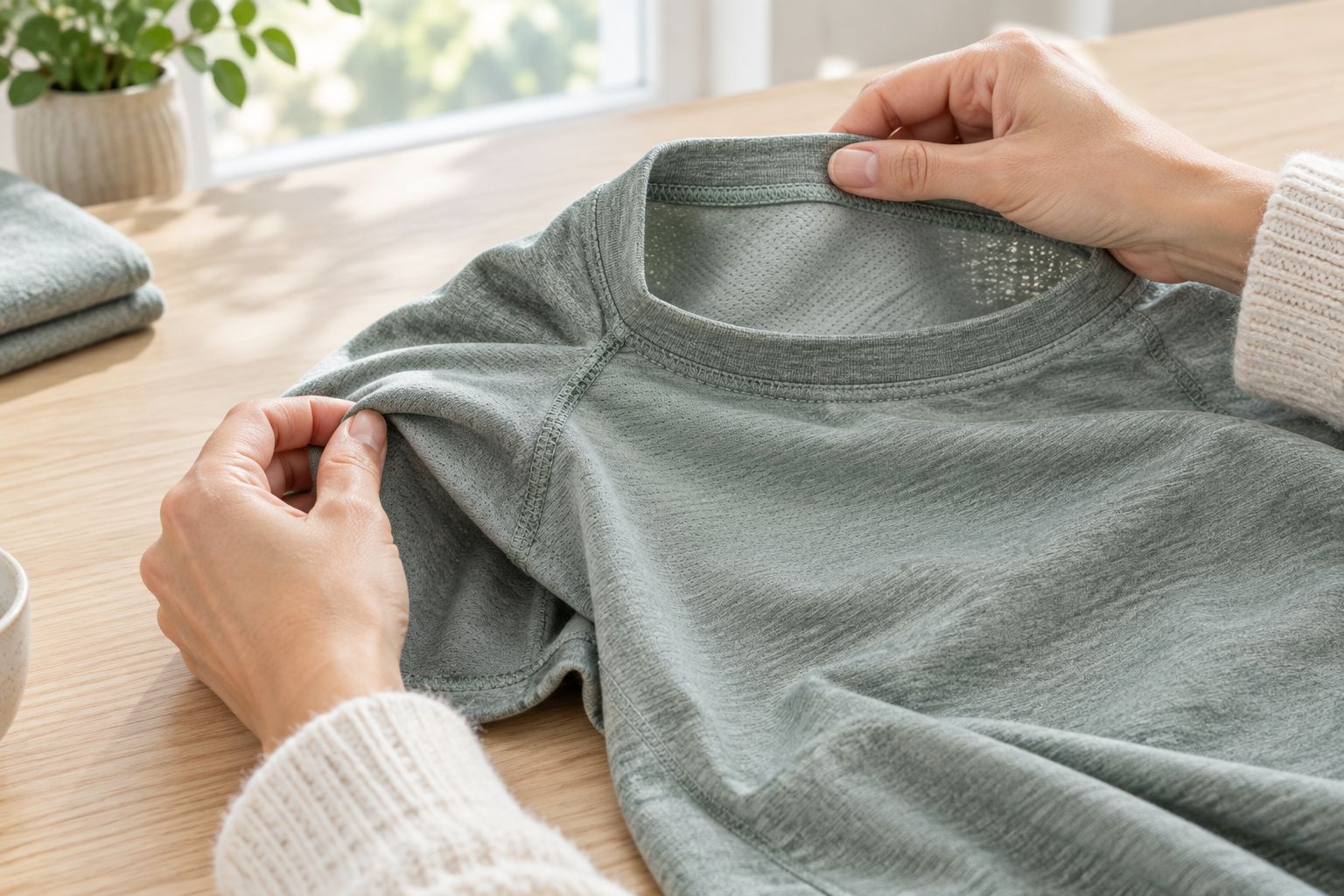
Do not assume that a seamless description means a garment has no joins, waistband, or pressure points. Judge the finished item. The part that touches your irritated area deserves more attention than a broad construction label.
For leggings, check behind your knees and around the waistband during normal movement. For tops, check the underarms and neckline. For sports bras, consider the band, straps, edges, and closure separately from the body fabric.
Build a lower-irritation clothing routine
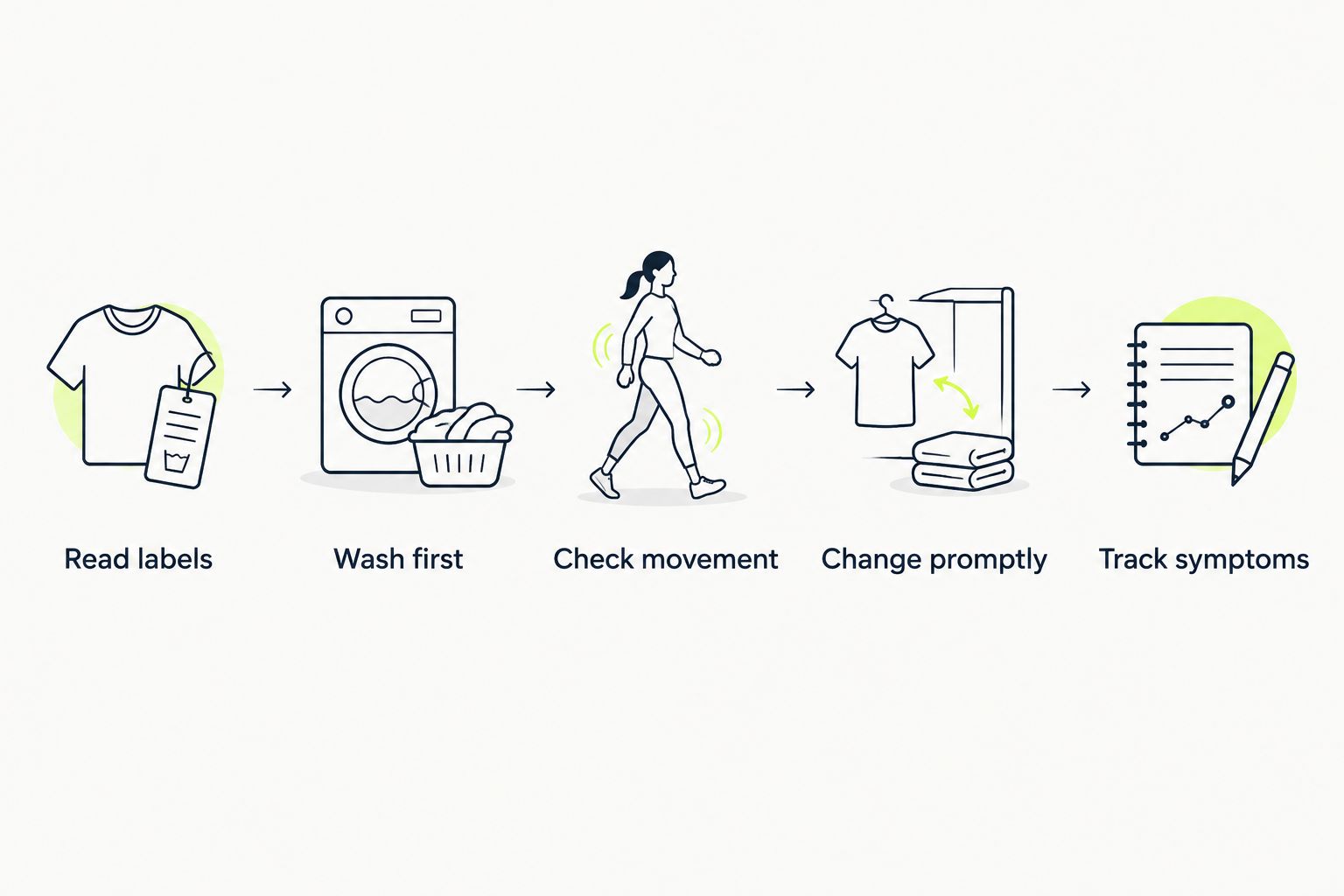
Your 2026 activewear routine should make it easier to identify problems, not change every variable at once. Keep the process straightforward and follow the garment’s care label throughout.
- Read labels. Check composition and washing instructions before the first wear. Do not fill gaps with assumptions about the fabric name.
- Wash first. Wash new clothing according to its care instructions, using a laundry product you already tolerate. Avoid adding unfamiliar scent products at the same time.
- Check movement. On comfortable, intact skin, assess ordinary movement before committing to strenuous exercise. Stop if the garment causes discomfort.
- Change promptly. Get out of sweaty clothing after training rather than leaving damp fabric against your skin through the rest of the day.
- Track symptoms. Note where discomfort appeared, which garment you wore, and what laundry products you used. Repeated patterns are useful information for a clinician.
A comfortable first wear does not prove that future reactions are impossible. Likewise, discomfort during exercise does not prove a textile allergy: rubbing, heat, sweat, and other exposures can overlap.
Do not continue wearing an irritating item to see whether your skin gets used to it. Remove the garment and reassess the cause before trying it again.
Can I wear these fabrics if I have eczema?
Eczema does not produce a universal approved-fabric list. Choose clothing you tolerate, reduce friction and overheating, and follow your clinician’s advice during flares.
Do not use a new garment to test actively inflamed or broken skin. A fabric marketed for training is not an eczema treatment, and comfort claims do not establish suitability for your condition.
Does moisture-wicking mean a fabric will not irritate me?
Moisture-wicking does not mean hypoallergenic. Managing moisture is a performance function; avoiding an allergic reaction depends on whether you contact a substance to which you are allergic.
In 2026, keep those claims separate when comparing activewear. You still need to assess fit, seams, care, and your response to the finished garment.
When should I stop wearing a garment?
Stop wearing a garment if it causes itching, burning, or a rash. Seek medical advice for symptoms that persist, recur, spread, or show signs of infection rather than repeatedly testing the same clothing.
Hives with trouble breathing or swelling of the lips, tongue, or throat require emergency medical help. Do not treat those symptoms as ordinary workout chafing.
FAQ
Are TLF fabrics hypoallergenic?
Do not treat TLF fabrics as hypoallergenic based on softness or a proprietary fabric name. Check evidence specific to the garment and your known allergens before relying on an allergy-related claim.
Is Cotton Luxe DNA(TM) suitable for sensitive skin?
Cotton Luxe DNA(TM) identifies a proprietary fabric, not a medical suitability standard. The Swole Tee description states ultra-soft stretch fabric, but your decision still depends on the complete composition, construction, and skin history.
Is a bamboo workout tank automatically better for eczema?
A bamboo workout tank is not automatically better for eczema. Check its complete fiber composition and choose clothing your skin tolerates rather than relying on the bamboo name.
Should I wash new workout clothing before wearing it?
Wash new workout clothing before wearing it, following the garment’s care label. Use a laundry product you already tolerate so you are not introducing an unfamiliar fragrance alongside a new garment.
Does sensitive skin mean I should avoid all synthetic activewear?
Sensitive skin does not automatically require avoiding all synthetic activewear. Your triggers, the finished garment, and the conditions in which you wear it matter more than a blanket natural-versus-synthetic rule.
Can tight leggings irritate sensitive skin?
Tight leggings can irritate sensitive skin through rubbing and concentrated pressure. Check the waistband, seams, and areas behind your knees during movement rather than assuming tighter means better support.
How can I tell whether my rash is an allergy or chafing?
A rash alone does not reliably tell you whether the cause is allergy or chafing. Stop wearing the suspected item and ask a clinician to assess persistent or recurring symptoms; allergy patch testing is a clinical procedure, not a clothing try-on.
One last thing
Check the least comfortable part of the garment—not just the softest part. A pleasant fabric sample does not tell you how a waistband, underarm join, or neckline will feel during training.
For your next 2026 purchase, start with a garment whose composition you can compare with something you already wear comfortably. That is a more useful decision than choosing by a fabric name alone.


