

Yes, plus size gym clothes can be tailored for a better fit, especially when you need a shorter hem or a small adjustment along an existing seam. The key caveat for this 2026 guide: altering stretch fabrics, compression panels, seamless construction, or sports-bra support requires more care than shortening a basic workout tee.
- Can plus size gym clothes be tailored? Yes—start with localized fit problems, not a complete size change.
- Stretch-knit leggings need seams that stretch with the fabric; a rigid seam can restrict movement.
- TLF Apparel gym clothes require an individual fit check before you plan alterations.
- For 2026 activewear alterations, preserve movement, coverage, and support before changing the silhouette.
Can plus size gym clothes be tailored for a better fit?
Yes—tailoring is most practical when the garment already fits your main movement areas and needs a specific adjustment. Shortening an overly long top is a different job from rebuilding leggings that pull across your hips and sag at the waist.
Before booking an alteration, separate a sizing problem from a proportion problem. Start with the guide to whether gym clothes run small for plus size body types if you feel restricted throughout the garment rather than in an isolated area.
| Adjustment | Best for | Main benefit | Main limitation |
|---|---|---|---|
| Shortening a plain hem | Extra length below the area that fits | Removes excess fabric without reshaping the whole garment | Stretch hems need suitable stitching |
| Tapering an existing leg seam | Excess width below a comfortable hip and thigh fit | Changes the lower-leg silhouette | Can reduce movement or foot clearance |
| Adjusting a waistband | Localized waist gaping | Addresses a loose opening | Requires inspection of elastic, seams, and attached panels |
| Reshaping a sports bra | A fit issue assessed by a specialist | Can address a specific construction problem | Changes can affect support and coverage |
| Recutting a seamless garment | Work assessed by a stretch-knit specialist | Allows consideration of a limited alteration | Cutting can disrupt the knit structure and placement of shaped zones |
A useful first request is precise: tell the tailor where the garment fails during exercise. “The ankle opening catches under my heel” gives clearer direction than “make these smaller.”
Why this matters
Gym clothes must fit while you move, not just while you stand in front of a mirror. A smaller-looking garment is not a better-fitting garment if it pulls during a squat, cuts into your waist when seated, or limits an overhead reach.
Plus size is a size category, not a single body shape. Your waist, hip, thigh, chest, and torso proportions determine where you need room; taking fabric out everywhere does not address those differences.
Alter the garment to suit your movement—not to chase a smaller label. Keep the room that lets you train comfortably, even when you want a cleaner silhouette.
Shortening hems: best for excess length
A plain hem is a sensible place to start when the rest of the garment fits. A tailor can assess whether shortening a top, pant leg, or sleeve leaves enough room to recreate a suitable finish.
Look at what sits near the proposed cut. An ankle zipper, cuff, drawcord channel, curved hem, or pocket changes the job because the alteration must preserve or reposition that feature.
For stretchy leggings, the finished hem must accommodate putting the garment on and moving in it. A tight, non-stretching seam defeats that purpose even when the new length looks right.
Ask to see the proposed hem position while wearing your training shoes. Check it standing, sitting, and bending your knee before the tailor cuts away fabric.
Waistband adjustments: best for localized gaping
A loose waistband does not automatically mean the entire garment is too large. If the hips and thighs feel comfortable but the waist stands away from your body, ask the tailor to inspect the waistband separately.
Construction determines the approach. Elastic inside a channel differs from elastic stitched through several layers; a wide waistband attached to shaped panels creates another set of constraints.
The benefit is targeted fit correction. The trade-off is that reducing the opening also changes how you pull the garment over your hips and how it feels when you bend or sit.
Do not solve waist gaping by sacrificing comfortable hip and thigh room. If the proposed alteration makes dressing difficult or creates pressure at the waist, reassess the approach before permanent stitching.
Leg tapering: best for excess width below the thigh
Tapering changes the shape of a pant leg rather than simply removing length. It makes sense to assess when the seat and upper thigh fit comfortably but the lower leg feels wider than you want.
Ask the tailor to follow the existing seams where the construction allows. Pockets, panels, knee shaping, and ankle details can limit how much the silhouette can change without affecting other features.
The gain is a more fitted outline. The compromise is less space for your calf, knee movement, and foot passage through the ankle opening.
Check a deep knee bend and a seated position during the fitting. Keep deliberate room in the leg if a close taper creates pulling behind the knee or makes the fabric cling where you need movement.
Sports bras and seamless leggings: specialist assessment first
Sports bras are support garments, not just fitted tops. Shortening a strap or tightening a band changes how tension moves through the garment, so a cosmetic improvement does not establish that the altered bra supports you appropriately.
Bring the bra to someone experienced in bra construction and explain the problem during your actual activity. If the cups do not contain your chest comfortably, adjusting the straps alone does not resolve the underlying fit.
Seamless leggings need a separate assessment. They do not offer the same alteration routes as garments assembled with conventional side seams, and cutting through knitted areas changes their original construction.
Choose a better starting fit rather than asking an alteration to rebuild support or recreate knitted shaping. A specialist can inspect the garment, but the presence of stretch does not make every change workable.
Why tailoring results vary
The same adjustment can be straightforward on one garment and complicated on another. These construction factors explain the difference:
- Fabric stretch: The new seam must accommodate the direction and amount of stretch required at that location.
- Seam construction: Overlocked, coverstitched, bonded, and flat seams do not share an identical alteration process.
- Elastic attachment: Enclosed elastic and elastic secured through multiple layers require different handling.
- Panel placement: A change near a gusset, pocket, shaped panel, or mesh insert affects more than the outer silhouette.
- Fabric condition: Worn, thinning, or damaged fabric remains worn after the garment becomes smaller.
- Support function: Altering a sports bra or a close-fitting support panel changes more than appearance.
Ask the tailor to explain which feature controls the decision. You need a garment-specific answer, not a promise that all activewear can be taken in the same way.
Your 2026 fit checklist before anything gets cut
Use this sequence to turn a vague fit complaint into a clear alteration brief. Keep the garment clean and follow its care label before the appointment so the tailor assesses it in its normal condition.
- Locate the problem. Identify the exact area that bunches, gaps, drags, or restricts you. Distinguish excess fabric from fabric pulled out of position by a tight area elsewhere.
- Check construction. Ask the tailor to inspect the seams, stretch, elastic, pockets, and panels around the proposed alteration. Confirm which original details will remain.
- Test movement. Wear your usual workout layers and shoes. Demonstrate the bend, reach, squat, or seated position that exposes the fit issue; move only as the tailor directs while pins are present.
- Approve the finish. Agree on the new shape and the seam or hem finish before cutting. Ask what will look different from the original garment.
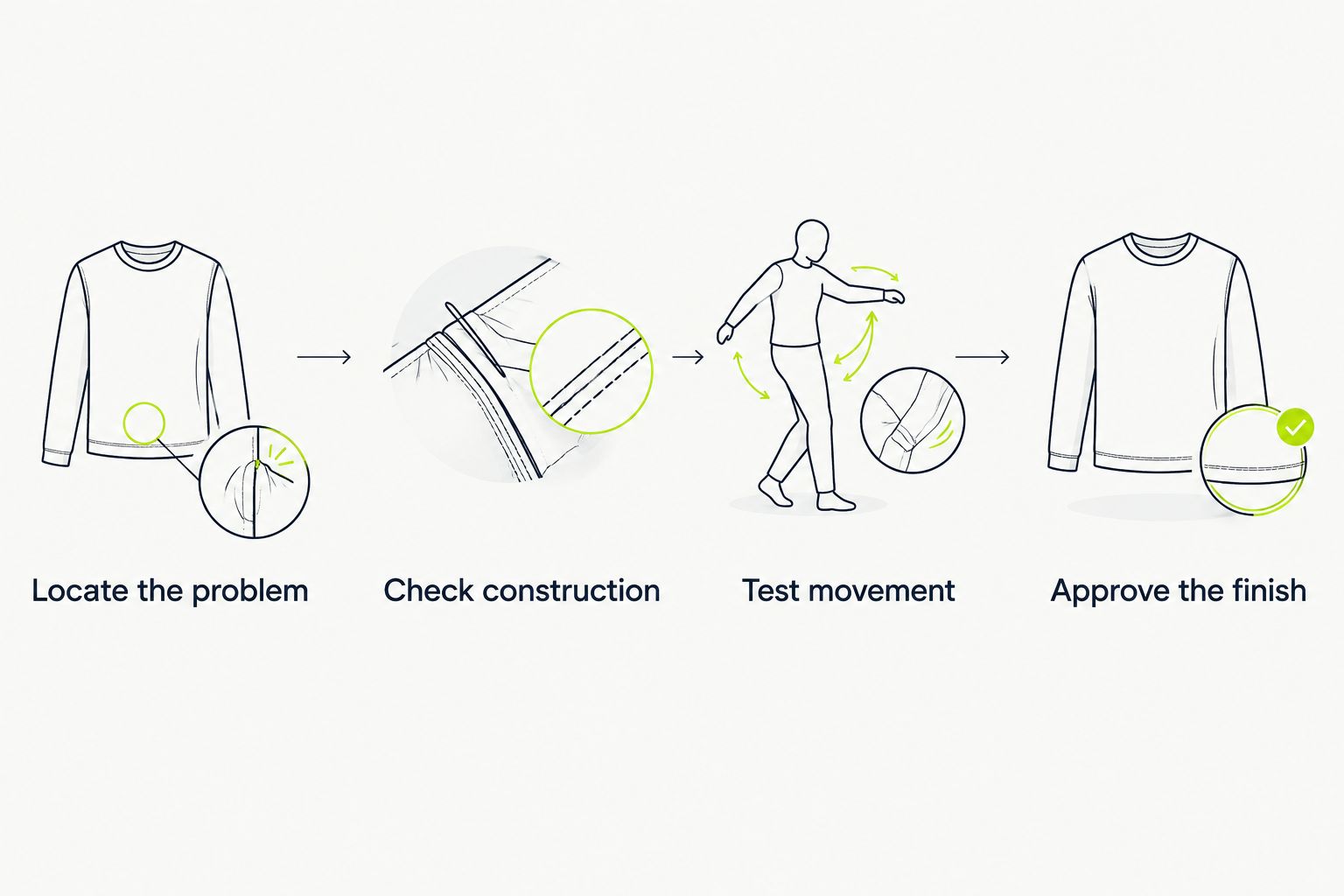
At collection, repeat the movements that originally exposed the problem. Inspect the altered area for skipped stitches, puckering, rough edges, or a seam that stops stretching before the surrounding fabric does.
Do not judge the work only on the hanger. The final check belongs on your body, through the movement you need the garment to accommodate.
Inseam is a design choice, not a size category
TLF Apparel suits shoppers seeking training and everyday clothing; the right starting fit still comes before alterations. For a 2026 wardrobe update, compare garment measurements and construction rather than treating a model’s size as a fit prediction.
The brand’s product descriptions illustrate how much intended length can differ. These measurements describe the named shorts, not a rule about which body size should wear them:
| TLF Apparel style | Stated inseam | Fit question before shortening |
|---|---|---|
| Track Shorts (Women’s GTS Gym-To-Street Edition) | 2 inches | Will the finished length retain the coverage you want? |
| Tempo 6 Inch Gym Shorts With Pockets | 6 inches | Where will the proposed hem sit relative to the pockets? |
| Track Shorts (Men’s GTS Gym-To-Street Edition) | 8.5 inches | Do you want less length, less width, or both? |
A shorter inseam changes coverage; it does not correct every fit problem. Likewise, an oversized cut describes a silhouette, not a guarantee that a particular size will fit your waist, hips, or thighs.
Use TLF Apparel product details to establish what the garment is designed to be. Then assess whether an alteration preserves that purpose or turns the piece into something fundamentally different.
Can a tailor make plus size leggings smaller without changing the stretch?
A tailor can reduce some leggings along suitable seams, but the altered garment still needs enough room to stretch over your body and through your movements. Removing fabric changes the amount of material available to stretch, even when the fabric itself stays the same.
Can gym clothes be made bigger instead of smaller?
Gym clothes can be enlarged only when their construction provides usable fabric or allows an added panel. A narrow seam allowance leaves little material to release, and an inserted panel changes the original garment’s appearance and construction.
Is tailoring better than choosing a different size?
Tailoring makes sense for a localized proportion issue in an otherwise comfortable garment. Choose a different starting size or cut when several areas pull, coverage fails during movement, or the proposed work requires rebuilding the garment.
FAQ
Can plus size gym clothes be tailored in 2026?
Yes, plus size gym clothes can be tailored when their fabric and construction permit the proposed change. Shortening a plain hem is a different task from rebuilding a waistband, reshaping a sports bra, or cutting seamless leggings.
Can a tailor shorten stretchy leggings?
A tailor experienced with stretch knits can assess and shorten suitable leggings. The new hem needs enough stretch for dressing and movement, and ankle details can complicate the work.
Can I take in leggings that gap at the waist?
A waistband alteration is worth assessing when the hips and thighs fit comfortably but the waist gaps. The tailor must inspect how the elastic and waistband attach before deciding how to change them.
Can I tailor workout clothes at home?
Home alterations require fabric-appropriate needles, thread, stitching, and sewing skills. Start with a practice sample rather than cutting a support garment or an unfamiliar stretch knit.
Will making leggings tighter improve support?
Making leggings tighter does not establish better support. Removing too much fabric can restrict movement, increase pulling, and change coverage.
Can a tailor repair stretched-out gym clothes by taking them in?
Taking in gym clothes changes their dimensions; it does not restore degraded elastic or worn fabric. Inspect the material before deciding whether an alteration addresses the actual problem.
Should I tailor a sports bra that does not fit?
Ask a specialist in bra construction before altering a sports bra. A different size or design is a better starting point when the cups, band, and straps do not work together comfortably.
One last thing
The fabric you dislike seeing is not always excess fabric. Bunching can result when a tight area pulls the garment out of position, so removing the bunching without identifying its cause can make the fit worse.
Ask the tailor to show you where the garment needs room before discussing where to remove it. That distinction separates a useful fit adjustment from simply making workout clothes smaller.


